Prepare a Small Batch of Coconut and Lime Syrup for Cold Drinks
Desiccated coconut releases its flavour slowly into liquid, and without a toasting step the infusion can taste flat and faintly raw. Toasting a small measured amount before steeping it in a warm sugar syrup draws out the natural oils and gives the finished syrup a fuller, rounded coconut character. Fresh lime zest added off the heat preserves its bright top note without cooking away. This guide covers each stage in order for a small batch suited to cold drinks at home or in a small cafe setting.
Read the note ↓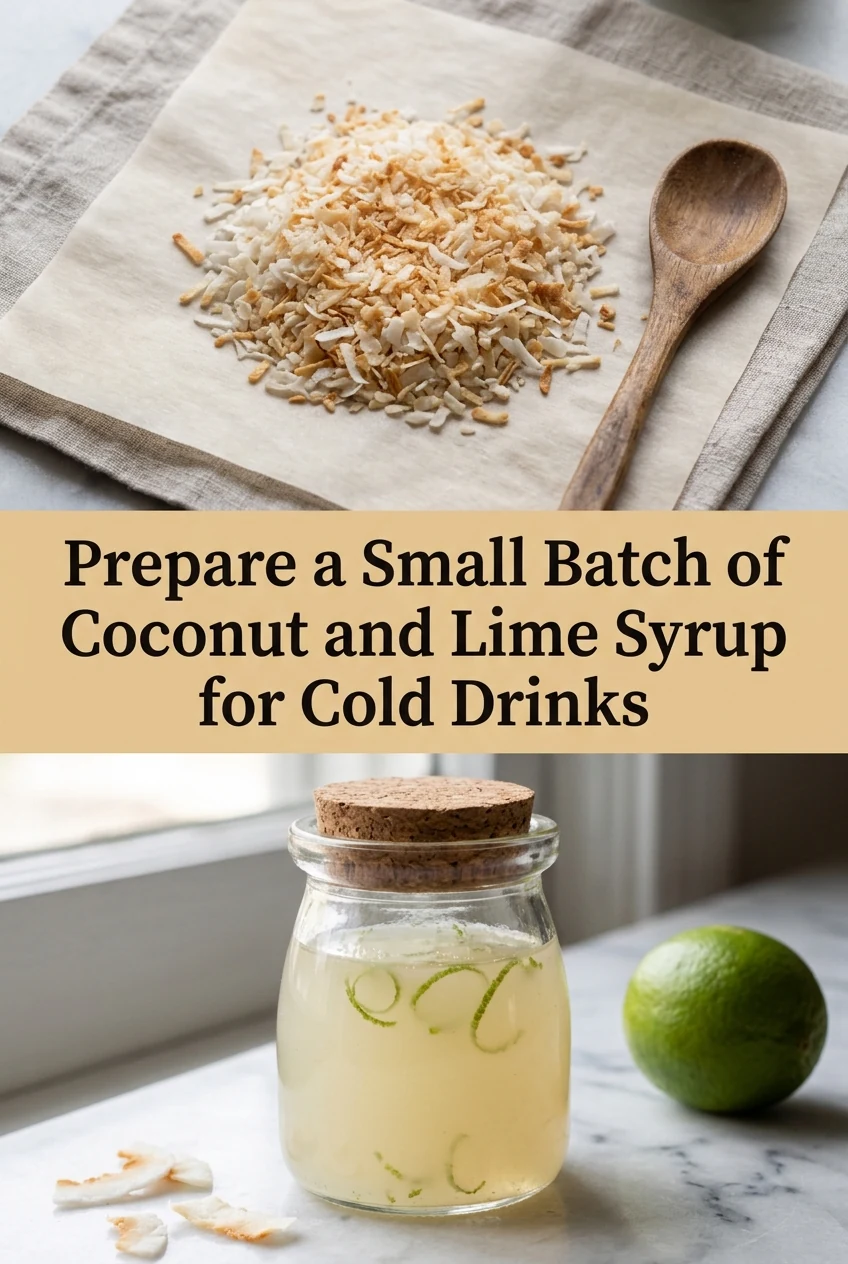
AI-generated editorial concept created for this article. The image is not a technical diagram or a tested result.
Toasting the desiccated coconut
Measure 40 grams of unsweetened desiccated coconut into a dry, light-coloured frying pan over medium-low heat. Stir continuously with a wooden spoon or heatproof spatula. The coconut will begin to turn golden within three to four minutes. Remove the pan from the heat when the coconut is evenly light golden, not dark brown. Dark toasting produces a bitter note that carries through into the syrup. Tip the toasted coconut immediately onto a plate to stop residual pan heat from continuing to cook it.
Making the sugar syrup base and steeping
Combine 200 grams of white granulated sugar with 250 millilitres of water in a small saucepan. Stir over medium heat until the sugar dissolves fully, then bring to a brief simmer. Remove from the heat and immediately add the toasted coconut. Stir once to submerge it, then cover the saucepan with a lid and leave to steep for 25 minutes. Covering the pan retains heat and keeps the syrup warm enough to continue extracting coconut oil during the steep without requiring the heat to remain on.
Straining the coconut from the syrup
After 25 minutes, set a fine mesh strainer over a heatproof jug and pour the syrup and coconut through it. Press the coconut solids firmly with the back of a spoon to extract as much liquid as possible. The strained syrup will be pale ivory and slightly opalescent from the coconut oils. Discard the pressed solids. This step determines the final yield; thorough pressing makes a meaningful difference. An illustrative example: 40 grams of coconut pressed well typically yields 30 to 40 millilitres more liquid than coconut left unpressed, though results vary.
Adding lime zest off the heat
While the strained syrup is still warm but no longer simmering, finely grate the zest of one medium lime directly into the jug. Stir gently and leave the zest in the syrup for five minutes only. This brief contact transfers the aromatic lime oils without allowing the heat to cook off the volatile compounds that give fresh zest its brightness. After five minutes, strain the syrup a second time through the fine mesh strainer to remove the zest pieces, then pour into a clean, dry glass bottle or jar.
Storing and using the syrup in cold drinks
Seal the bottle and refrigerate at 4 degrees Celsius or below. Use within five days. The syrup may appear slightly cloudy when cold due to the coconut oils; this is normal and does not indicate spoilage. Shake or stir gently before measuring. Use 20 to 25 millilitres per 250 millilitre glass of cold still or sparkling water over ice, or stir into cold coconut water for a layered coconut flavour. Discard if the syrup develops an off smell or visible mould at any point.
A little more
to know.
Can I use sweetened desiccated coconut instead of unsweetened?
Sweetened coconut adds extra sugar to the syrup in an uncontrolled amount, making the final sweetness difficult to predict. It also toasts unevenly because the added sugar burns before the coconut is fully golden. Unsweetened gives more consistent results.
Why does the syrup sometimes separate in the refrigerator?
Coconut oil solidifies at cool temperatures and can form a thin layer at the surface. This is a natural property of coconut fat, not a sign of spoilage. Stir or shake the sealed bottle briefly before each use to redistribute the oils evenly.
Original editorial guidance and recipe formulations, not independently kitchen-tested. Times are estimates and depend on equipment and product directions. Cooked bases need additional cooling and refrigeration before cold serving. Images are AI-generated illustrations; appearance and yield may vary. Check actual ingredient labels, allergens, and any certification you require. We do not certify products. Read our approach.
Save to Pinterest ↗ANOTHER IDEA FOR THE COUNTER