Prepare a Small Batch of Apricot and Rose Water Syrup for Warm and Cold Milk Drinks
Rose water is volatile. Even brief simmering drives off the delicate floral compounds that make it worth using, leaving behind a faint, flat note that does not justify the addition. The practical solution is to build the syrup's body and sweetness from a simmered dried apricot base, cool it completely, and then stir in a small measured amount of rose water just before bottling. This sequence preserves the aroma while giving the syrup the concentrated fruit flavor needed to carry through milk.
Read the note ↓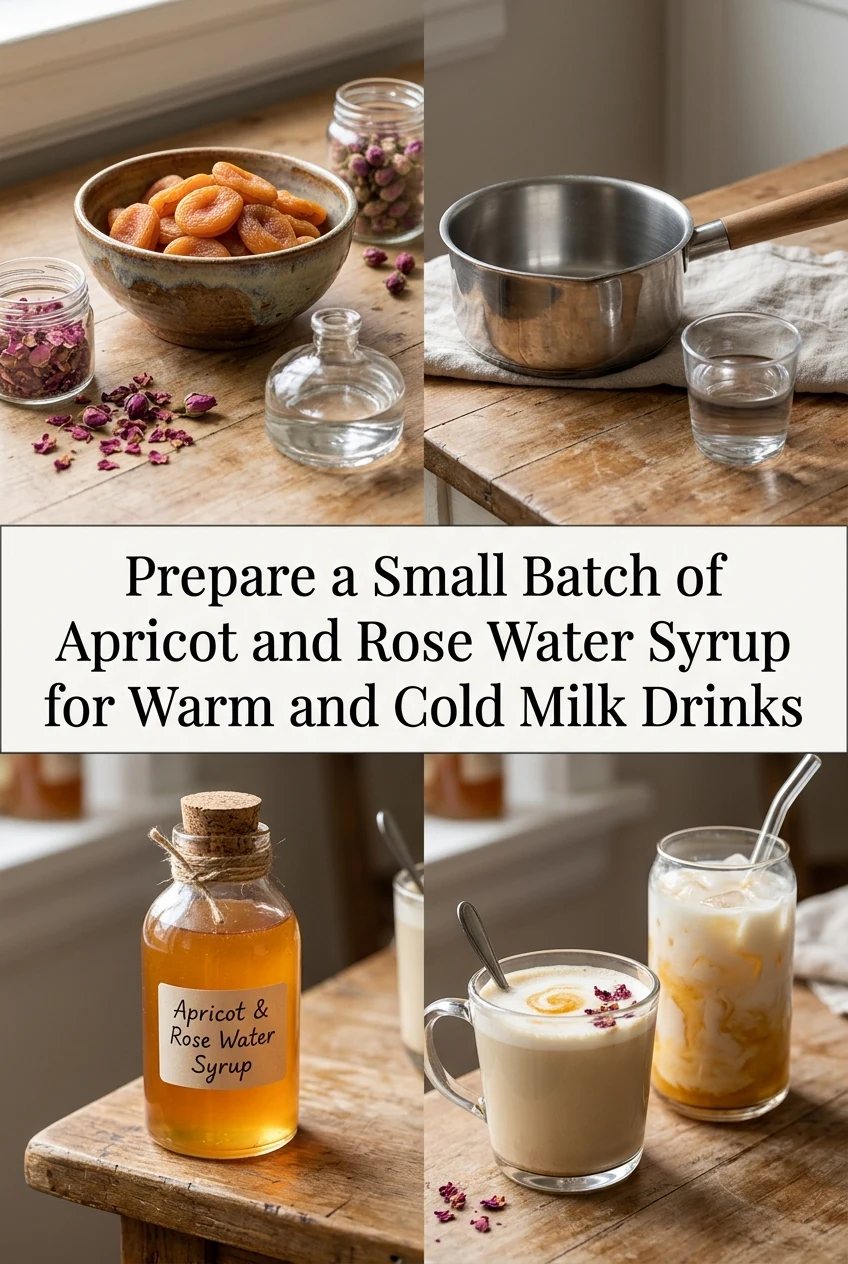
AI-generated editorial concept created for this article. The image is not a technical diagram or a tested result.
Ingredients and Quantities for One Small Batch
Combine 100 g of chopped dried apricots, 150 ml of water, and 80 g of white sugar in a small saucepan. This produces roughly 180 to 200 ml of finished syrup, enough for approximately eight to ten single-serve drinks depending on how much you use per cup. Dried apricots vary in moisture content, so the yield is an estimate rather than a fixed figure. Use unsulfured or sulfured dried apricots according to your preference; both work, though unsulfured varieties produce a darker, earthier syrup.
Simmering the Apricot Base
Bring the apricot, water, and sugar mixture to a gentle simmer over medium heat, stirring until the sugar dissolves. Reduce the heat to low and simmer uncovered for fifteen to eighteen minutes, stirring occasionally, until the apricots are very soft and the liquid has reduced and thickened slightly. The mixture should coat the back of a spoon but still pour freely. Remove from heat and allow to cool in the pan for ten minutes before the next step.
Straining and Cooling the Base
Pour the warm apricot mixture through a fine mesh strainer into a clean heatproof bowl or jug, pressing the softened fruit solids gently with the back of a spoon to extract as much liquid as possible. Discard the pressed solids or reserve them separately for another use. Allow the strained syrup to cool to room temperature, which typically takes thirty to forty-five minutes. Do not add the rose water while the syrup is still warm, as heat will diminish its aroma immediately.
Adding Rose Water and Bottling
Once the syrup is fully cooled, stir in one teaspoon (approximately 5 ml) of food-grade rose water. Taste and add a second teaspoon only if the floral note is too subtle for your preference. Rose water strength varies considerably between brands, so begin conservatively. Pour the finished syrup into a clean glass bottle or jar with a tight-fitting lid. Label with the preparation date. Refrigerate promptly at 4 degrees Celsius or below and use within one week.
Using the Syrup in Warm and Cold Milk Drinks
For a warm milk drink, stir one to two tablespoons of syrup into 200 ml of steamed or gently heated milk. The syrup dissolves readily into warm milk without requiring additional whisking. For a cold drink, combine the syrup with cold milk over ice and stir well. The syrup's sugar content helps it incorporate into cold liquid, though a brief stir is needed. Avoid boiling the syrup after the rose water has been added, as this will reduce the floral character significantly.
A little more
to know.
Can I use fresh apricots instead of dried for this syrup?
Fresh apricots contain much more water, so the simmer time and sugar ratio would need adjustment to achieve a similar concentration. Dried apricots give a more predictable, consistent result for a small batch and are available year-round, making them the more practical choice for this preparation.
Will the syrup work in non-dairy milk such as oat or almond milk?
Yes. The syrup stirs into oat and almond milk without curdling or separating. Oat milk's natural sweetness pairs well with the apricot base. Use the same quantity as you would with dairy milk and adjust to taste, as non-dairy milks vary in sweetness.
Original editorial guidance and recipe formulations, not independently kitchen-tested. Times are estimates and depend on equipment and product directions. Cooked bases need additional cooling and refrigeration before cold serving. Images are AI-generated illustrations; appearance and yield may vary. Check actual ingredient labels, allergens, and any certification you require. We do not certify products. Read our approach.
Save to Pinterest ↗ANOTHER IDEA FOR THE COUNTER