Prepare a Pineapple and Ginger Still Cooler in a Measured Jug
Blending fresh pineapple with a measured amount of ginger syrup and still water, then straining the result into a marked jug, removes fibrous pulp and gives you a repeatable cooler with consistent sweetness batch after batch. Eyeballing pineapple volume leads to drinks that vary noticeably in tartness. Weighing the fruit and measuring the syrup before blending solves that problem without requiring specialist equipment.
Read the note ↓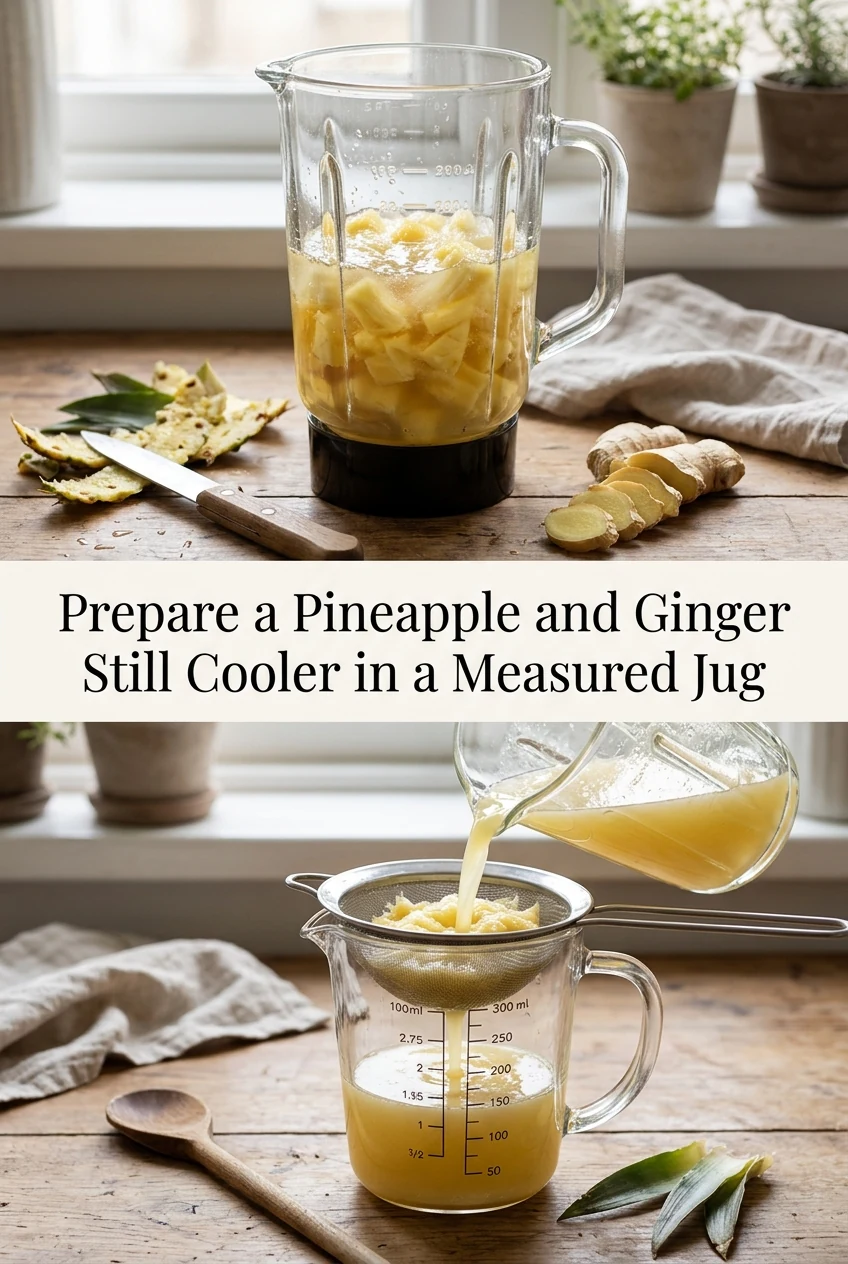
AI-generated editorial concept created for this article. The image is not a technical diagram or a tested result.
Weigh and Prepare the Pineapple
Peel and core the pineapple, then cut it into rough chunks. Weigh 300 g of prepared fruit on a kitchen scale for a 750 ml jug serving four small glasses. Consistent weight matters more than chunk size because the blender reduces everything to liquid. Chill the chunks in the refrigerator for at least one hour before blending so the finished drink stays cold longer without needing excess ice that would dilute the flavour.
Make a Simple Ginger Syrup Beforehand
Combine 100 g white sugar with 100 ml water in a small saucepan. Add 20 g of peeled, thinly sliced fresh ginger. Stir over medium heat until the sugar fully dissolves, then remove from heat and allow to cool completely before straining out the ginger solids. This produces roughly 150 ml of syrup. Store it covered in the refrigerator and use within seven days. Having the syrup ready before assembly keeps the workflow straightforward.
Blend and Strain Into the Jug
Place the chilled pineapple chunks in a blender with 30 ml of the cooled ginger syrup and 200 ml of still water. Blend on high for about 45 seconds until fully liquefied. Pour the mixture through a fine-mesh strainer set over your measuring jug, pressing the pulp gently with a spoon. Discard the solids. You should have approximately 450 ml of strained liquid. This illustrative example assumes a ripe, juicy pineapple; actual yield will vary slightly.
Adjust Sweetness and Top Up With Water
Taste the strained liquid before adding more water. If the pineapple was very sweet, add an extra 10 ml of lime juice to balance rather than reducing the syrup at this stage. Top the jug up to the 750 ml mark with still water. Stir once with a long spoon. Adjusting at this point rather than during blending keeps the process predictable because you are working with a finished, uniform liquid rather than estimating mid-blend.
Serve and Store Safely
Pour over ice immediately or refrigerate the jug at 4 C or below and serve within 24 hours. Because fresh pineapple juice contains no preservatives, do not leave the filled jug at room temperature for more than two hours, or one hour if your kitchen exceeds 32 C. Label the jug with the preparation time if sharing a refrigerator with others. Stir again before pouring as the liquid may settle slightly during storage.
A little more
to know.
Can I use tinned pineapple instead of fresh?
Yes. Drain tinned pineapple thoroughly and weigh the same 300 g. The syrup from the tin is already sweet, so start with 15 ml of ginger syrup rather than 30 ml and taste before adding more.
Why does the drink sometimes turn cloudy after refrigeration?
Fine pineapple particles that passed through the strainer continue to settle and can create a haze. Stir gently before serving. A second straining pass before refrigerating reduces this noticeably without affecting flavour.
Original editorial guidance and recipe formulations, not independently kitchen-tested. Times are estimates and depend on equipment and product directions. Cooked bases need additional cooling and refrigeration before cold serving. Images are AI-generated illustrations; appearance and yield may vary. Check actual ingredient labels, allergens, and any certification you require. We do not certify products. Read our approach.
Save to Pinterest ↗ANOTHER IDEA FOR THE COUNTER