Pre-Cool Glassware for Neat Layered Iced Beverages
Serving layered iced drinks requires thoughtful temperature management between the glassware, the base ingredients, and the ice. A room-temperature tumbler causes ice to melt quickly along the inside surface, watering down sweetened dairy or plant milk before the contrasting top layer is even added. Storing thick-walled serving glasses in a refrigerator set at four degrees Celsius before assembly cools the glass thoroughly, helping to slow down initial ice melt and keeping the beverage layers visually distinct during presentation.
Read the note ↓
Representative category illustration reused from our editorial library; it does not depict this specific project or a tested result.
Thermal Transfer in Ambient Glass
Heavy glassware holds considerable ambient warmth when sitting on a room-temperature shelf. When warm glass meets fresh ice cubes, heat transfers directly into the ice, causing fast surface melting around the edges of the tumbler. This extra meltwater thins sweet syrups and milk bases early, making it easier for the contrasting upper pour, such as chilled coffee or concentrated tea, to mix immediately rather than resting neatly on top.
Cold Staging Specifications
Place clean, dry serving glasses inside a refrigerator set at four degrees Celsius or below for thirty to forty-five minutes before building drinks. Make sure the glasses are thoroughly dry beforehand so condensation does not cloud the surface or pick up unwanted aromas from the fridge. Chilling the glass in advance keeps the walls cold, which reduces initial melting when ice and cold liquids are first poured into the vessel.
Ice Density and Structural Placement
Take the pre-cooled vessel directly from the refrigerator and load dense, solid ice cubes to within two centimeters of the rim. Avoid cracked chips or wet, melting cubes from room-temperature wells. Dry, solid cubes stack firmly against the cold glass walls, establishing a supportive scaffold that slows fluid descent when pouring contrasting liquid densities like chilled brew or concentrated tea.
Illustrative Assembly Dimensioning
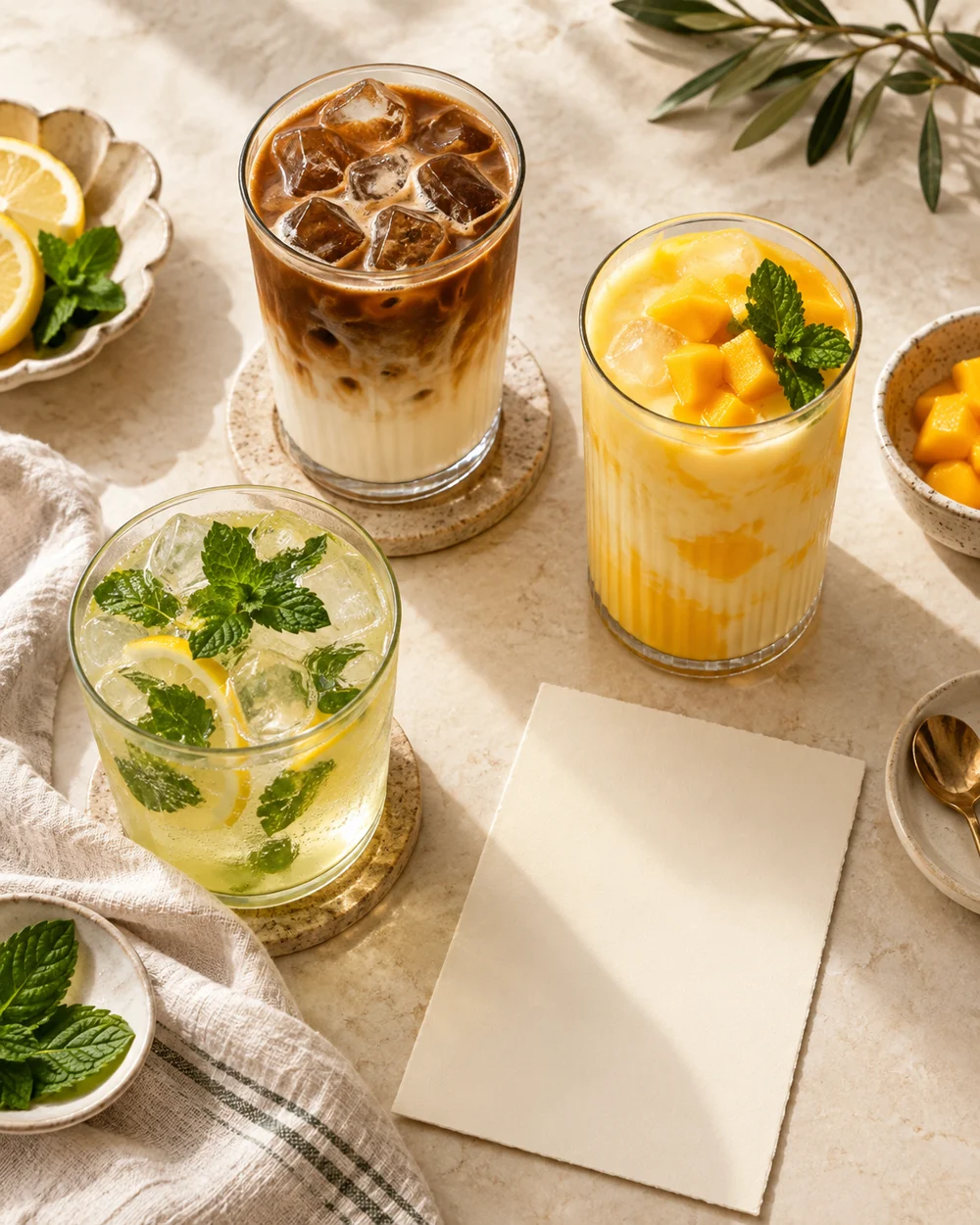
In an illustrative setup, place one hundred and twenty grams of solid ice cubes into a chilled three-hundred-milliliter tumbler. Pour eighty milliliters of cold pasteurized milk stirred with ten milliliters of simple syrup directly over the ice. Slowly pour sixty milliliters of chilled brewed coffee over the back of a spoon onto the top cubes. Pre-chilling the tumbler reduces initial meltwater, helping the dark coffee float above the pale milk layer with clean visual contrast.
Condensation and Surface Moisture Controls
Humid summer air produces immediate outer condensation on cold drinkware. Place pre-chilled glasses onto dry coasters immediately after pouring to prevent slippage on preparation mats. If any dairy-based ingredients remain in prep pitchers during staging, return those containers promptly to the refrigerator at four degrees Celsius within safe perishable timeframes to uphold food freshness and maintain uniform viscosity.
A little more
to know.
Can thin borosilicate glasses substitute for thick soda-lime tumblers?
Thin borosilicate glassware cools down quickly in the refrigerator, but its thin walls hold less cold and warm up faster at room temperature. Heavier tumblers made from standard soda-lime glass take longer to chill, but their thicker walls stay cold longer, which helps delay ice melt while serving layered cold drinks.
How does ice cube size influence layer separation in chilled glass?
Larger ice cubes melt more slowly than crushed ice or small pellets, providing broader surfaces that gently catch the poured top liquid. Using solid cubes gives you more control during the pour and helps prevent the lighter top liquid from tumbling straight to the bottom of the glass.
Original editorial guidance and recipe formulations, not independently kitchen-tested. Times are estimates and depend on equipment and product directions. Cooked bases need additional cooling and refrigeration before cold serving. Images are AI-generated illustrations; appearance and yield may vary. Check actual ingredient labels, allergens, and any certification you require. We do not certify products. Read our approach.
Save to Pinterest ↗ANOTHER IDEA FOR THE COUNTER