Portion Sticky Syrup with a Measuring Spoon and Stir with a Separate Spoon
Sticky syrups cling to spoons, pool slowly, and resist quick pouring. Using a labeled kitchen measuring spoon to portion syrup into a cup, then a separate clean spoon to stir it into a warm drink, keeps the original syrup container uncontaminated and gives you a repeatable starting point for your recipe. This article walks through the practical steps, explains what the measurement actually represents, and helps you work with the syrup's natural behavior rather than against it.
Read the note ↓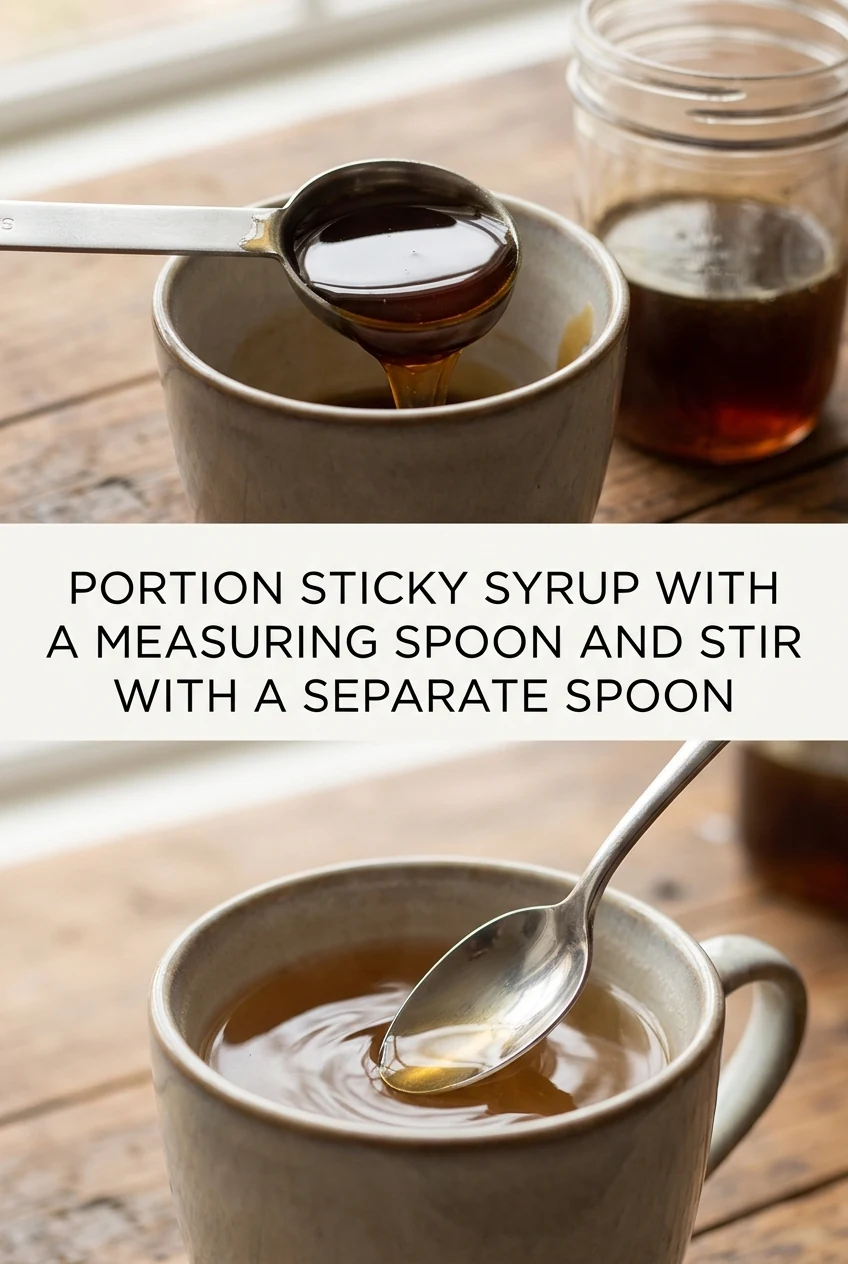
AI-generated editorial concept created for this article. The image is not a technical diagram or a tested result.
Read Your Measuring Spoon Before You Start
Household measuring spoons are sold in sets and each spoon is stamped or molded with its capacity, commonly 1 tablespoon, 1 teaspoon, 1/2 teaspoon, or 1/4 teaspoon. Pick up the spoon you plan to use and read that printed label directly. Do not assume every teaspoon-shaped spoon in your kitchen holds the same volume, because spoon sets vary by manufacturer and older spoons may have worn markings. Once you have confirmed the labeled capacity, you know the intended volume the spoon is designed to hold when filled level to its rim. This is the figure your recipe refers to when it lists a spoon measurement.
Scoop the Syrup and Let It Drain Naturally
Hold your confirmed measuring spoon over the open syrup container and dip or pour syrup into it until the bowl of the spoon is full to the rim. Lift the spoon clear of the container and hold it level over a small cup or bowl for several seconds, allowing the syrup to begin sliding off on its own. Do not scrape the spoon against the rim of the syrup container or dip it back in, because either action introduces residue from the spoon into the stored syrup. Let gravity do the work. The syrup that slides into your cup is your working portion. Some syrup will remain coating the inside of the measuring spoon after draining, which is normal and expected. That residue is why a spoonful of sticky syrup is a volumetric starting point rather than a laboratory-precise mass delivery. Your recipe result may vary slightly from batch to batch, and that is an ordinary feature of working with viscous ingredients at home.
Use a Separate Spoon to Stir
Once your portioned syrup is sitting in the cup, set the measuring spoon aside without returning it to the syrup container. Pick up a separate clean household spoon, one that has not touched the syrup container, and use it to stir the syrup into your already prepared warm drink. Stirring with a dedicated spoon keeps the measuring spoon available for rinsing and prevents double-dipping. Work the spoon in a gentle circular motion until the syrup visibly disperses through the liquid. Thicker syrups may need a few extra passes. If the drink has cooled significantly before you stir, the syrup may take longer to blend, so aim to add it while the drink is still warm.
A Worked Example Using One Teaspoon of Honey Syrup
Here is an illustrative plan, not a tested result, to show how the steps connect. Suppose a recipe calls for one teaspoon of a plain honey-based syrup to add to a cup of warm ginger tea. You select the spoon stamped 1 tsp from your set and confirm the label. You fill it with honey syrup from the jar, lift it over a small bowl, and hold it steady for roughly ten seconds while the syrup slides down. You pour what has collected in the bowl into your prepared cup of ginger tea. You then pick up a separate dessert spoon and stir the tea in slow circles for about fifteen seconds until the syrup is no longer visible as a separate layer. The measuring spoon goes to the sink. The honey syrup jar is closed and stored according to its label. The result is a cup of tea with approximately one teaspoon of syrup blended in, with the understanding that some syrup remained on the measuring spoon and the actual delivered amount is close to but not exactly one teaspoon.
Keep Utensils Out of the Container and Follow Label Storage
The single most important hygiene step in this process is keeping used spoons out of the original syrup container. A spoon that has touched your cup, your drink, or your mouth carries moisture and microorganisms that can affect the syrup remaining in the jar. Always pour or dip from the container using a clean dry spoon, then move that spoon directly to the cup. For storage after use, close the syrup container and follow whatever instructions appear on its label, whether that means refrigerating after opening, keeping it in a cool dry place, or another specific direction the manufacturer provides. Do not rely on general rules about how long syrups last, because storage guidance differs by product and the label is your accurate source.
A little more
to know.
Does the syrup left on the measuring spoon mean my recipe will be wrong?
It means the delivered amount is close to but not exactly the labeled volume. Sticky syrups always leave a coating on any spoon. Home recipes written for measuring spoons account for this natural behavior, so a small amount of residue on the spoon is a normal part of home cooking rather than a mistake. If consistency matters to you across multiple batches, use the same spoon, the same syrup, and the same draining time each time, which gives you a repeatable process even if it is not laboratory precise.
Can I use the same spoon to scoop and to stir?
It is better practice to use two separate spoons. If you stir with the measuring spoon, it picks up liquid from the drink, and if you then rest it near the syrup container there is a risk of that liquid contaminating the stored syrup. A dedicated stirring spoon keeps the workflow clean and protects the remaining syrup in the container.
Original editorial guidance and recipe formulations, not independently kitchen-tested. Times are estimates and depend on equipment and product directions. Cooked bases need additional cooling and refrigeration before cold serving. Images are AI-generated illustrations; appearance and yield may vary. Check actual ingredient labels, allergens, and any certification you require. We do not certify products. Read our approach.
Save to Pinterest ↗ANOTHER IDEA FOR THE COUNTER