Portion Cookie Dough Evenly for a Coffee Plate
Uneven cookie portions cause a familiar problem on a home coffee plate: thin edges crisp and darken while larger rounds stay pale and soft in the centre. The fix is not a different recipe but a consistent portioning method applied before the tray goes into the oven. This guide covers the tools, spacing logic, and tray choices that keep a batch of butter-and-oat cookies uniform from the first round to the last, with a note on safe handling and short storage.
Read the note ↓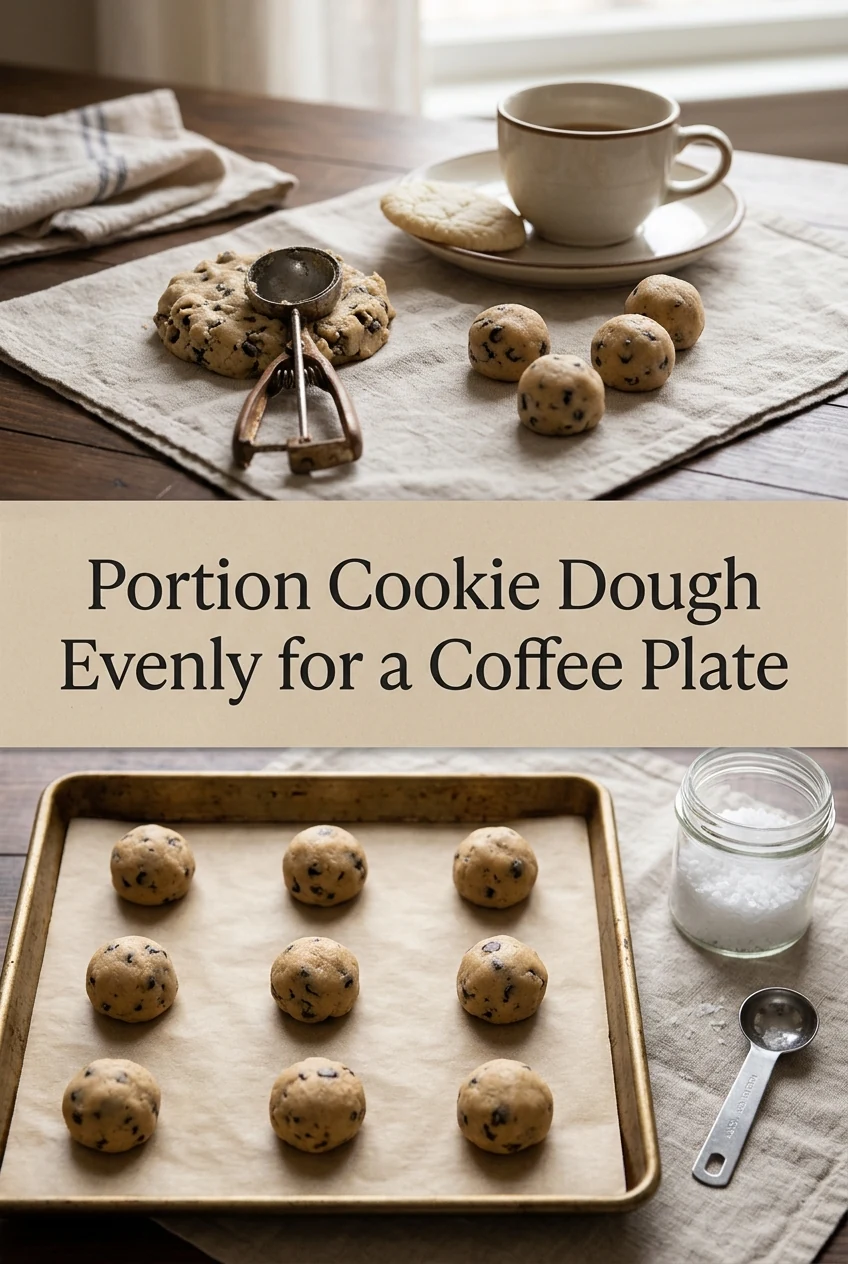
AI-generated editorial concept created for this article. The image is not a technical diagram or a tested result.
Choose a Portioning Tool That Matches Your Dough
A spring-loaded dough scoop with a fixed capacity is the most reliable tool for consistent rounds. A level tablespoon measure works as a practical alternative when a scoop is unavailable. The key step is levelling the dough flush with the rim of the measure rather than mounding it. For a butter-and-oat dough, a single level tablespoon produces a round roughly 3 to 4 centimetres across before spreading. Use the same tool for every piece in the batch without switching between sizes mid-tray.
Space Pieces According to the Recipe's Spread Estimate
Butter-based doughs spread during baking, so crowded pieces merge at the edges and bake unevenly. Follow the spacing your specific recipe states. As an illustrative example, if your recipe notes that each round spreads to about 7 centimetres, placing centres roughly 5 centimetres apart is far too close, and 7 centimetres leaves them touching edge-to-edge. A spacing of 9 to 10 centimetres between centres gives each piece roughly 2 to 3 centimetres of clearance without wasting tray space. Count pieces per tray before baking so the last tray holds the same number as the first, keeping bake times comparable.
Use the Same Tray Type Throughout the Batch
Switching between a dark non-stick tray and a light aluminium tray mid-batch changes how quickly the bottoms colour, even at the same oven setting. Choose one tray type and use it consistently. Line each tray with the same material, whether parchment paper or a silicone mat, because the liner also affects bottom heat transfer. Avoid stacking two trays together to slow browning unless your recipe specifically calls for that technique, as it alters the bake in ways the recipe timing does not account for.
Rotate and Time According to Your Oven's Own Behaviour
Home ovens vary in how evenly they distribute heat. Check your oven's manual for guidance on hot spots and rack positioning. A common practical step is rotating the tray halfway through the bake time your recipe gives, which helps compensate for uneven heat distribution. Do not open the oven door repeatedly in the early stage, as this drops the temperature and can affect rise and spread. Use a timer rather than relying on colour alone, since colour develops quickly near the end of the bake.
Cool on a Rack Before Plating, and Handle Dough Safely
Transfer baked cookies to a wire rack immediately after removing them from the oven. Leaving them on the hot tray continues cooking the bottoms and softens the structure unevenly. Allow full cooling before stacking or plating for a coffee service. Do not taste raw dough at any stage: raw flour and raw egg both carry food safety risks. Store finished cookies according to your recipe's instructions. If you prepare dough in advance and refrigerate it, keep it covered and use it within the timeframe your recipe specifies.
A little more
to know.
Can I portion the dough the night before and bake it the next morning?
Yes. Portion the rounds onto a lined tray or plate, cover tightly, and refrigerate at 4 degrees Celsius or below. Bake directly from the refrigerator, but note that cold dough may need slightly longer than the recipe's stated time. Check your recipe for any specific make-ahead guidance.
My cookies are spreading into each other even with correct spacing. What is causing that?
Warm dough spreads faster and wider than chilled dough. If your kitchen or tray is warm, the butter softens before the oven sets the structure. Chilling the portioned tray for 10 to 15 minutes before baking, as your recipe may suggest, can reduce excessive spread.
Original editorial guidance and recipe formulations, not independently kitchen-tested. Times are estimates and depend on equipment and product directions. Cooked bases need additional cooling and refrigeration before cold serving. Images are AI-generated illustrations; appearance and yield may vary. Check actual ingredient labels, allergens, and any certification you require. We do not certify products. Read our approach.
Save to Pinterest ↗ANOTHER IDEA FOR THE COUNTER