Plan a Weekly Prep List for a Home Café With Four Core Drinks
Running a home café for yourself or a small household works better when you decide in advance which components to prepare each week rather than assembling everything from scratch each time. A focused prep list built around four regularly served drinks prevents the situation where the syrup is finished, the fruit is uncut, or the cold brew was never started. This guide walks through how to build that list logically.
Read the note ↓
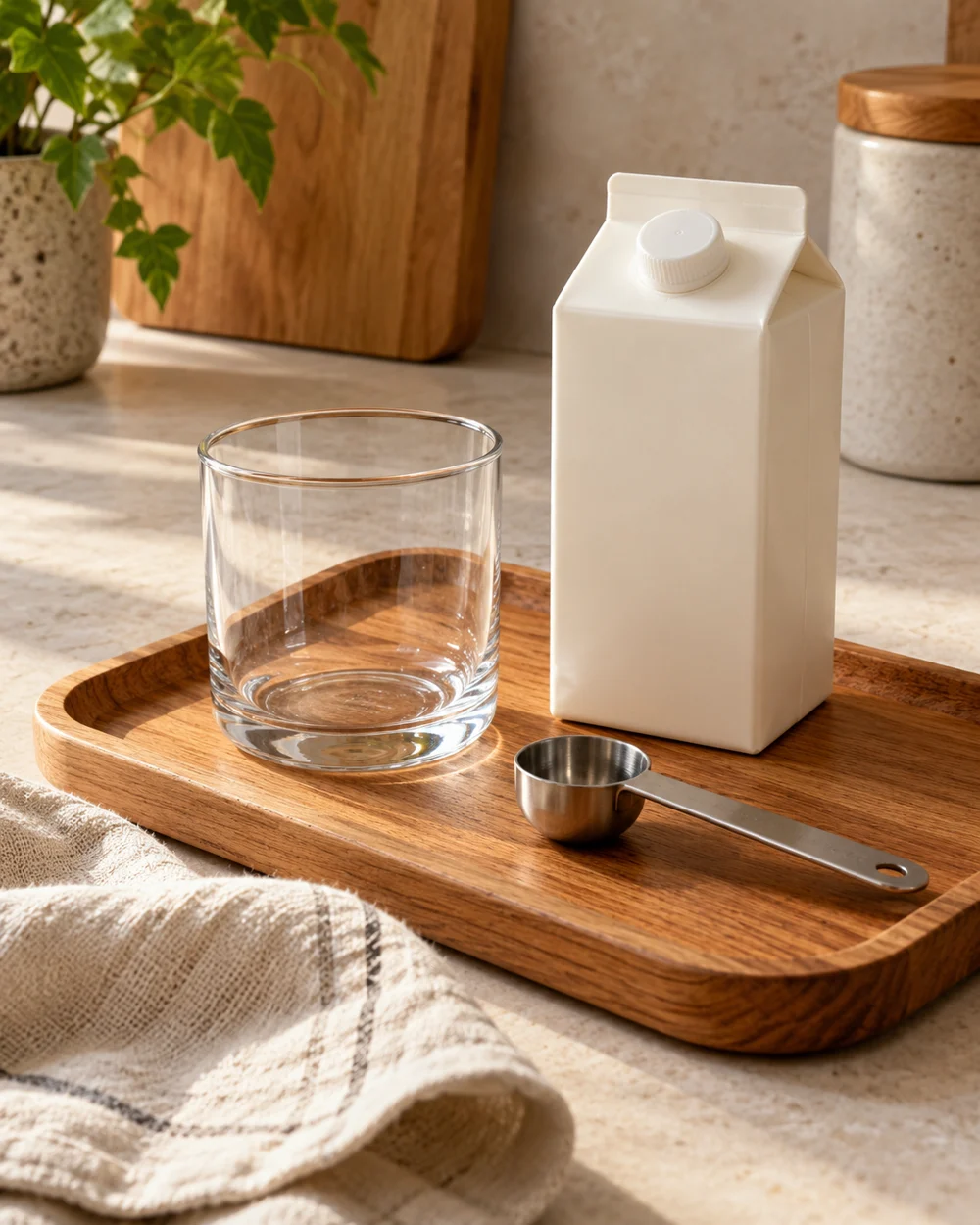
AI-generated editorial concept created for this article. The image is not a technical diagram or a tested result.
Name Your Four Drinks and List Every Component
Write down the four drinks you serve most often. For each one, list every component that is not made to order, such as syrups, infused milks, cut fruit, or brewed concentrates. A useful example: if one drink is an iced vanilla latte, its prep components are vanilla syrup and cold brew concentrate. Mapping this out on paper before the week starts shows you exactly what needs to be made and prevents overlooking a single ingredient that blocks the whole drink.
Assign Prep Tasks to Specific Days Based on Shelf Life
Not every component lasts the same number of days. A simple sugar syrup stored in a sealed jar in the refrigerator is generally usable for about two weeks, while cut fresh fruit should be used within two days. Cold brew concentrate typically keeps for up to a week refrigerated. Assign tasks to days that match those windows. Make syrups at the start of the week, start cold brew on day one or two, and cut fruit only two days before you plan to use it.
Build a Single Written List Rather Than Relying on Memory
Write the prep list on paper or in a notes app and keep it in the kitchen. Structure it by day rather than by drink. Monday might read: make simple syrup, start cold brew. Wednesday: cut citrus, check syrup level. Friday: assess what needs replenishing before the weekend. A written list also reveals when two tasks fall on the same day and lets you redistribute the workload before it becomes a problem on a busy morning.
Set Quantity Targets Based on How Many Servings You Expect
Estimate how many times each drink will be made during the week. If you expect to make six servings of a drink that uses 30 millilitres of syrup each, you need at least 180 millilitres of syrup plus a small buffer. Making slightly more than the minimum prevents mid-week shortfalls without producing so much that perishable components go to waste. Write these target quantities on the prep list next to each task so you are not guessing at the time of preparation.
Review the List at the End of Each Week and Adjust
Spend five minutes at the end of the week noting which components ran out early and which were left over. If the cold brew was gone by Thursday, start a larger batch next week or begin it a day earlier. If cut fruit was wasted, reduce the quantity or move the cutting day closer to peak use. This review step is what turns a generic checklist into a list that actually fits your household's real consumption pattern over time.
A little more
to know.
What if one of my four drinks is seasonal and changes month to month?
Treat the seasonal drink as a rotating slot. When you swap it out, redo the component mapping for that one drink only. The rest of the prep list stays the same, which limits the planning effort required each time you rotate.
How do I handle prep when I will be away for part of the week?
Shift perishable tasks to days after your return and make only non-perishable components like syrups before you leave. Avoid cutting fruit or starting cold brew if it will sit unattended past its safe storage window.
Original editorial guidance and recipe formulations, not independently kitchen-tested. Times are estimates and depend on equipment and product directions. Cooked bases need additional cooling and refrigeration before cold serving. Images are AI-generated illustrations; appearance and yield may vary. Check actual ingredient labels, allergens, and any certification you require. We do not certify products. Read our approach.
Save to Pinterest ↗ANOTHER IDEA FOR THE COUNTER