Plain Savory Spinach and Feta Börek Rolls for a Café Tray
Börek rolls are a practical choice for a café tray because they travel well from oven to counter without collapsing, provided the filling is dry and the filo is rolled firmly. The two problems most home and small-café bakers encounter are soggy filling that steams through the pastry and loose rolls that unravel during baking. Both issues are avoidable with straightforward preparation steps. This article walks through an illustrative plan for making a tray of spinach and halal feta börek rolls, covering filling prep, filo handling, rolling technique, egg wash, and baking. It is presented as an editorial guide rather than a claim of tested or laboratory-verified results.
Read the note ↓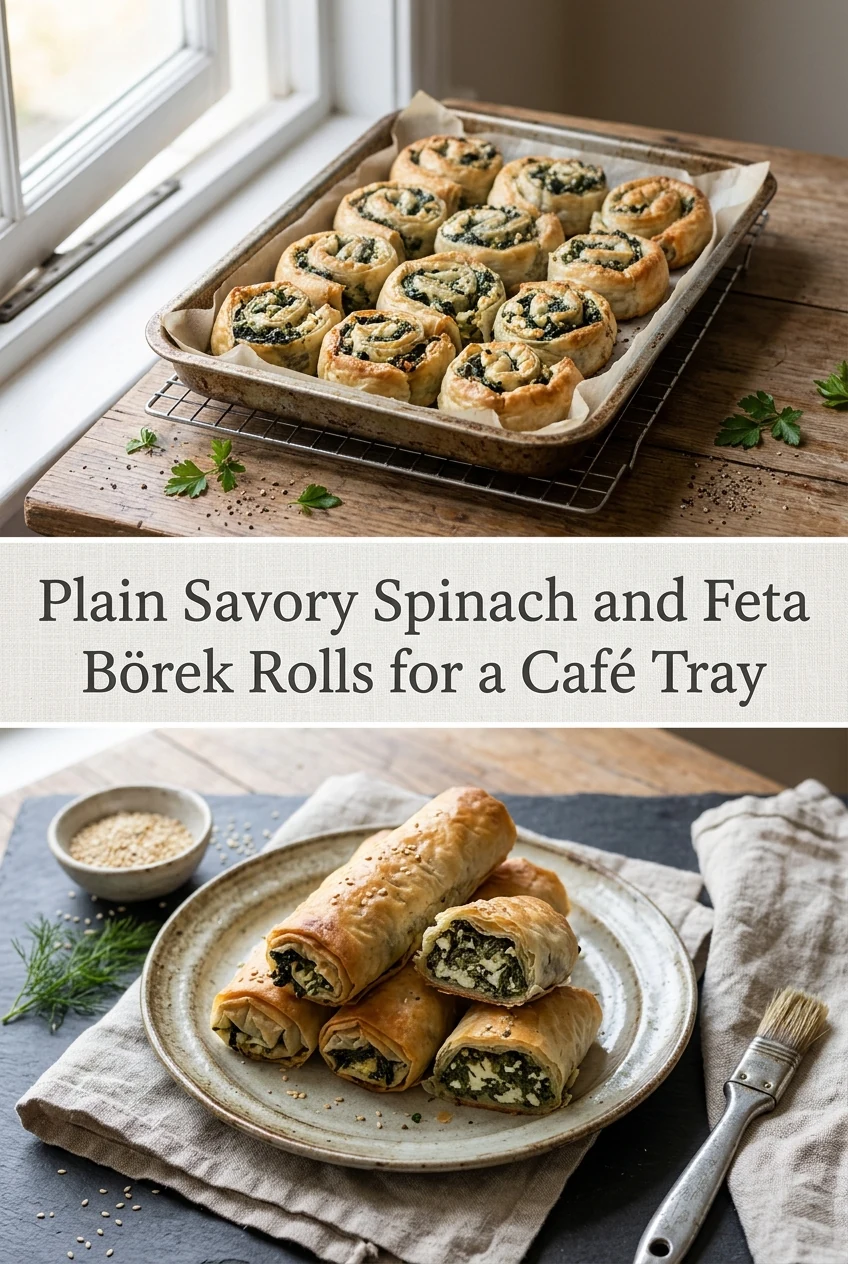
AI-generated editorial concept created for this article. The image is not a technical diagram or a tested result.
Draining Spinach Until It Is Genuinely Dry
Excess moisture is the primary cause of soggy börek. Whether you start with fresh baby spinach or frozen leaf spinach, the goal is the same: remove as much water as possible before the filling touches the filo. For frozen spinach, thaw it completely at room temperature or in the refrigerator, then transfer it to a clean kitchen towel or several layers of paper towel. Gather the towel into a bundle and squeeze firmly over a sink, working in sections, until almost no liquid drips out. Repeat with a fresh section of towel if the spinach still feels wet. For fresh spinach, wilt it briefly in a dry pan over medium heat, stirring until the leaves collapse, then transfer to the towel and squeeze the same way. The spinach should feel compact and almost crumbly when it is ready. Skipping or rushing this step is the single most common reason filo tears or turns translucent and soft on the tray.
Preparing the Halal Feta Filling
Use a halal-certified feta cheese for this recipe. Crumble it by hand into a mixing bowl rather than cutting it, so the texture stays irregular and the pieces distribute evenly through the spinach. A rough ratio that works as an illustrative starting point is two parts drained spinach to one part crumbled feta by volume, though you can adjust to taste. Season with ground black pepper and a small pinch of dried chilli flakes if you like mild heat. Salt carefully, because feta is already salty; taste the mixture before adding any. You can stir in one whole egg to help bind the filling slightly, which reduces the chance of loose pieces falling out when you cut the finished rolls. Mix gently so the feta does not turn into a paste. The filling should hold together loosely when pressed but not feel wet or sticky.
Rolling Filo Tightly Without Tearing
Filo dries out quickly, so keep unused sheets covered with a lightly damp cloth while you work. Lay one sheet flat on a clean, dry surface. Brush it lightly with melted unsalted butter or a neutral oil, then lay a second sheet directly on top and brush again. Spoon a line of filling along one short edge, leaving a clear border of roughly two centimetres on each side. Fold the side borders inward over the filling first, then roll the filo away from you around the filling, keeping tension in the roll as you go. A firm, even roll prevents air pockets that cause the pastry to puff unevenly or split. Press the seam gently to seal and place the roll seam-side down on a lined baking tray. For a standard 30-by-40-centimetre tray, an illustrative plan might yield eight to ten rolls, depending on how thickly you fill each one.
Brushing with Egg Wash and Baking
Egg wash gives börek rolls an even, deep golden colour and helps the outer layer of filo crisp rather than stay pale and papery. Beat one whole egg with a tablespoon of water or plain milk until combined, then brush it over the tops and visible sides of each roll using a pastry brush. Apply a second coat if you want a deeper colour. Sprinkle sesame seeds or nigella seeds over the top if you like the visual contrast on a café tray. Bake the rolls in an oven preheated to around 190 degrees Celsius, conventional setting, on the middle rack. Check them after roughly 20 minutes; the tops should be golden and the undersides should feel firm when you lift one gently with a spatula. Exact timing will vary with your oven, so use colour and texture as your guide rather than a fixed minute count.
Holding and Presenting on a Café Tray
Once out of the oven, transfer the rolls to a wire rack for a few minutes so steam can escape from the base rather than softening the underside. For a café tray, arrange them in a single layer rather than stacking, which keeps the pastry crisp longer during service. If you are preparing rolls in advance for the same day, bake them fully, cool them on the rack, and reheat on a lined tray in a moderate oven until warmed through before serving. Avoid covering warm rolls tightly with film or foil while they are still hot, as trapped steam will soften the filo. Cut rolls in half on the diagonal for a neater presentation and to make the spinach and feta filling visible from the counter.
A little more
to know.
Can I assemble the rolls the night before and bake them the next morning?
You can assemble the rolls, place them seam-side down on a lined tray, cover the tray loosely with cling film, and refrigerate them overnight. Brush with egg wash just before baking rather than the night before, as the wash can become patchy if it sits too long. Bake directly from the refrigerator, allowing a few extra minutes for the pastry to heat through fully. This is an illustrative approach rather than a guaranteed result, so check colour and firmness as your guide.
Why do my rolls unravel in the oven even when I place them seam-side down?
The most common cause is insufficient tension during rolling. If the filo is rolled loosely, the layers have room to separate as the butter or oil heats up. Try rolling more firmly from the start, pressing the seam against the tray surface, and making sure the side borders are folded in snugly before you begin rolling. A second cause can be overfilling, which pushes the layers apart from the inside, so use a modest, even line of filling rather than a thick mound.
Original editorial guidance and recipe formulations, not independently kitchen-tested. Times are estimates and depend on equipment and product directions. Cooked bases need additional cooling and refrigeration before cold serving. Images are AI-generated illustrations; appearance and yield may vary. Check actual ingredient labels, allergens, and any certification you require. We do not certify products. Read our approach.
Save to Pinterest ↗ANOTHER IDEA FOR THE COUNTER