Organize Speed Well Workflow on a Compact Beverage Cart
Operating a home coffee station or compact beverage cart within limited square footage requires deliberate spatial zoning. Without structured organization, sticky syrup bottles, wet stirring utensils, and espresso shot glasses crowd the prep area, leading to accidental spills and cross-contamination. By adapting commercial speed well principles to small residential carts, high-frequency accessories occupy intuitive, reachable positions. Establishing dedicated functional stations ensures an orderly workflow, safeguards pasteurized ingredients through hygienic containment, and keeps daily beverage preparation both streamlined and tidy on any modest tabletop.
Read the note ↓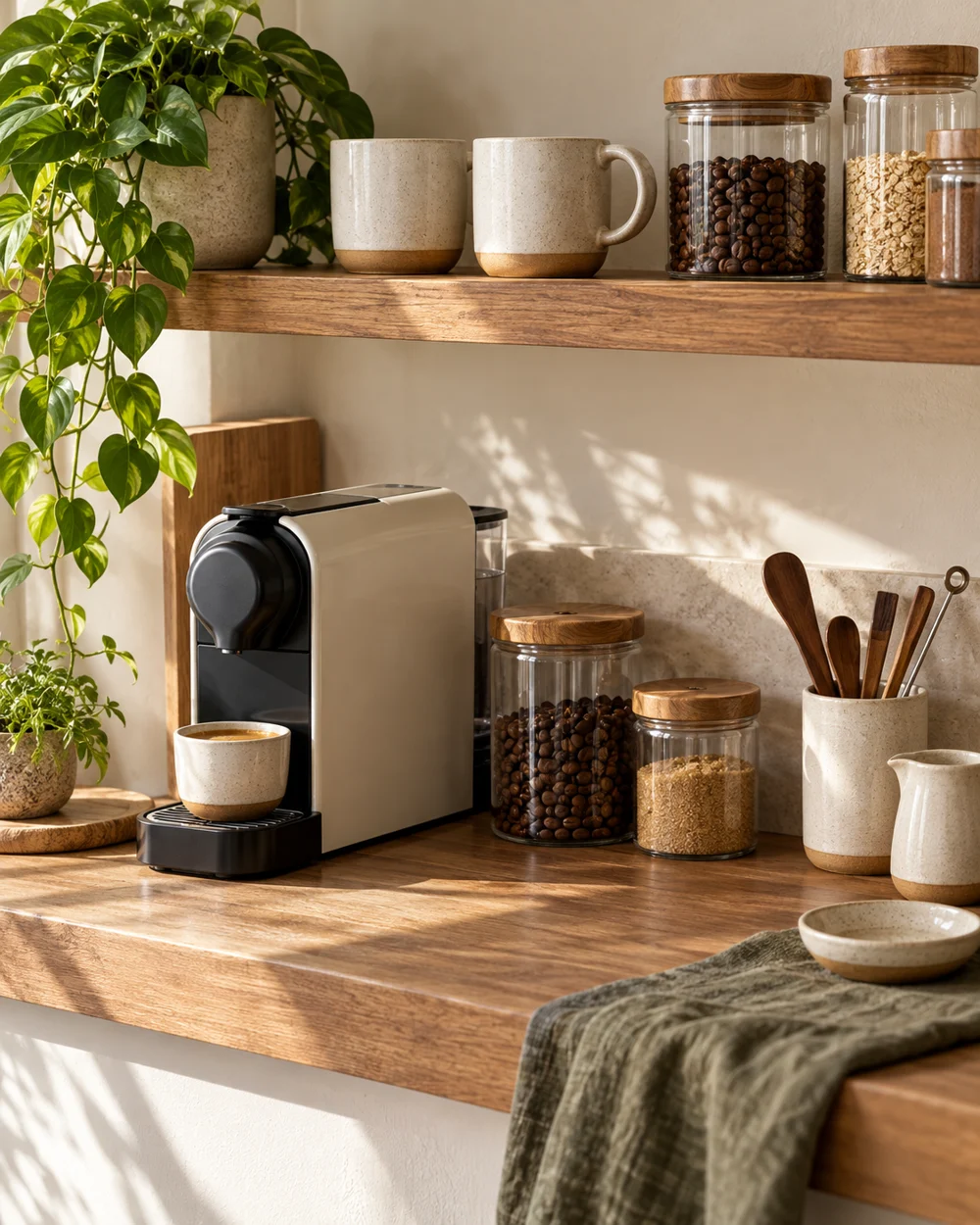
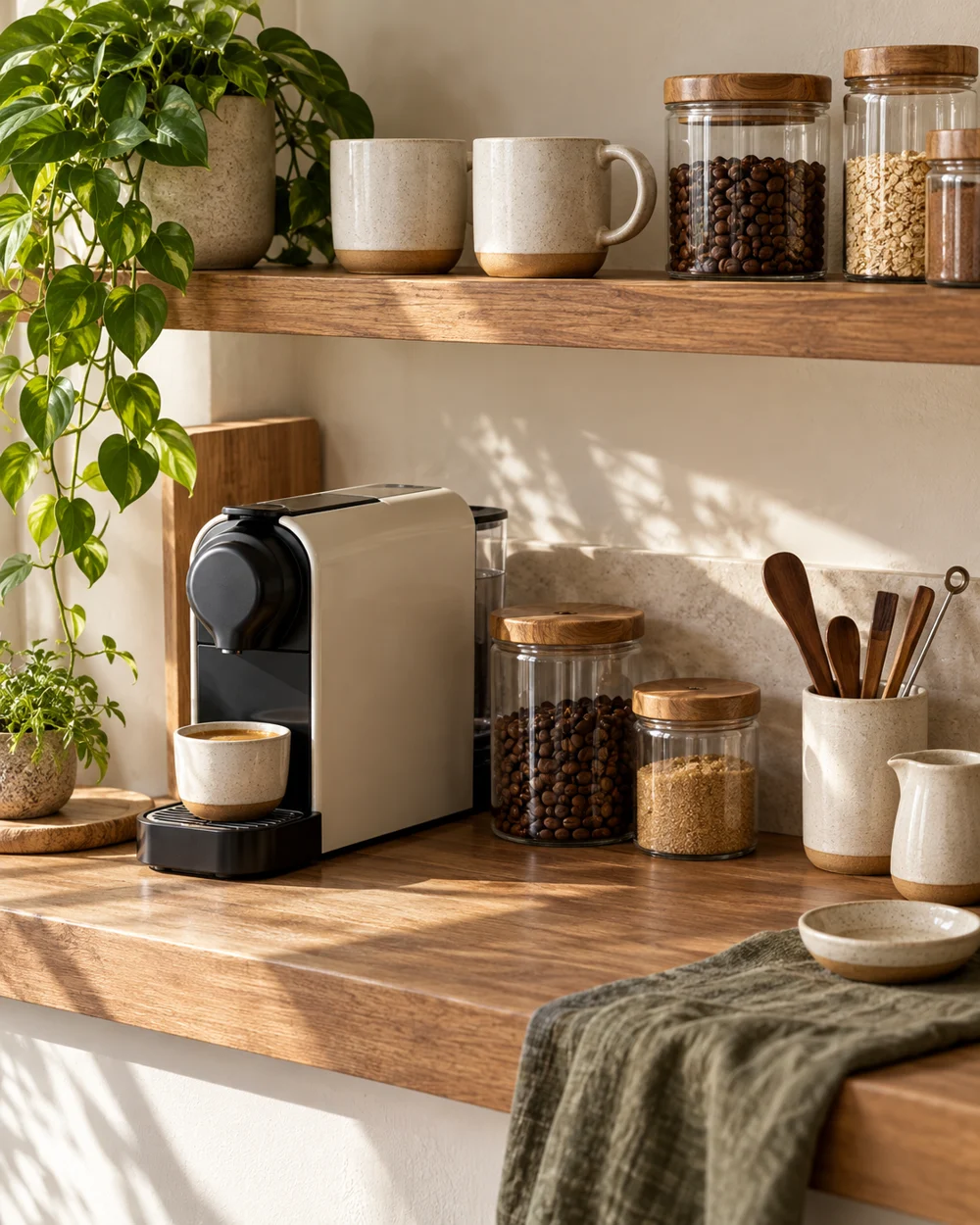
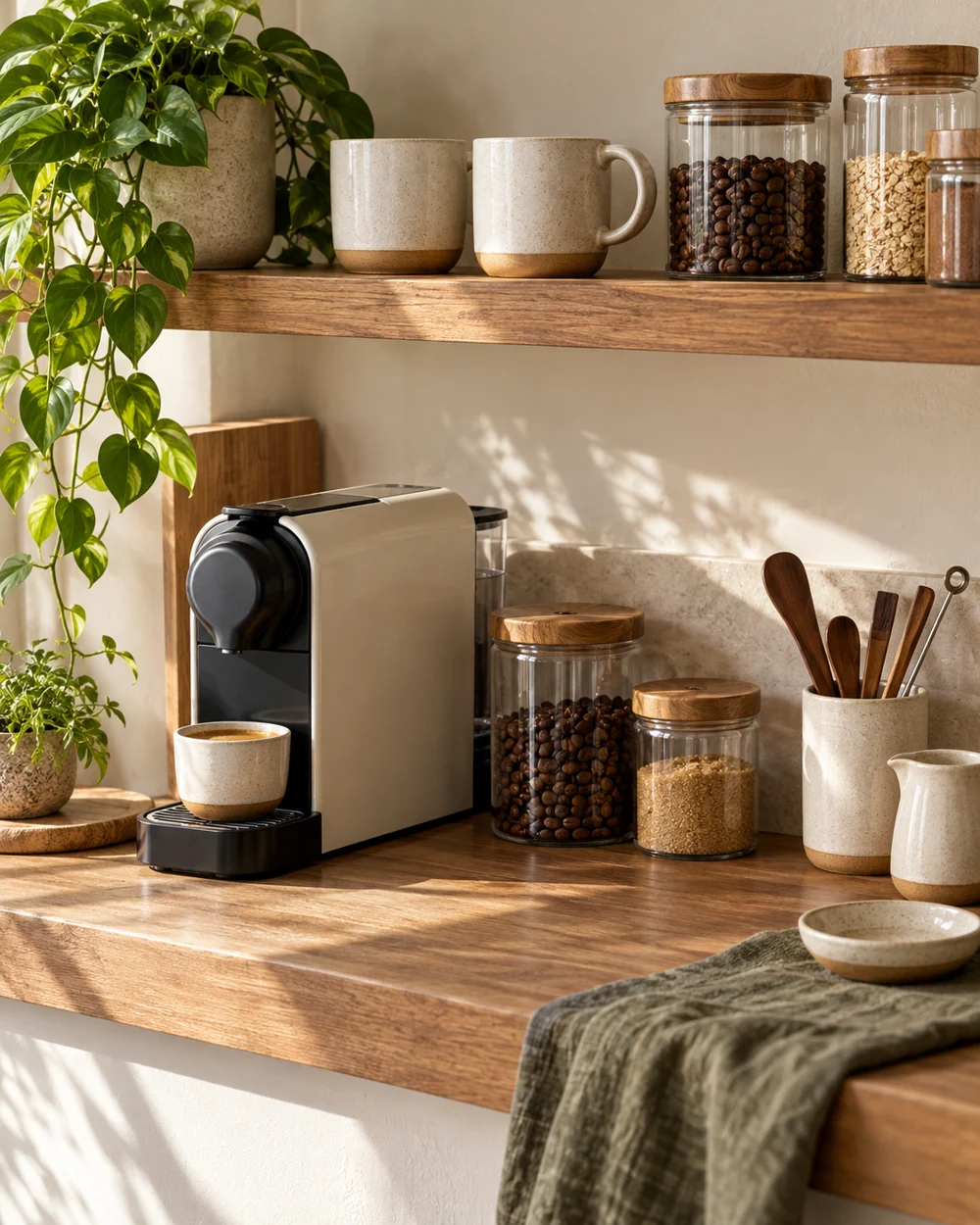
Representative category illustration reused from our editorial library; it does not depict this specific project or a tested result.
Establishing Linear Left-to-Right Station Geometry
Organize the compact cart surface in a clear directional line based on the preparation sequence. Position dry inputs, grinders, and whole beans on the far left. The espresso machine or primary brewing brewer sits in the center zone, leaving the far right for liquid assembly, stirring, and final serving. This linear progression prevents dirty shot glasses from crossing paths with clean cups. Even on a narrow 60-centimeter cart shelf, strict directional flow keeps clean zones separate from moist extraction areas.
Selecting and Anchoring Modular Drip Trays
Standard commercial rails are often too bulky for residential carts, so shallow stainless steel drip trays provide a compact alternative. Measure an illustrative 30-centimeter by 12-centimeter drip tray along the front edge of the assembly station. Fit silicone non-slip bumpers to the tray base so it remains firm during rapid pick-and-place movements. The slotted grate catches stray syrup drips and coffee droplets, isolating sticky residues from the primary cart surface and reducing frequent wipe-downs during peak morning use.
Arranging Squeeze Bottles by Viscosity and Frequency
Group squeeze bottles within the speed well based on daily usage rates and liquid viscosity. Place high-use items, such as simple syrup or vanilla base, directly in front for seamless reach without stretching. Thicker preparations, like chocolate sauces, belong adjacent to them in wide-nozzle squeeze dispensers. Wipe dispenser tips after each use with a dedicated clean, damp cloth to prevent syrup crusting, and check that bottles remain upright in their assigned tray slots to avoid unexpected tipping.
Sanitary Tool Staging for Spoons and Shot Glasses
Stirring spoons and measurement shot glasses should not rest directly on bare counter spaces or moist service towels. Place a divided stainless container or small perforated insert within the secondary tray zone to hold spoon handles upright. Inverted shot glasses rest securely on an elevated wire rack insert to air-dry between rinses. This orientation prevents lingering rinse water from collecting inside the glassware and stops residual coffee oils from contaminating neighboring prep surfaces.
Perishable Ingredient Hygiene and Cart Reset
Syrups containing dairy, fruit purees, or egg-free cream bases must not sit at ambient room temperature indefinitely. Return opened perishable squeeze bottles to refrigeration at 4 degrees Celsius or below within two hours of preparation, or within one hour if room temperature exceeds 32 degrees Celsius. At the end of service, lift drip trays, discard collected liquid waste into the sink, and wash trays with warm soapy water to prevent sticky residue buildup.
A little more
to know.
How often should utensil drip wells be emptied on a home cart?
Empty and rinse the utensil drip tray after every beverage assembly session. Standing liquid quickly breeds odors and compromises hygiene, particularly when sweet syrup remnants mix with warm rinse water in a confined room-temperature space.
Can squeeze bottles remain on the cart between morning and evening sessions?
Only shelf-stable commercial syrups with approved preservatives may remain at room temperature. Any homemade bases, real fruit reductions, or milk-adulterated sauces must return to prompt refrigeration at 4 degrees Celsius or lower between each usage window.
Original editorial guidance and recipe formulations, not independently kitchen-tested. Times are estimates and depend on equipment and product directions. Cooked bases need additional cooling and refrigeration before cold serving. Images are AI-generated illustrations; appearance and yield may vary. Check actual ingredient labels, allergens, and any certification you require. We do not certify products. Read our approach.
Save to Pinterest ↗ANOTHER IDEA FOR THE COUNTER