Organize a Small Baking Mise en Place Before Making Café Cookies
Measuring every ingredient before you begin mixing is the single habit that separates a smooth baking session from a rushed one. When butter, sugar and flour sit in their own small bowls ahead of time, you can confirm quantities at a glance, catch a shortfall before the oven is hot and move through each mixing step without pausing to weigh or search. This guide covers how to set up that station efficiently for a standard home cookie batch.
Read the note ↓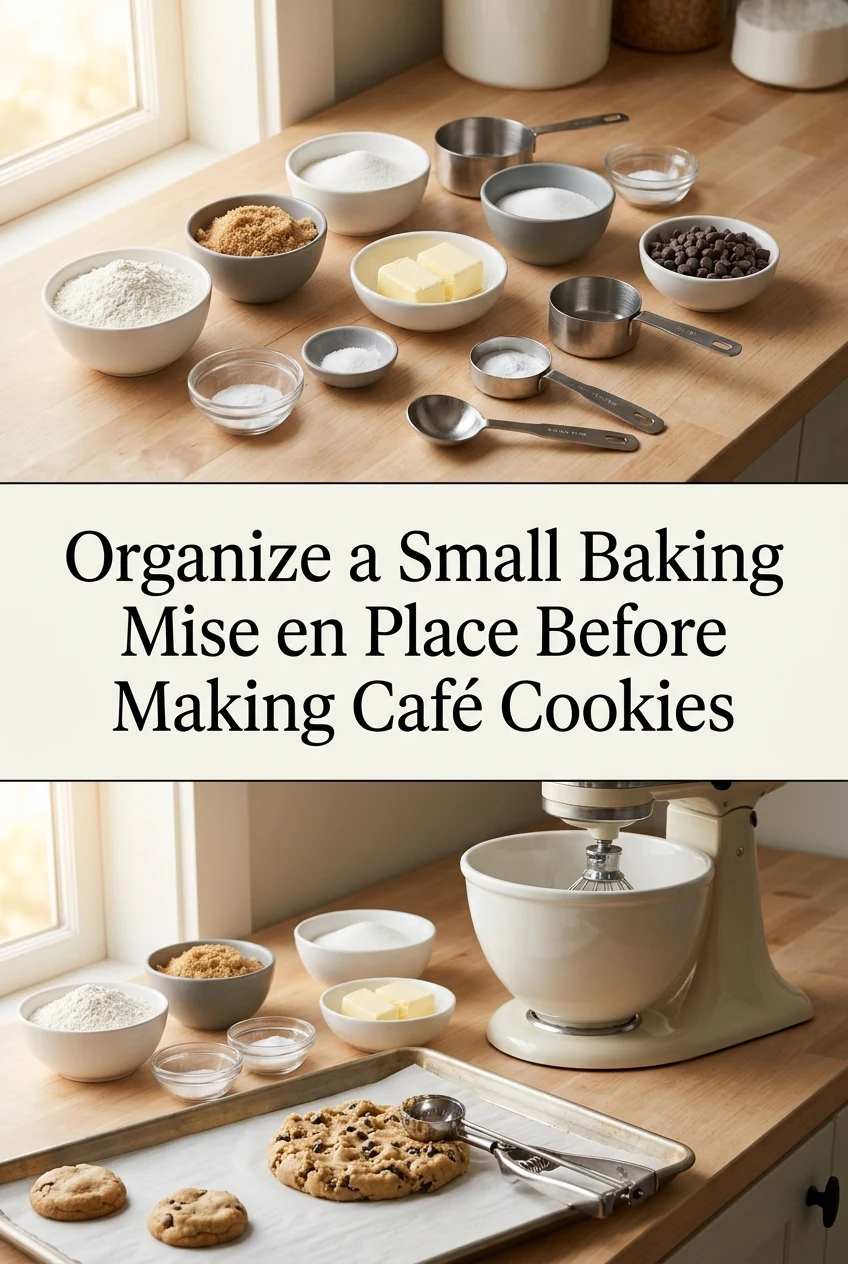
AI-generated editorial concept created for this article. The image is not a technical diagram or a tested result.
Choose the Right Containers for Each Ingredient
Use small ceramic or glass ramekins for dry ingredients and a medium bowl for butter so nothing tips during measuring. A 60 ml ramekin suits a single spice or leavening portion; a 250 ml bowl works for granulated sugar. Label each container with a small piece of tape if you are preparing multiple recipes at once. Avoid stacking filled ramekins because a knock mid-session can combine ingredients you have not yet checked.
Measure Butter at the Right Temperature
Most drop-cookie recipes call for room-temperature butter, which means it should yield slightly when pressed but hold its shape. Cut the block into tablespoon-sized pieces and place them in their bowl about 20 to 30 minutes before mixing begins. Measure by weight on a kitchen scale rather than by volume for accuracy. For a small batch using 115 g of butter, pre-portioning onto the scale and transferring directly to the bowl removes one variable entirely.
Sift Flour and Leavening Together Before the Bowl
Sifting flour and baking powder or baking soda together into a single bowl before mixing ensures even distribution of leavening and removes any lumps that would otherwise streak through the dough. For a batch requiring 190 g of all-purpose flour and 4 g of baking powder, sift both into one medium bowl and set it aside. This combined bowl then becomes a single addition step, which keeps the mixing sequence clean and reduces the chance of forgetting the leavening.
Arrange the Station in Mixing Order
Place your prepared bowls left to right or front to back in the order they enter the recipe. Butter and sugar go first because they are creamed together; eggs or liquid come next; the flour bowl sits at the far end. This physical sequence acts as a visual checklist. As you add each ingredient, move its empty container to a separate cleared area so you can see at a glance what remains and confirm nothing was skipped.
Check the Station Once Before You Start the Mixer
Before switching on the mixer or beginning to cream by hand, do one deliberate pass along the station. Confirm each bowl is present, that measured quantities look consistent with your recipe card and that the oven is set to the correct temperature. This 30-second check is the moment mise en place pays off. Discovering a missing ingredient now costs nothing; discovering it after creaming butter and sugar means stopping at the worst possible point in the process.
A little more
to know.
Can I measure ingredients the night before and refrigerate them?
Dry ingredients in covered ramekins keep well overnight at room temperature. Measured butter should be refrigerated and then allowed to return to room temperature for 20 to 30 minutes before mixing. Do not pre-measure eggs into a bowl and refrigerate them uncovered.
What if I only have one small bowl available?
Use small cups, mugs or a muffin tin as substitute containers. Each cavity of a standard muffin tin holds roughly 80 ml, which is adequate for most individual dry ingredient portions in a home cookie recipe.
Original editorial guidance and recipe formulations, not independently kitchen-tested. Times are estimates and depend on equipment and product directions. Cooked bases need additional cooling and refrigeration before cold serving. Images are AI-generated illustrations; appearance and yield may vary. Check actual ingredient labels, allergens, and any certification you require. We do not certify products. Read our approach.
Save to Pinterest ↗ANOTHER IDEA FOR THE COUNTER