Natural or Dutch-Process Cocoa: Reading the Label for Drinks and Baking
A tin of cocoa powder sitting in the cupboard might be natural cocoa or Dutch-process cocoa, and the label tells you which. The difference affects how a hot drink tastes and, in baking, whether the leavening in a recipe will work as written. Many cooks use whichever tin is on hand without checking, then wonder why a bake rose unevenly or why one cup of cocoa tasted sharper than expected. Reading the ingredient panel takes ten seconds and removes the guesswork from both the mug and the mixing bowl.
Read the note ↓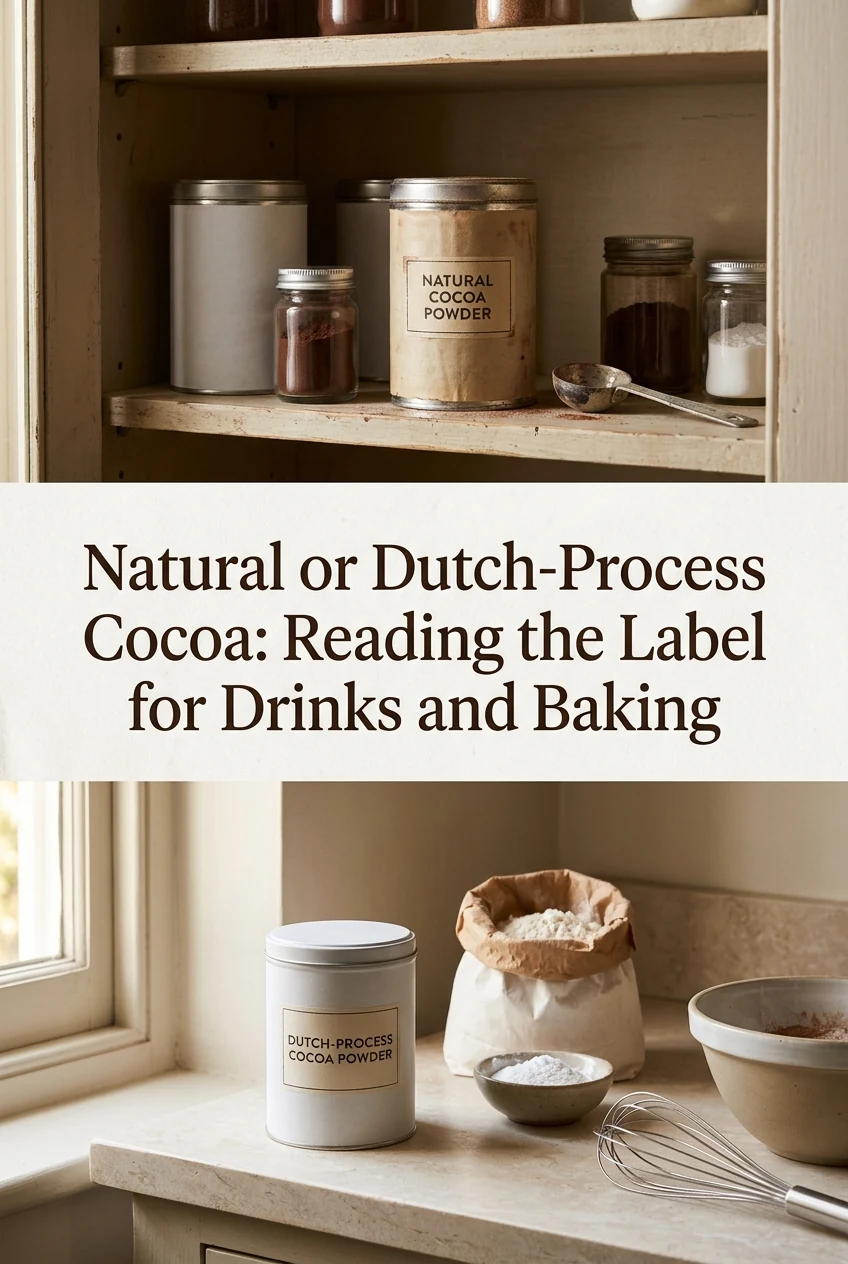
AI-generated editorial concept created for this article. The image is not a technical diagram or a tested result.
Find the Type on the Ingredient Panel
Natural cocoa powder lists cocoa as the only ingredient. Dutch-process cocoa, also called alkalized cocoa, lists cocoa processed with alkali or cocoa and an alkali such as potassium carbonate. Some tins print the type prominently on the front label; others only note it in the ingredient list. If the label says nothing about alkalization and lists only cocoa, assume it is natural. If you cannot find the information on the packaging, the manufacturer's website often clarifies. Do not assume based on color alone, as color varies by brand.
Compare the Two Types in Plain Warm Milk
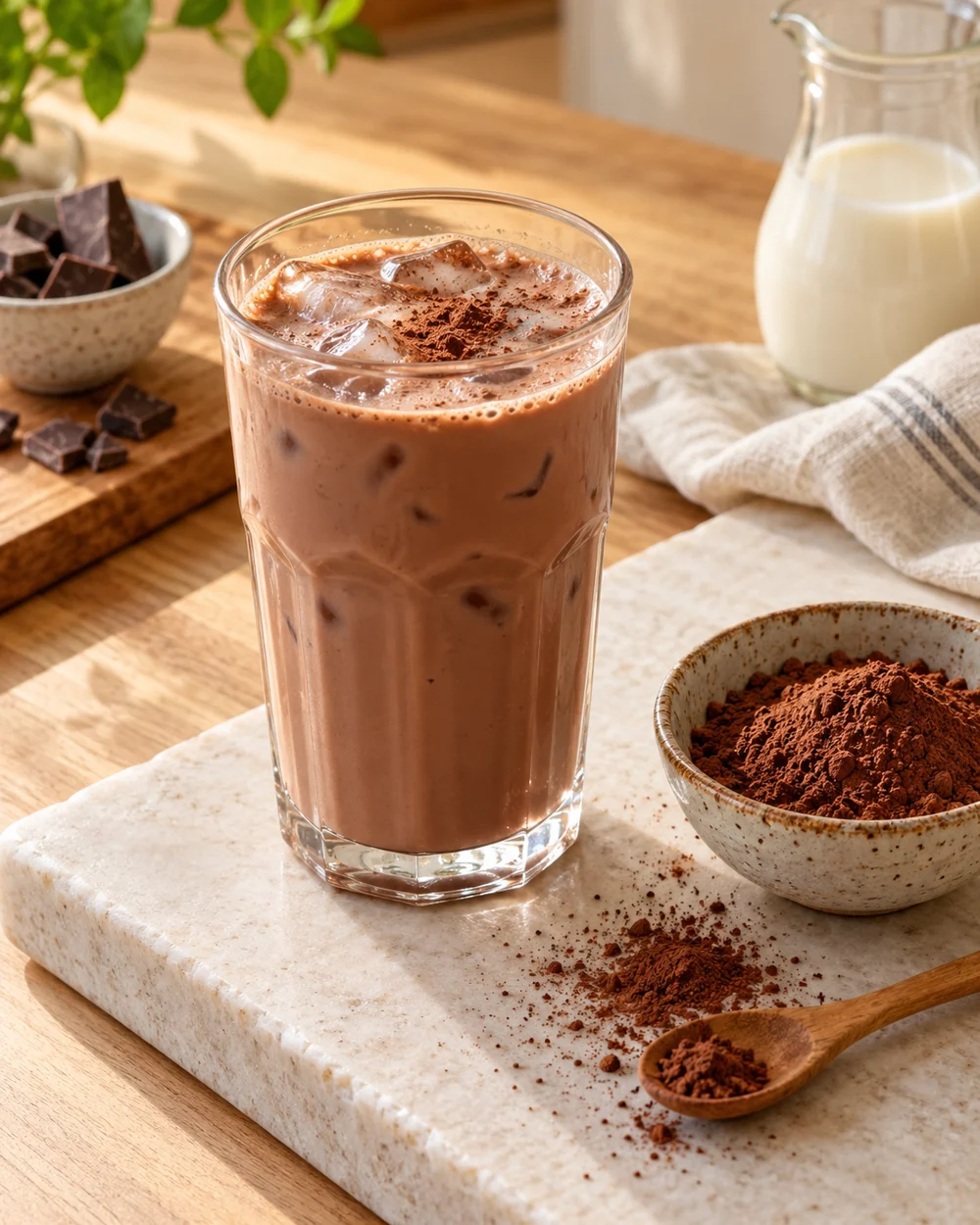
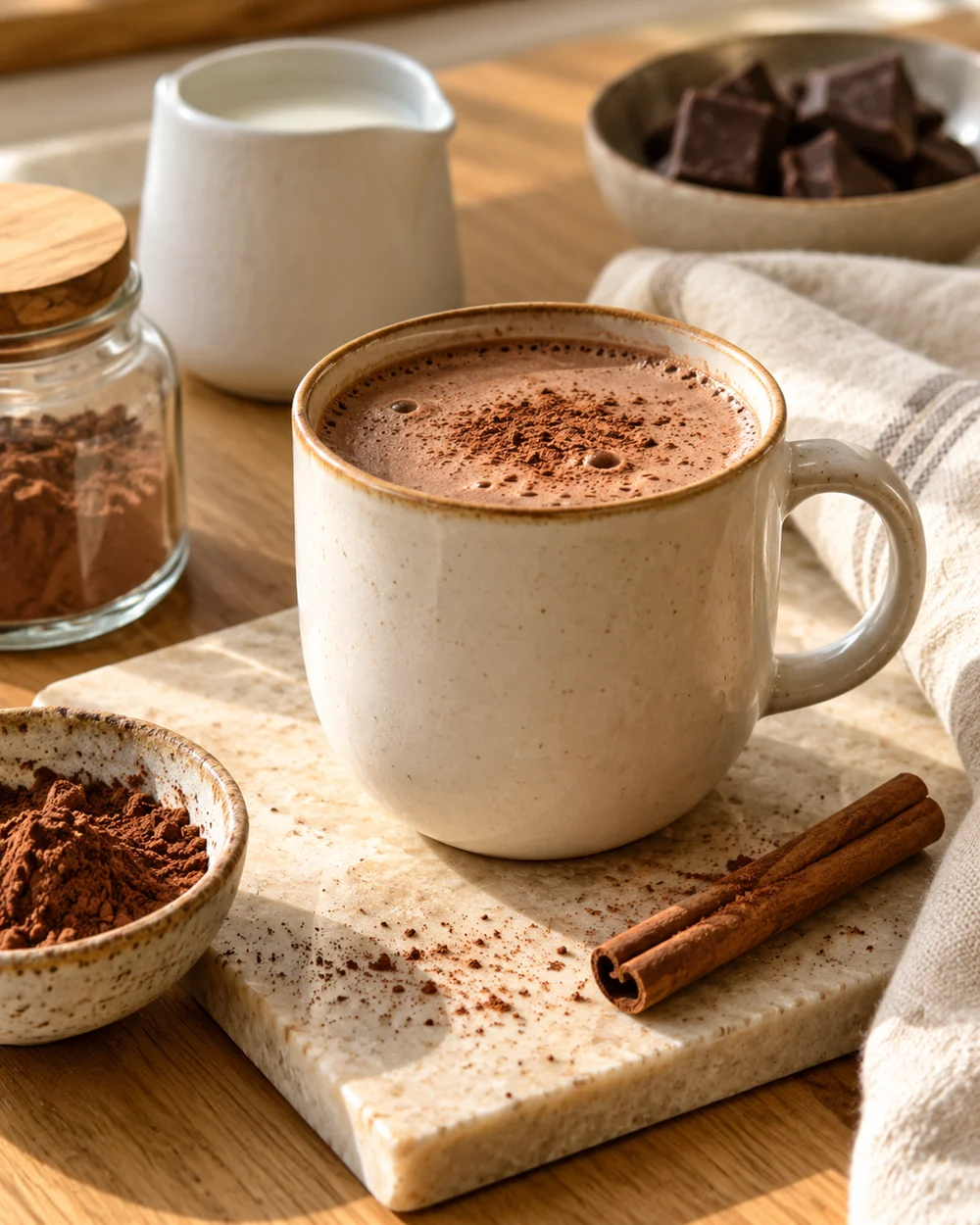
As an illustrative exercise, measure one level teaspoon of each cocoa type into two separate mugs. Add the same amount of warm pasteurized milk, roughly 180 milliliters each, and stir for the same duration. Natural cocoa typically produces a lighter brown color and a sharper, more acidic flavor. Dutch-process cocoa tends to produce a darker color and a milder, less sharp taste. Neither is better; they are different. Noting which you prefer for drinking helps you buy the right tin next time.
Why Leavening Makes the Type Matter in Baking
In baking, natural cocoa is acidic and reacts with baking soda to produce lift. Dutch-process cocoa has been neutralized and does not trigger the same reaction with baking soda. A recipe written for natural cocoa that calls for baking soda relies on that acidity. Substituting Dutch-process cocoa in that recipe without adjusting the leavening can result in less rise. Recipes written for Dutch-process cocoa often use baking powder instead, which contains its own acid. When a recipe specifies the type, follow it exactly for small bakes where the difference is visible.
When the Type Is Less Critical
For a simple hot cocoa drink where you are adding your own sweetener and adjusting to taste, the leavening issue does not apply. The main difference you will notice is flavor and color. If a recipe says cocoa powder without specifying a type, and the recipe uses baking powder rather than baking soda as its only leavening, either cocoa type is generally workable. If the recipe uses baking soda, the type matters more. Reading the leavening line of a recipe is a quick way to assess how strictly the cocoa type needs to be followed.
Keep Notes for Your Own Tins and Recipes
Because brands vary in flavor intensity and color even within the same type, keeping a brief note about which brand you used and what result you got is more useful than relying on general descriptions. Write the brand name, whether it is natural or Dutch-process, and one or two observations from your side-by-side mug test. When you repeat a bake that worked well, you can buy the same tin with confidence. If a bake did not rise as expected, your notes help you identify whether the cocoa type was a likely factor.
A little more
to know.
Can I use Dutch-process cocoa in a recipe that calls for natural cocoa if I adjust the leavening?
Leavening adjustments for cocoa substitutions are recipe-specific and depend on other acidic or alkaline ingredients present. Without testing your specific recipe, a substitution carries risk. Following the recipe as written is the more reliable approach for small bakes.
Does Dutch-process cocoa dissolve more easily in cold milk than natural cocoa?
Dutch-process cocoa is often described as dissolving slightly more smoothly due to its lower acidity, but both types dissolve more easily in warm liquid than cold. For cold drinks, mixing either type into a small amount of warm liquid first before adding cold milk reduces clumping.
Original editorial guidance and recipe formulations, not independently kitchen-tested. Times are estimates and depend on equipment and product directions. Cooked bases need additional cooling and refrigeration before cold serving. Images are AI-generated illustrations; appearance and yield may vary. Check actual ingredient labels, allergens, and any certification you require. We do not certify products. Read our approach.
Save to Pinterest ↗ANOTHER IDEA FOR THE COUNTER