Measure Matcha into a Small Prep Bowl Before Whisking
A small prep bowl sitting beside your scale is one of the quieter habits that makes a matcha session feel deliberate rather than rushed. Before any whisking begins, the powder needs to be measured and, in most cases, sifted into a vessel where it can wait without spilling or clumping further. That intermediate step — from package to prep bowl — is easy to skip, but skipping it tends to create small problems that compound before the drink is finished. This article walks through why the prep bowl earns its place on the counter and how to use it well.
Read the note ↓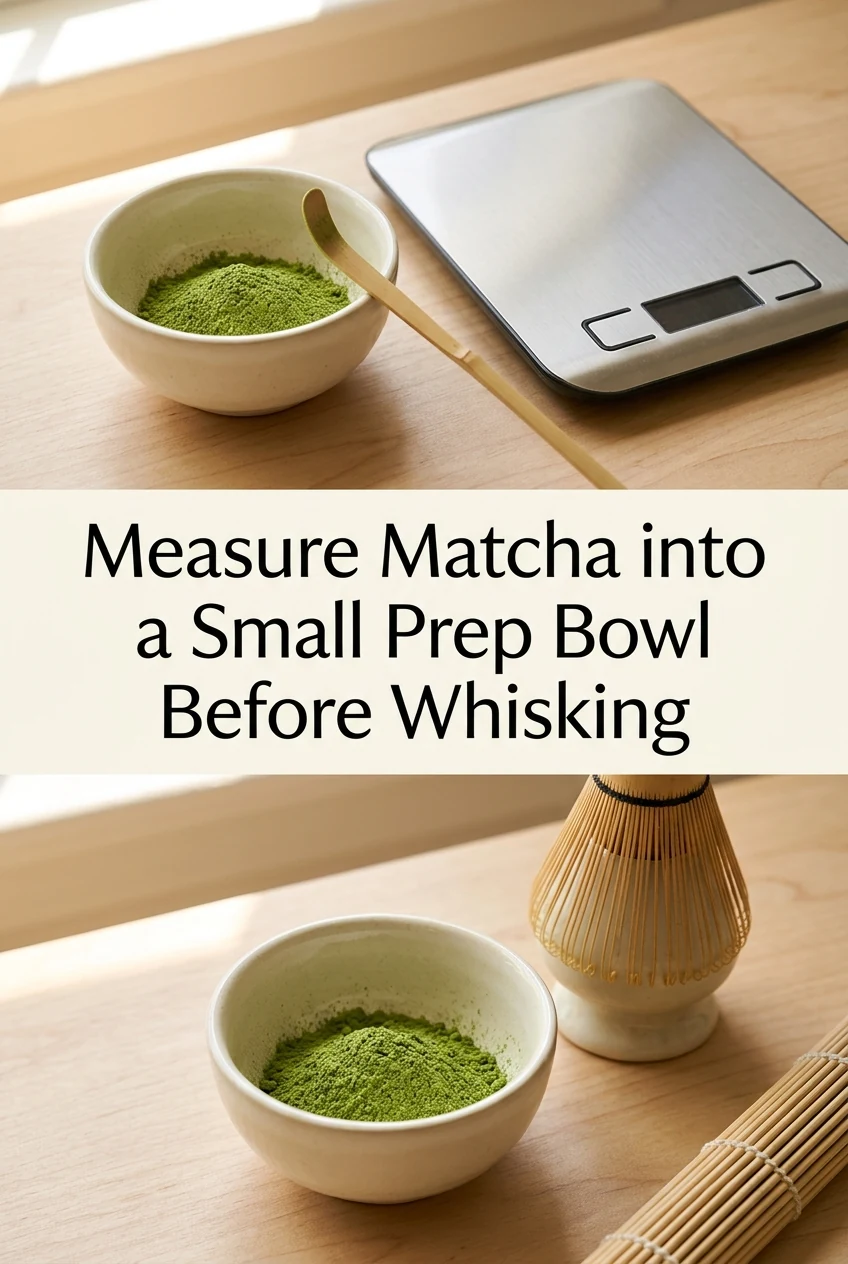
AI-generated editorial concept created for this article. The image is not a technical diagram or a tested result.
Why a Separate Vessel Before the Whisk Bowl
Many people measure matcha directly into the bowl they plan to whisk in, which works sometimes but introduces practical difficulties: large whisk bowls can obscure small scale displays or exceed the weight limits of compact precision scales, and removing excess powder if you scoop too much is awkward. A small prep bowl — something with a diameter of roughly eight to ten centimetres and a depth that keeps the powder contained — sits neatly on compact scale platforms and keeps the measured dose in one manageable spot. That dose is then easy to inspect, sift if needed, and transfer cleanly. The whisk bowl also stays dry until you are ready to add water, which is the moment you actually want it involved.
Choosing the Right Prep Bowl
Ordinary kitchen prep bowls made from ceramic, glass, or stainless steel all work. The choice is mostly about what you already own and what sits steadily on your scale platform. A bowl that rocks or has a wide uneven base can shift the tare reading slightly each time you set it down, so a flat-bottomed bowl is preferable. Size matters in a practical sense: too large and the powder spreads thin, making it harder to pour neatly; too small and the bowl may overflow when you add a standard dose. A bowl that holds roughly 60 to 80 millilitres of volume is typically sufficient for a single serving of matcha powder, which most tea products specify as somewhere between one and two grams depending on the style of preparation described on the package.
Using a Scale with the Prep Bowl
Place the empty prep bowl on the scale and tare it to zero. Then spoon or scoop matcha into the bowl slowly, watching the display. Stop when you reach the dose stated by your specific tea product. Do not estimate by eye or by the height of the powder in the bowl, because matcha density varies between products and between batches. A scale reading is the only reliable way to hit the dose your tea maker describes. Once the correct weight is confirmed, the bowl can be set aside briefly while you prepare your whisk bowl and measure your water. This short pause does not meaningfully affect the powder.
A Practical Example of the Sequence
Here is how this looks in practice for a single serving. The tea product label says to use 1.5 grams of matcha for 70 millilitres of water at the temperature the maker specifies. You place a small ceramic prep bowl on the scale, tare it, and spoon matcha in until the display reads 1.5 grams. You set that bowl to the left of your work area. You then place your whisk bowl on the counter, measure the correct amount of water into a separate pouring vessel, and check the temperature. When everything is ready, you transfer the matcha from the prep bowl into the whisk bowl, add a small amount of water first to form a paste as the maker instructs, then add the remaining water and whisk. The prep bowl is rinsed immediately after transfer so residue does not dry and stick.
Keeping the Prep Bowl Clean Between Sessions
Matcha powder can leave a faint green residue if it dries inside a bowl. Rinsing the prep bowl with cool or warm water immediately after each use removes most of this before it has a chance to set. Avoid leaving measured but unused powder sitting in the bowl for extended periods, as the powder can absorb moisture from the air and begin to clump against the bowl surface. If you are preparing multiple servings in sequence, measure each dose individually rather than measuring a combined amount and dividing by eye later. Each measured dose in its own tared bowl keeps the process accurate and the cleanup straightforward.
A little more
to know.
Can I use a measuring spoon instead of a scale with the prep bowl?
You can use a measuring spoon if your tea product provides a spoon-based dose instruction rather than a gram weight. In that case the prep bowl still serves its purpose as a clean, contained landing spot for the measured powder before transfer to the whisk bowl. However, if the product specifies a gram weight, a scale is the appropriate tool for that instruction, and a spoon alone will not reliably match it.
Does the material of the prep bowl affect the matcha powder?
For the brief time the powder sits in the prep bowl before whisking, the material does not meaningfully change the powder. Ceramic, glass, and stainless steel are all common choices. What matters more is that the bowl is completely dry before you add the powder, since any moisture in the bowl will cause the matcha to clump against the surface and make a clean transfer more difficult.
Original editorial guidance and recipe formulations, not independently kitchen-tested. Times are estimates and depend on equipment and product directions. Cooked bases need additional cooling and refrigeration before cold serving. Images are AI-generated illustrations; appearance and yield may vary. Check actual ingredient labels, allergens, and any certification you require. We do not certify products. Read our approach.
Save to Pinterest ↗ANOTHER IDEA FOR THE COUNTER