Measure Fruit Juice and Milk Separately Before Combining in a Glass
Pouring fruit juice and milk directly into a glass without pre-measuring often produces a drink that is too tart, too dilute, or curdled before it reaches the customer. Measuring each component into its own small jug first gives you a moment to confirm proportions, make a quick adjustment, and control the order and speed of combining. This single habit improves consistency across multiple servings more than any other single step.
Read the note ↓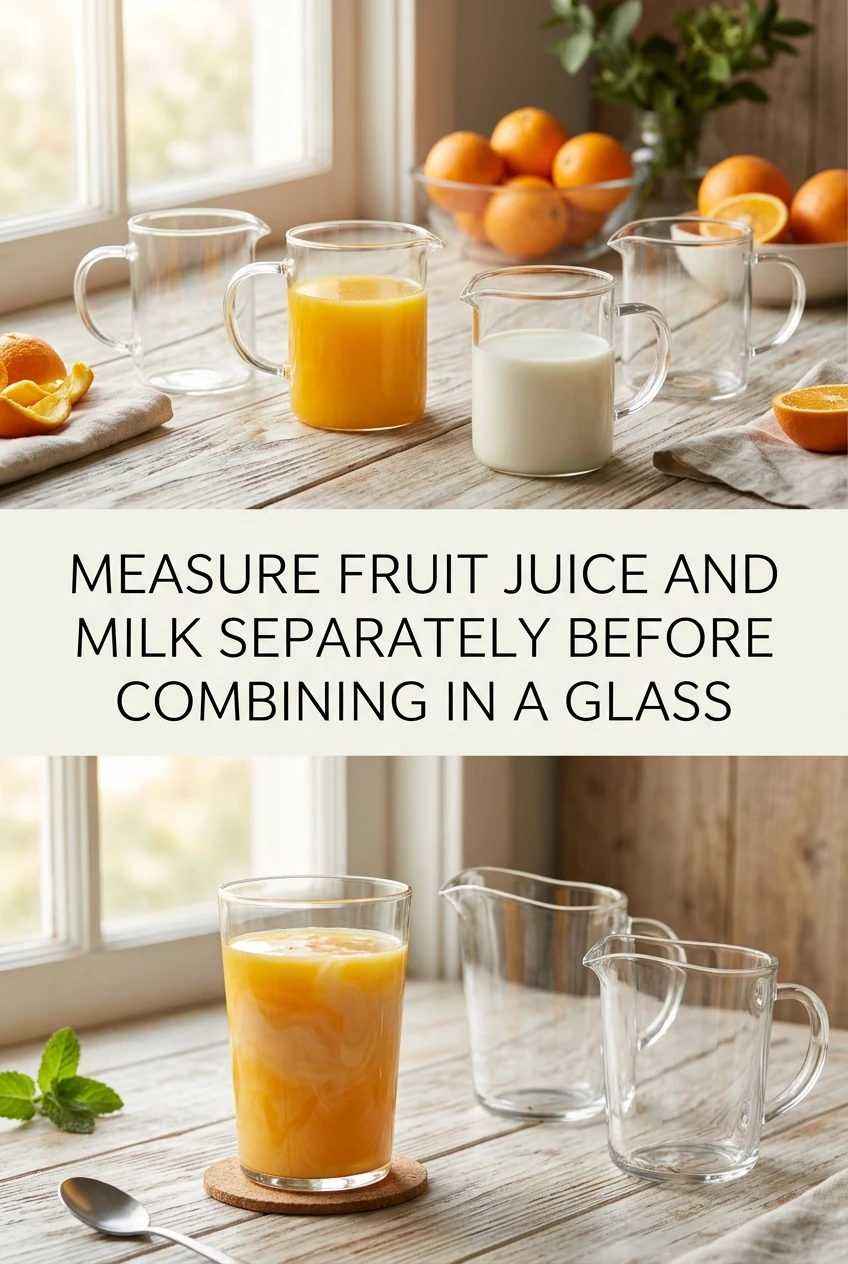
AI-generated editorial concept created for this article. The image is not a technical diagram or a tested result.
Why Separate Measurement Matters for Curdling
Acidic juices, particularly citrus and pineapple, can cause milk proteins to clump visibly when the two liquids meet abruptly in high concentration. Measuring separately allows you to pour the milk into the glass first over ice, then add the juice slowly down the inside wall of the glass. This gentler introduction reduces the speed of the pH change at the contact point and keeps the drink visually smooth for longer after serving.
Choosing the Right Small Jugs
Use two small pouring jugs with clear volume markings, one sized for juice and a slightly larger one for milk. A 100 ml or 150 ml jug for juice and a 200 ml or 250 ml jug for milk, each marked at 10 ml intervals, provide the capacity and precision needed for single-serve drinks. Transparent glass or clear plastic lets you read the level accurately without lifting the jug. Avoid jugs with wide spouts for juice, as they make slow controlled pouring difficult. Rinse both jugs between each drink to prevent flavor carryover.
A Worked Example of Proportions
For an illustrative single-serve drink in a 350 ml glass with 80 g of ice, measure 90 ml of fresh orange juice into one jug and 160 ml of cold pasteurized whole milk into the other. This leaves roughly 20 ml of headspace in the glass. Pour the milk over the ice first, then add the orange juice slowly. These quantities are a starting point; adjust based on your actual glass volume and taste preference.
Adjusting Before You Combine
Once both jugs are filled, hold them side by side and look at the ratio visually. If the juice volume looks disproportionately large relative to the milk, pour a small amount back into the juice container before proceeding. This visual check takes five seconds and prevents a batch that is too acidic to serve. It is much easier to correct the ratio in separate jugs than to fix it after the two liquids have already met in the glass.
Recording What Worked
When a combination produces a drink with the right balance and appearance, write down the exact milliliter amounts for both components immediately. Note the juice variety, the milk type, and the glass size used. This record becomes your repeatable starting point. Without it, you will rely on memory across shifts and gradually drift from the version that worked. A small notebook kept near the prep station is sufficient for this purpose.
A little more
to know.
Does the temperature of the juice affect how quickly curdling happens?
Yes. Warm juice added to cold milk creates a faster and more visible reaction than two cold liquids meeting. Chill the juice to the same temperature as the milk before combining to slow the process and improve the drink's appearance.
Can I use the same jug for both juice and milk if I rinse it between pours?
A quick rinse between pours is not sufficient to remove acid residue that can affect the milk. Use two dedicated jugs or wash and dry thoroughly between uses to avoid flavor and chemical carryover affecting the next component.
Original editorial guidance and recipe formulations, not independently kitchen-tested. Times are estimates and depend on equipment and product directions. Cooked bases need additional cooling and refrigeration before cold serving. Images are AI-generated illustrations; appearance and yield may vary. Check actual ingredient labels, allergens, and any certification you require. We do not certify products. Read our approach.
Save to Pinterest ↗ANOTHER IDEA FOR THE COUNTER