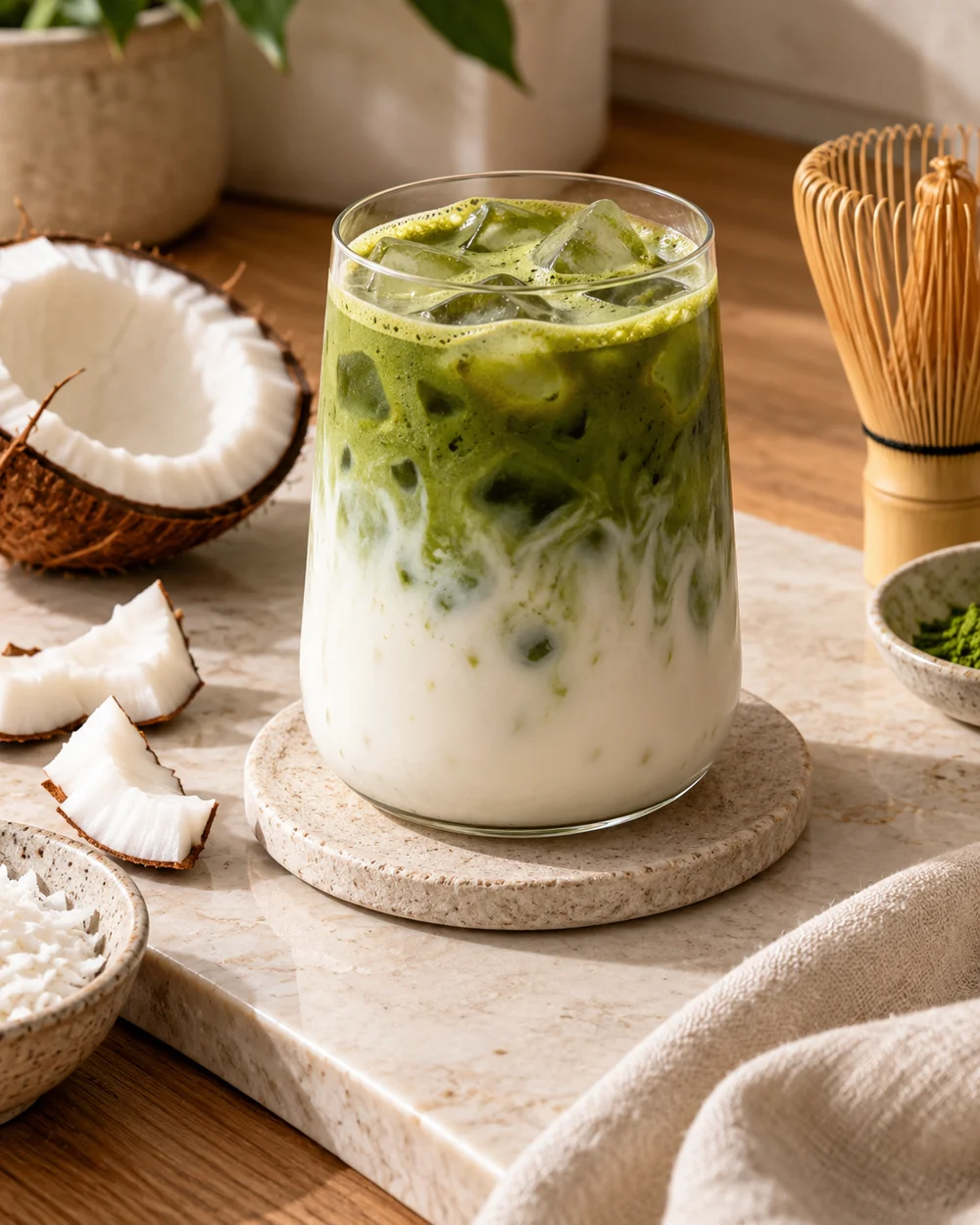
Matcha and Coconut Milk Warm Cup
Matcha and coconut milk make a naturally rich pairing, but anyone who has whisked matcha powder directly into coconut milk has likely ended up with stubborn green clumps floating on the surface. The fat content in coconut milk resists the powder before it can fully disperse. The solution is a two-stage approach: form a smooth matcha paste with warm water first, then stir in the warmed coconut milk. This article walks through that method as one illustrative plan, not a claim of tested or guaranteed results.
Read the note ↓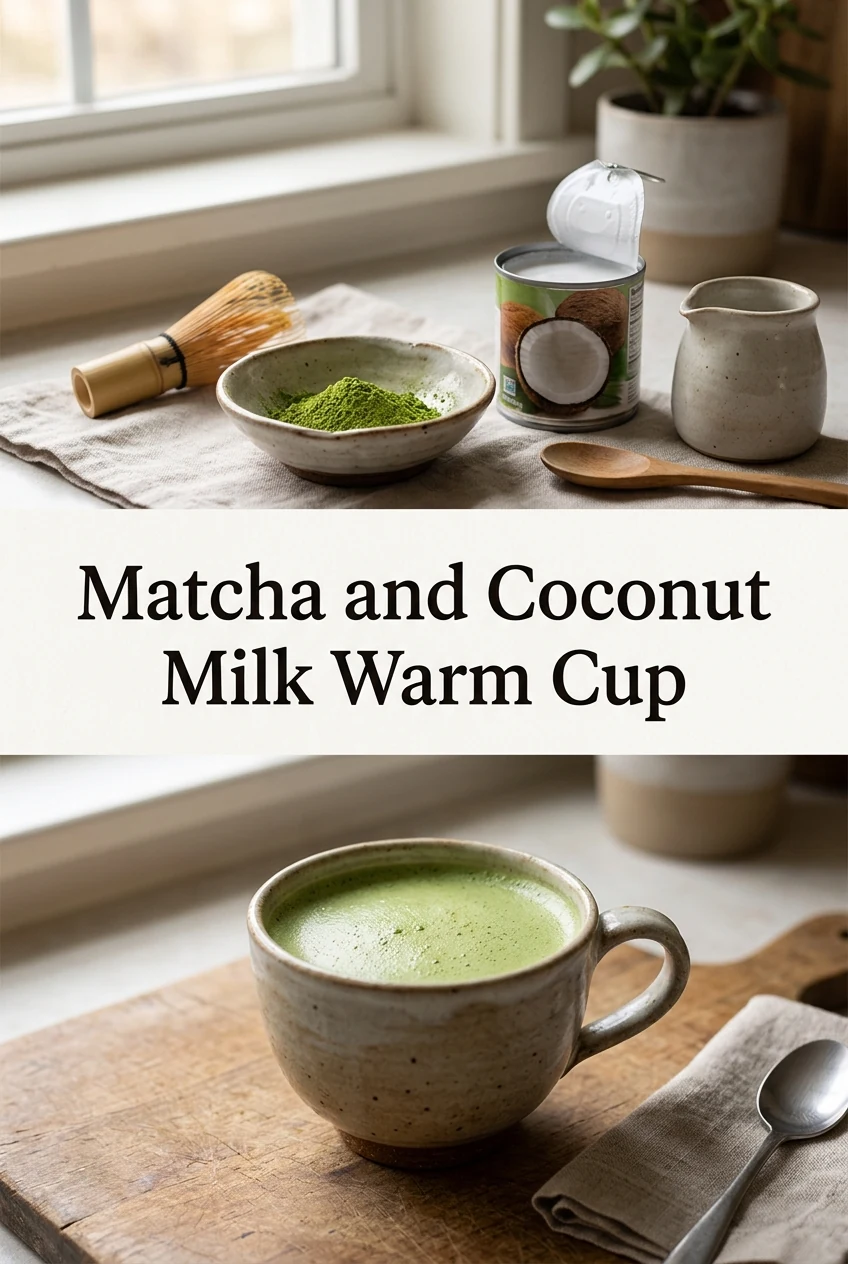
AI-generated editorial concept created for this article. The image is not a technical diagram or a tested result.
Why Coconut Milk and Matcha Clash at First Contact
Matcha is a finely milled powder, and like many fine powders it needs a water-based liquid to wet its particles before it can disperse evenly. Coconut milk, even the lighter varieties, carries enough fat to coat matcha particles before water can reach them, locking small clusters together into clumps. Whisking harder rarely solves this because the fat simply re-coats the particles as fast as the whisk breaks them apart. Introducing a small amount of plain warm water first gives the matcha particles a chance to hydrate and form a paste, after which the fat in the coconut milk no longer has the same locking effect.
What You Will Need
For one cup you will need: one teaspoon of culinary-grade or ceremonial-grade matcha powder, two tablespoons of warm water (not boiling, roughly 70 to 80 degrees Celsius is a commonly cited range for matcha preparation), and approximately 200 millilitres of coconut milk, either full-fat from a can or a carton variety. You will also need a fine-mesh sifter or small strainer, a small bowl or wide cup, a bamboo matcha whisk or a small regular whisk, a saucepan or small pot for warming the coconut milk, and a serving cup. An optional addition is a small amount of alcohol-free vanilla flavoring or a pinch of ground cardamom if you prefer a lightly spiced note.
Sifting and Forming the Paste
Place the fine-mesh sifter over your small bowl. Measure one teaspoon of matcha into the sifter and tap it gently so the powder falls through into the bowl. Sifting breaks apart any pre-existing clumps before you add any liquid, which makes the next step considerably easier. Add the two tablespoons of warm water directly onto the sifted matcha. Using a bamboo whisk, move it in a brisk W or M motion across the bottom of the bowl rather than stirring in circles. Continue for around 20 to 30 seconds until the mixture looks uniform and paste-like with no visible dry powder. The result should be a smooth, slightly thick green paste. This is your base.
Warming the Coconut Milk and Combining
Pour 200 millilitres of coconut milk into a small saucepan and place it over low to medium heat. Stir it occasionally and remove it from the heat before it reaches a full boil, aiming for a gentle warmth that is comfortable to hold a cup of. If you are using canned full-fat coconut milk, stir it well as you pour because the cream and liquid can separate in the can. Once the coconut milk is warmed, pour a small splash of it into the matcha paste and stir to loosen the paste first. Then pour in the remaining coconut milk steadily while stirring. This gradual addition helps the paste incorporate without seizing. Transfer to your serving cup. If using alcohol-free vanilla flavoring, stir in a small drop at this stage.
Adjusting the Cup to Your Preference
The illustrative plan above uses one teaspoon of matcha and 200 millilitres of coconut milk, which gives a moderately strong matcha flavor with a creamy body. If you prefer a lighter cup, reduce the matcha to half a teaspoon and keep the coconut milk volume the same. For a thinner texture, replace up to half the coconut milk with plain warm water before combining with the paste. Full-fat canned coconut milk will produce a noticeably richer, creamier result than a carton-style coconut milk drink, so the choice of product will affect the final texture. Taste after combining and adjust from there, keeping in mind that these are starting points rather than fixed formulas.
A little more
to know.
Can I use cold coconut milk instead of warmed?
You can stir the matcha paste into cold coconut milk, but the paste may not disperse as smoothly because cold fat tends to be more viscous. Warming the coconut milk first makes it more fluid and easier to combine with the paste. If you prefer a cold drink, one approach is to combine the paste with the warmed coconut milk first, then pour the mixture over ice once it has cooled slightly, rather than adding cold coconut milk directly to the paste.
Does the grade of matcha matter for this method?
Both culinary-grade and ceremonial-grade matcha work with this two-stage method. Ceremonial-grade matcha is generally finer and may dissolve into the paste a little more easily. Culinary-grade matcha is coarser and stronger in flavor, so sifting it carefully before whisking is especially worthwhile. Either grade benefits from the paste step when coconut milk is involved, since the clumping issue relates to the fat in the coconut milk rather than the matcha grade specifically.
Original editorial guidance and recipe formulations, not independently kitchen-tested. Times are estimates and depend on equipment and product directions. Cooked bases need additional cooling and refrigeration before cold serving. Images are AI-generated illustrations; appearance and yield may vary. Check actual ingredient labels, allergens, and any certification you require. We do not certify products. Read our approach.
Save to Pinterest ↗ANOTHER IDEA FOR THE COUNTER