Manage Dense Fruit Puree Ratios in Still Water Coolers
Balancing stone fruit purees in non-carbonated water coolers requires managing fruit thickness and pulp settling. Dense purees made from mango, peach, or apricot contain insoluble pulp that easily settles to the bottom or creates an overly heavy texture if under-diluted. Using an illustrative starting guideline of one part fruit puree to four parts chilled still water by weight offers a refreshing mouthfeel while keeping the fruit flavor noticeable and well distributed.
Read the note ↓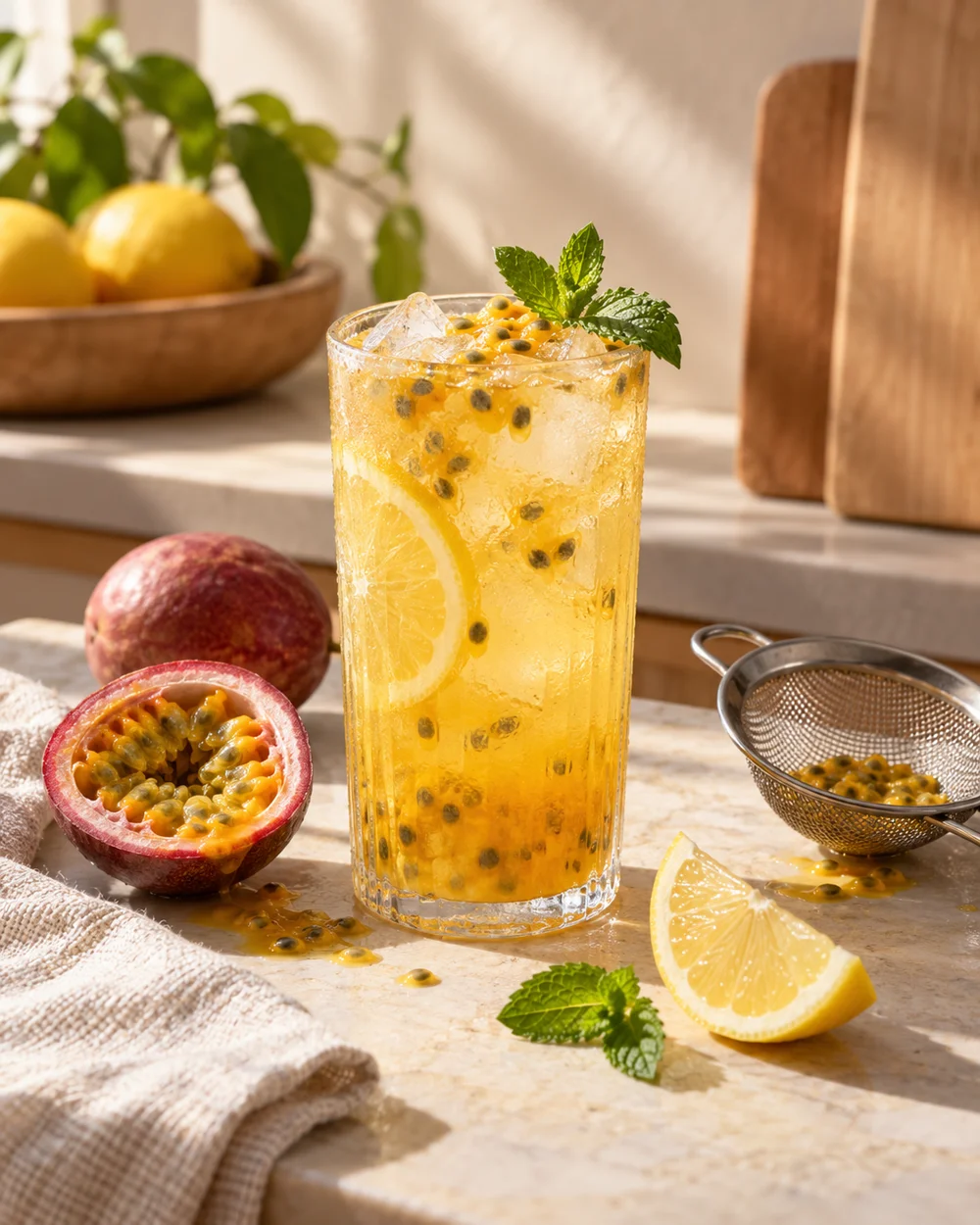
Representative category illustration reused from our editorial library; it does not depict this specific project or a tested result.
Viscosity Challenges in Stone Fruit Bases
Stone fruit purees contain natural fruit fibers and pectins that do not dissolve completely in water, remaining in suspension instead. If a cooler uses too much puree, the beverage feels heavy and dense to drink. If diluted excessively, the fruit flavor washes out, leaving a thin liquid with settled sediment at the bottom of the glass. Finding a practical dilution helps achieve a clean texture that remains easy to sip.
Using a 1:4 Ratio as an Illustrative Baseline
Working with a digital kitchen scale provides consistent results across different batches. As a helpful planning example, mixing 60 grams of smooth stone fruit puree with 240 grams of chilled still water provides a balanced 1:4 dilution baseline. This proportion thins dense fruit pulp enough to produce an easy-drinking cooler while preserving the distinctive taste and bright color of the fruit.
Blending a Smooth Puree Slurry
Pouring all the water directly over thick puree in a glass often leaves clumps and uneven streaks. Instead, place the 60 grams of puree into a small pitcher with roughly 60 grams of water first. Whisk gently with a small balloon whisk until the mixture forms a smooth, even slurry. Once this initial base is well combined, stir in the remaining 180 grams of water until the drink is completely uniform.
Acid Balance and Sweetness Calibration
Diluting stone fruit puree fourfold inherently dampens perceived sweetness and natural brightness. To restore vibrancy without thickening the texture, add 5 milliliters of strained, pasteurized lemon juice and 10 milliliters of standard 1:1 simple syrup per 300-milliliter total drink batch. The citric acid highlights natural stone fruit aromas, cutting through remaining fiber viscosity, while the simple syrup ensures the flavor profile does not read as flat or washed out against the cold ice.
Ice Dynamics and Settling Management
Add solid ice cubes only after the water and puree are thoroughly blended. Fast-melting crushed ice dilutes the drink quickly and separates the fruit solids faster. Because uncarbonated fruit pulp naturally settles over time, serve the beverage with a reusable glass or metal drinking straw. An occasional gentle stir with the straw redistributes the fruit pulp easily as the drink is enjoyed.
A little more
to know.
Can I use this 1:4 ratio for berry purees as well?
Berry purees contain lower flesh density but significantly higher seed content. Pass the berry puree through a fine sieve to remove all seeds, then use a slightly lighter 1:5 ratio to balance high natural acidity.
How long will a diluted still fruit cooler stay suspended?
Without chemical stabilizers, natural separation typically begins within fifteen to twenty minutes of standing. Serving immediately over cold ice or providing a clean straw allows easy re-incorporation as the guest consumes the beverage.
Original editorial guidance and recipe formulations, not independently kitchen-tested. Times are estimates and depend on equipment and product directions. Cooked bases need additional cooling and refrigeration before cold serving. Images are AI-generated illustrations; appearance and yield may vary. Check actual ingredient labels, allergens, and any certification you require. We do not certify products. Read our approach.
Save to Pinterest ↗ANOTHER IDEA FOR THE COUNTER