Make a Small Dish of Baked Custard Using a Reliable Recipe
Baked custard is one of the quieter pleasures of a home cafe setup. It asks for very few ingredients, rewards careful attention, and produces a dish that feels considered rather than hurried. Before you begin, the most useful step is to locate a published recipe from a credible food authority or a well-regarded cookbook, because doneness cues, milk ratios, and oven guidance vary meaningfully between sources. The plan below is an illustrative working example, not a kitchen-tested result. Use it alongside authoritative guidance you have selected yourself, and treat your own oven, ramekins, and ingredient brands as the final reference.
Read the note ↓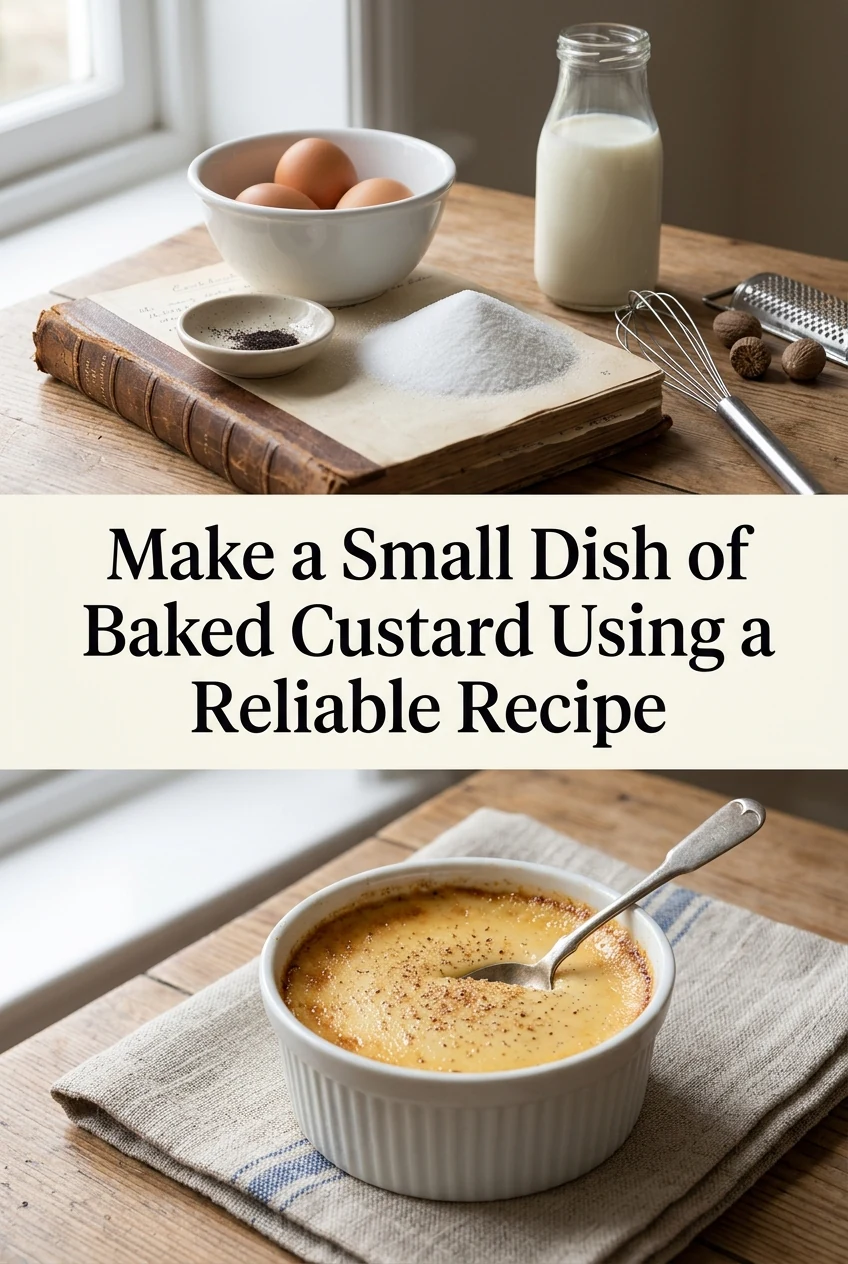
AI-generated editorial concept created for this article. The image is not a technical diagram or a tested result.
Choosing Your Source and Gathering Ingredients
Start by selecting one authoritative recipe from a source you trust, such as a national food agency publication, a culinary school resource, or a cookbook from a recognized food writer. Read it fully before shopping. For a small batch of two standard ramekins, a typical illustrative starting point is two large eggs, one cup of pasteurized whole milk, two tablespoons of white sugar, and a small amount of alcohol-free vanilla flavoring. Check the label of any vanilla product you buy to confirm it is explicitly alcohol-free, as formulations differ. Use pasteurized milk from a sealed, refrigerated container. Halal gelatin is not needed for a plain baked custard, but if your chosen recipe calls for any setting agent, select one clearly labeled halal. Keep all dairy and eggs refrigerated until the moment you need them.
Preparing the Ramekins and the Milk Mixture
Place two standard ceramic ramekins, each holding roughly six fluid ounces, into a deep baking dish that can later hold water around them. Lightly butter the inside of each ramekin using softened unsalted butter and a pastry brush, following the method described in your chosen recipe. In a small saucepan, warm the pasteurized milk over low heat until it is steaming but not boiling, then remove it from the heat. In a bowl, whisk the two eggs with the sugar until the mixture is smooth and the sugar has begun to dissolve. Pour the warm milk slowly into the egg mixture while whisking continuously, then add the alcohol-free vanilla flavoring in the quantity your source specifies. Strain the mixture through a fine mesh sieve into a pouring jug to catch any cooked egg threads.
Setting Up the Water Bath
A water bath, sometimes called a bain-marie, surrounds the ramekins with gentle, even heat and helps the custard set without cracking or curdling. Pour the strained custard mixture evenly between the two prepared ramekins. Place the baking dish holding the ramekins on the oven rack before adding water, so you avoid carrying a full dish of hot water across the kitchen. Pour hot tap water carefully into the baking dish until it reaches approximately halfway up the sides of the ramekins. The exact depth your chosen recipe recommends may differ slightly, so follow that guidance. Refer to your recipe for the oven temperature and approximate baking time, as these depend on your specific ramekin size and oven type.
Reading Doneness Without Guessing
Doneness in baked custard is typically described in reliable recipes as a gentle wobble in the center when the dish is nudged, with the edges appearing set. Some authoritative sources also describe an internal temperature range measured with a food thermometer. Follow whichever doneness indicator your chosen source provides rather than relying on a fixed time alone, because oven calibration and ramekin thickness both affect the outcome. When you judge the custard to be done, carefully lift the ramekins out of the water bath using tongs or a folded kitchen towel, and place them on a wire rack. Allow them to cool at room temperature only for the short period your recipe suggests before moving them.
Cooling and Refrigerating Promptly
Custard contains eggs and milk, both of which are perishable. Once the ramekins have cooled enough to handle safely, cover each one loosely with plastic wrap or a small plate and transfer them to the refrigerator without delay. Do not leave baked custard at room temperature for an extended period. For guidance on safe holding times, consult your national food safety authority rather than relying on an estimated figure, as recommendations are updated periodically and depend on storage conditions you control. Serve the custard chilled directly from the ramekin, or run a thin knife around the edge and invert it onto a small plate if your recipe confirms the custard is firm enough to unmold.
A little more
to know.
Can I use low-fat milk instead of whole milk in baked custard?
Some recipes are written specifically for whole milk and note that lower-fat versions may produce a slightly thinner or less rich result. Check whether your chosen authoritative recipe addresses this substitution directly, and follow its guidance rather than assuming the swap will work identically.
How do I know if my oven temperature is accurate enough for this recipe?
Domestic ovens can run hotter or cooler than their dial settings suggest. An inexpensive oven thermometer placed inside the oven gives you a more reliable reading than the dial alone. If your oven runs noticeably hot or cool, adjust the dial accordingly and monitor the custard using the doneness cues your chosen recipe describes.
Original editorial guidance and recipe formulations, not independently kitchen-tested. Times are estimates and depend on equipment and product directions. Cooked bases need additional cooling and refrigeration before cold serving. Images are AI-generated illustrations; appearance and yield may vary. Check actual ingredient labels, allergens, and any certification you require. We do not certify products. Read our approach.
Save to Pinterest ↗ANOTHER IDEA FOR THE COUNTER