Make a Simple Baked Fruit Compote for a Cafe Side Dish
A baked fruit compote is a spoonable, soft-textured accompaniment served alongside cafe dishes such as porridge, yoghurt, pancakes, or cheese plates. It is not a concentrated drink syrup. Where a syrup is reduced to a pourable liquid for stirring into beverages, a compote keeps its fruit pieces intact in a light, jammy juice. Baking the fruit in a covered dish rather than stirring it on a stovetop gives a gentler, more even heat and requires less attention. This article walks through one illustrative plan for a small-batch baked compote using stone fruit and spice. Treat it as a starting framework rather than a kitchen-tested recipe, and adjust quantities, timing, and oven temperature to suit your own oven and the ripeness of your fruit.
Read the note ↓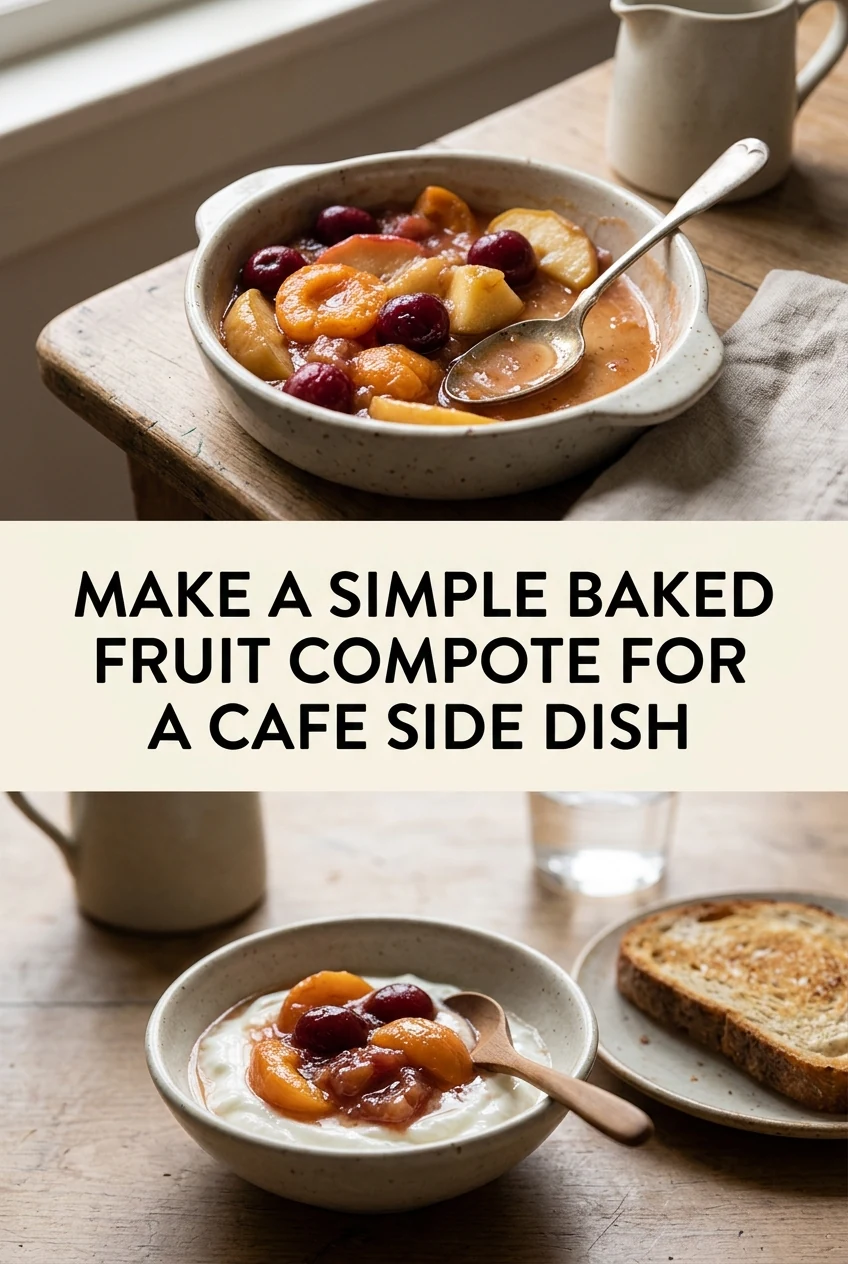
AI-generated editorial concept created for this article. The image is not a technical diagram or a tested result.
Understanding the Difference Between Compote and Syrup
Before starting, it helps to be clear about what you are making. A compote is a cooked fruit dish with body: the fruit softens but holds some shape, and the surrounding juice thickens only lightly from the fruit's own pectin and released sugars. A drink syrup, by contrast, is deliberately reduced until most water has evaporated, leaving a dense, shelf-stable liquid measured in millilitres and added to cold or hot drinks. Compote is measured in spoonfuls and served as food. It is perishable and must be refrigerated promptly after cooling. Do not attempt to treat a compote as a shelf-stable syrup or assume it will keep for a fixed number of days; use your own judgement and standard food-safety practice.
Choosing and Preparing Your Fruit
For a small cafe-style portion, around 400 g of prepared fruit is a workable starting point, yielding roughly four to six side-dish servings depending on spoon size. Stone fruits such as plums, peaches, or apricots work well because they release juice readily and soften without completely collapsing. Wash the fruit, remove stones, and cut into quarters or halves. You can also combine fruits, for example two-thirds plums and one-third dried apricots that have been soaked briefly in warm water to soften. Pat the fruit dry before placing it in your baking dish so that excess surface water does not thin the juice too much. Choose a ceramic or glass baking dish with a lid or a piece of foil to cover it during baking.
Building the Flavour Base
Place the prepared fruit in the dish and add a measured amount of sugar. For 400 g of moderately ripe fruit, somewhere between 40 g and 60 g of caster sugar is a reasonable range to consider, though the right amount depends on the natural sweetness of your fruit. Add a small strip of orange zest, a cinnamon stick, and two or three cardamom pods lightly crushed. If you want a vanilla note, use a small amount of alcohol-free vanilla flavoring, checking the product label to confirm it contains no alcohol before adding it. Stir everything gently to distribute the sugar, then cover the dish tightly. This is an illustrative combination; adjust spices to your preference.
Baking and Finishing the Compote
Place the covered dish in your oven. Because ovens vary, a moderate oven temperature is a sensible starting point, but you will need to check your own oven's behaviour. Begin checking the fruit after about 25 minutes. The fruit should be tender when pressed gently with a spoon, and there should be visible juice pooling in the dish. If the fruit still feels firm, return it to the oven and check again in short intervals. Once the fruit is soft and the juice looks lightly syrupy around the edges of the dish, remove it and let it cool uncovered for a few minutes. Remove the cinnamon stick, cardamom pods, and zest strip before serving or storing. The juice will thicken slightly as it cools.
Serving as a Cafe Side Dish and Storing Safely
Spoon the compote into a small ramekin or shallow bowl and serve it alongside your chosen cafe dish. It works well warm or at room temperature. As a side dish portion, roughly 60 g to 80 g per serving is a practical guide, meaning your 400 g batch could plate five to six portions. For storage, transfer any remaining compote to a clean container, allow it to cool fully, then cover and refrigerate it promptly. Do not leave it at room temperature for extended periods. Use standard food-safety judgement when deciding whether refrigerated compote is still good to serve; do not rely on an invented shelf life figure. This is a perishable product, not a preserved one.
A little more
to know.
Can I use frozen fruit instead of fresh for this compote?
Frozen fruit can work, but it typically releases more liquid as it thaws and cooks, so the resulting juice may be thinner than with fresh fruit. If you use frozen fruit, consider starting with slightly less sugar since the extra liquid will dilute sweetness, and be prepared to bake uncovered for a short period at the end to allow some of the extra moisture to reduce. Results will vary depending on the fruit type and how it was frozen.
How is this different from making a fruit syrup for drinks?
A fruit syrup for drinks is cooked or reduced until most of the water evaporates, leaving a concentrated, pourable liquid that dissolves easily into beverages. A baked compote is intentionally left with body and fruit pieces; the juice is light and jammy rather than dense. You would spoon compote onto food, not measure it into a drink. The two preparations have different textures, different uses, and different storage considerations, so a compote should not be substituted for a drink syrup or treated as one.
Original editorial guidance and recipe formulations, not independently kitchen-tested. Times are estimates and depend on equipment and product directions. Cooked bases need additional cooling and refrigeration before cold serving. Images are AI-generated illustrations; appearance and yield may vary. Check actual ingredient labels, allergens, and any certification you require. We do not certify products. Read our approach.
Save to Pinterest ↗ANOTHER IDEA FOR THE COUNTER