Keep a Brewed Matcha Concentrate Cold and Ready for a Busy Morning
Whisking matcha to order every morning takes time most people do not have before work. A small cold concentrate, prepared the evening before and stored in a sealed jar, lets you pour directly over ice and add milk or water in seconds. This guide covers a practical powder-to-water ratio for a concentrate, whisking technique without a chasen, safe refrigerator storage and the realistic window in which the concentrate stays usable.
Read the note ↓
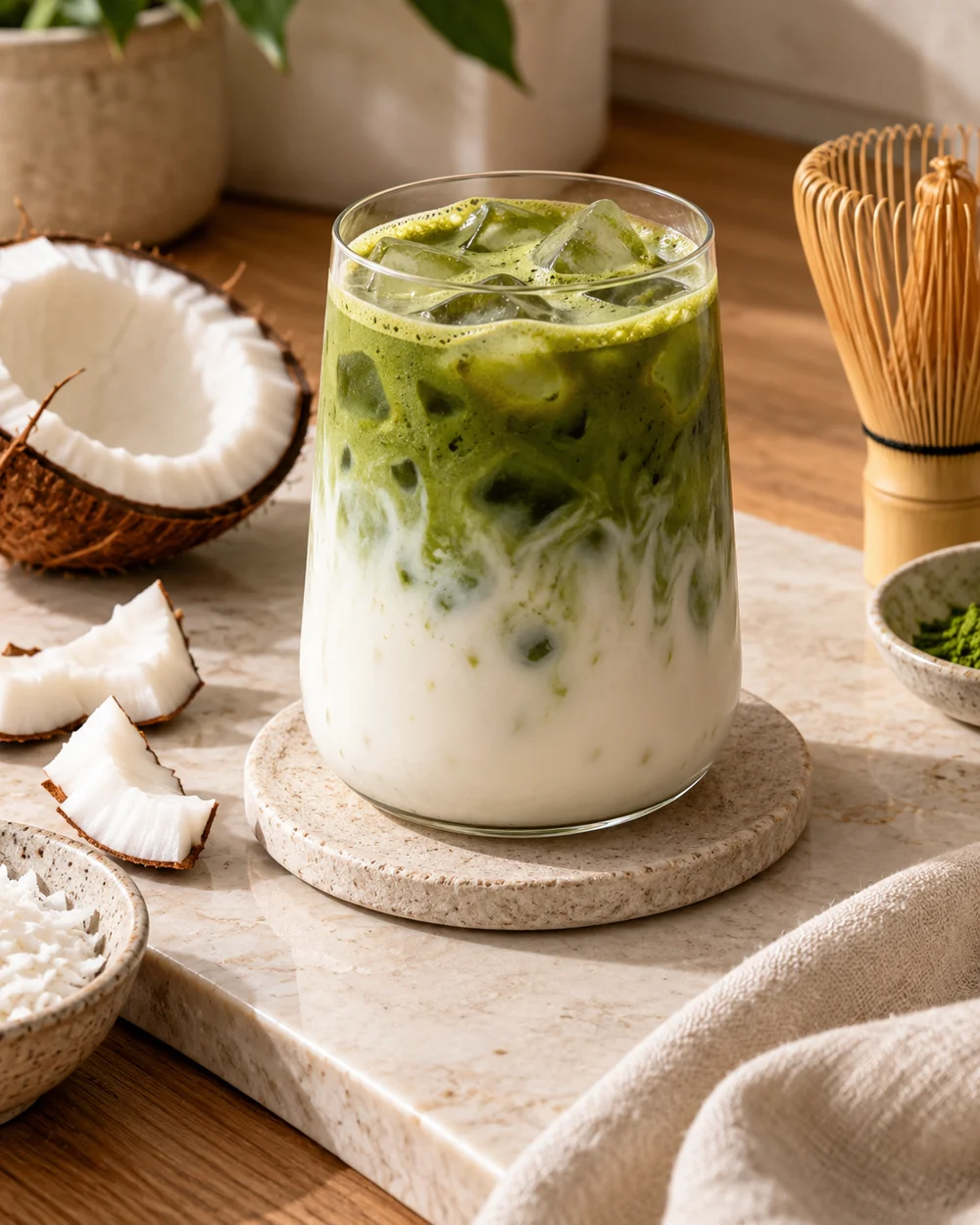
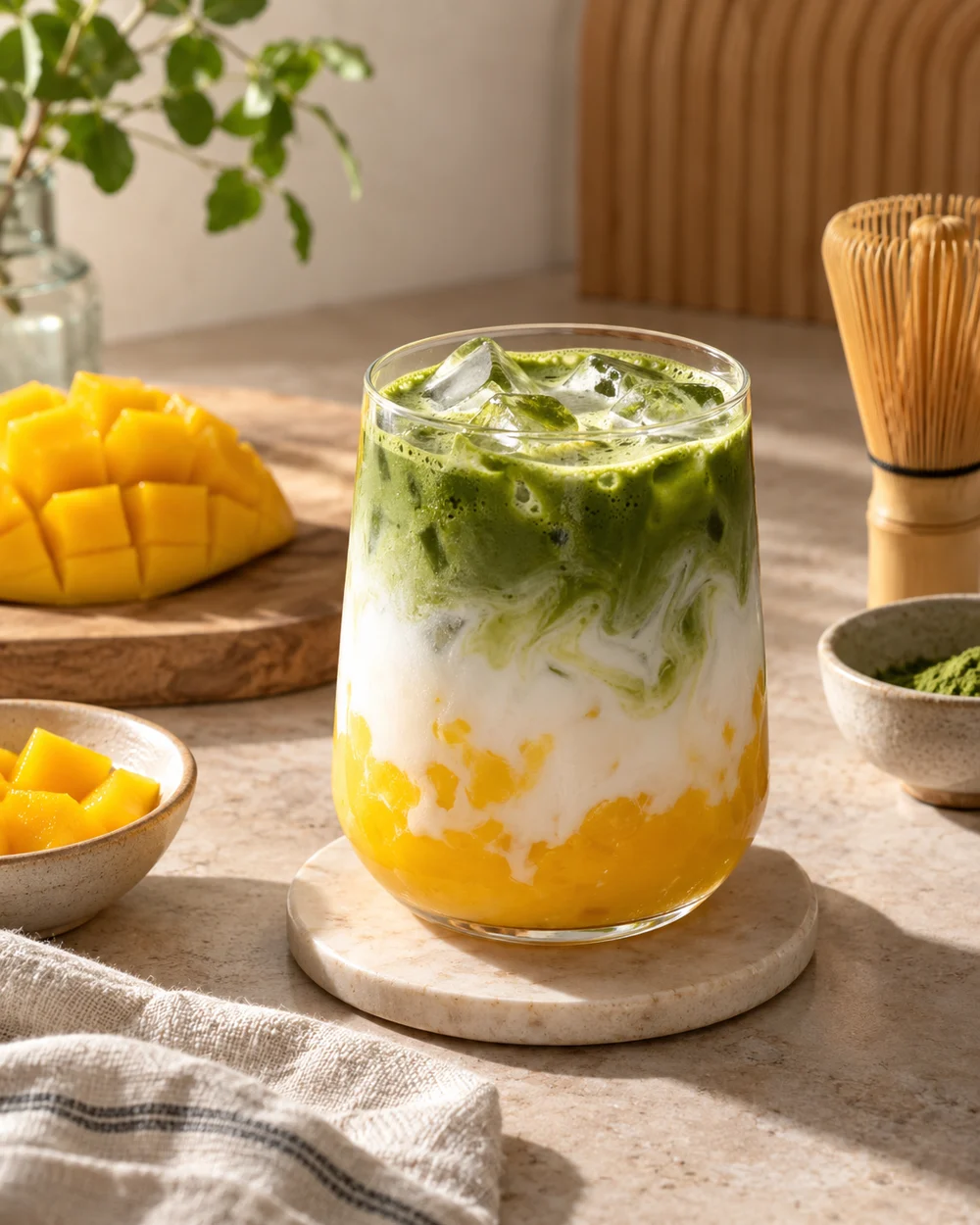
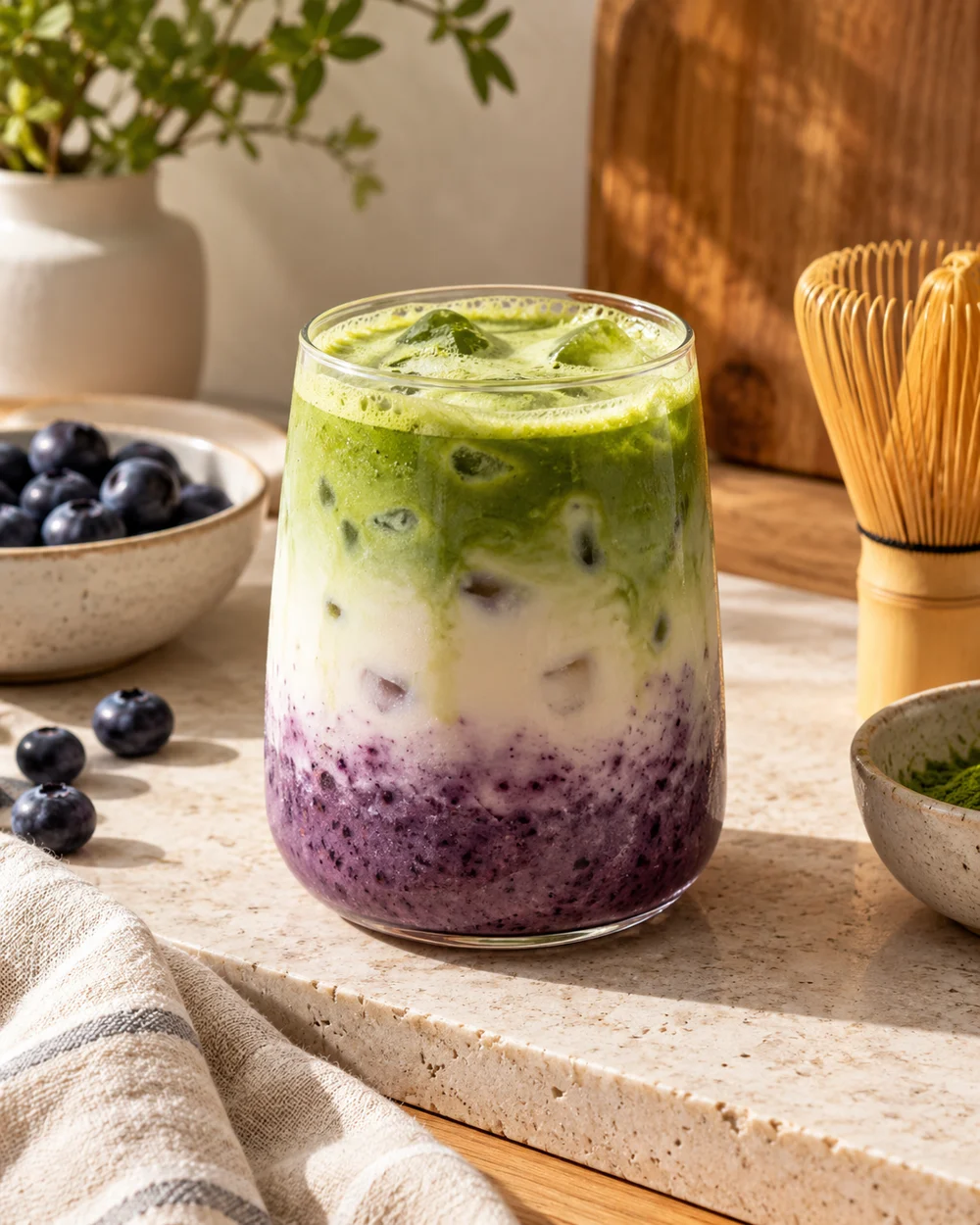
AI-generated editorial concept created for this article. The image is not a technical diagram or a tested result.
Measure the Concentrate Ratio
For a two-serving concentrate, measure 2 level teaspoons of ceremonial or culinary grade matcha powder into a small bowl or wide-mouthed jar. Add 60 ml of water that has been heated to approximately 70 to 75 degrees Celsius, not boiling, as boiling water can make matcha taste harsh and overly astringent. This produces a thick, intensely green concentrate. Each 30 ml portion of concentrate, once diluted, yields roughly one standard 240 ml iced drink. This is an illustrative starting ratio, not a universal standard.
Whisk Without a Traditional Chasen
If you do not own a bamboo chasen, a small milk frother wand or a standard metal whisk works adequately for a concentrate. Whisk in a brisk W or M motion for 30 to 45 seconds until no visible dry powder remains on the surface and the liquid looks uniformly green. A few small bubbles on top are normal. Avoid stirring in circles only, which leaves unmixed powder settled at the bottom of the bowl.
Transfer and Seal for Refrigerator Storage
Pour the finished concentrate into a clean, dry glass jar with a tight-fitting lid. Seal it immediately and place it in the refrigerator at 4 degrees Celsius or below within 30 minutes of whisking. Label the jar with the date and time. Matcha concentrate stored this way is best used within 24 hours. Beyond that initial window, oxidation visibly dulls the colour and the flavour becomes noticeably flat, so prepare only what you intend to consume promptly.
Assemble the Morning Drink in Under a Minute
Fill a tall glass with ice cubes. Pour 30 ml of concentrate from the jar directly over the ice. Add 180 to 200 ml of cold water, oat milk or pasteurized dairy milk and stir briefly with a long spoon. Shake the jar gently before each pour, as some fine powder may settle overnight. Do not leave the jar at room temperature while you prepare other things; return it to the refrigerator immediately after pouring your portion.
Recognise When the Concentrate Should Be Discarded
Discard the concentrate if it develops an off smell, shows visible separation that does not resolve after shaking, or if it has been outside the refrigerator for more than two hours in total, or one hour if your kitchen is above 32 degrees Celsius. Colour alone is not a reliable freshness indicator, as oxidation dulls colour before any safety concern arises. When in doubt, make a fresh small batch rather than using a concentrate of uncertain age.
A little more
to know.
Can I freeze the concentrate to extend its life beyond 24 hours?
Freezing is possible in a small ice cube tray. Each cube can be dropped directly into a glass and left to melt over ice. Flavour and colour quality after freezing and thawing will be noticeably different from fresh concentrate, so treat frozen portions as a backup rather than a preferred method.
Does the grade of matcha powder affect how the concentrate holds overnight?
Culinary grade matcha is ground less finely than ceremonial grade and may settle more visibly in the jar. Both grades are safe to store the same way. Shake the jar before pouring regardless of grade, and sift culinary grade powder more carefully before whisking to reduce clumping.
Original editorial guidance and recipe formulations, not independently kitchen-tested. Times are estimates and depend on equipment and product directions. Cooked bases need additional cooling and refrigeration before cold serving. Images are AI-generated illustrations; appearance and yield may vary. Check actual ingredient labels, allergens, and any certification you require. We do not certify products. Read our approach.
Save to Pinterest ↗ANOTHER IDEA FOR THE COUNTER