Iced Oolong and Peach Milk
Oolong tea sits between green and black on the oxidation scale, which gives it a floral, lightly roasted character that pairs naturally with ripe peach. The most common problem home brewers run into is a bitter base: water that is too hot or a steep that runs too long pulls harsh tannins from the leaves, and those tannins fight the sweetness of fresh fruit rather than complementing it. This drink is built around three straightforward fixes — brewing at the temperature your tin recommends, cooling the tea completely before it meets the peach, and adding each component in an order that keeps the drink layered and balanced.
Read the note ↓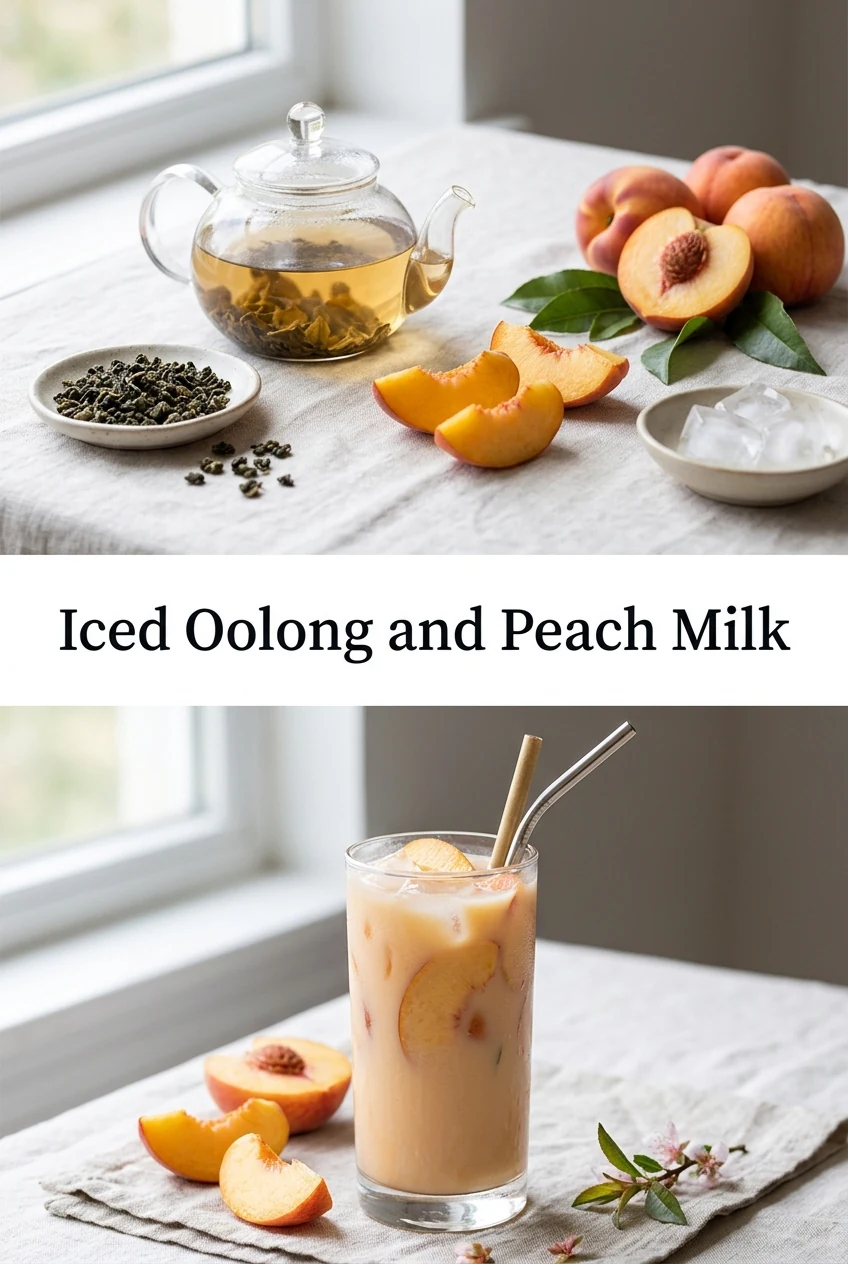
AI-generated editorial concept created for this article. The image is not a technical diagram or a tested result.
Choosing Your Oolong
Oolong is a broad category, so the tin or packet you buy matters more than a generic rule. A lightly oxidised oolong, sometimes labelled jade or green oolong, tends to carry grassy and floral notes. A more heavily oxidised style, such as a roasted or amber oolong, leans toward honey and toasted grain. Both work with peach, but they produce different results. A lightly oxidised leaf will echo the floral top notes of the fruit, while a roasted style adds a caramel undertone. Read the packaging before you begin, because the maker's stated brew temperature and steep time are the only reliable starting points for your specific leaf. Ignoring those numbers in favour of a generic guideline is the single most reliable way to end up with a bitter cup.
Brewing Without Bitterness
Fill your kettle and heat the water to whatever temperature your tin specifies — many oolongs call for somewhere between 80 °C and 95 °C, but confirm this against your own packaging rather than treating any single figure as universal. Measure the leaf quantity your tin recommends for the volume you are making. For a worked example, imagine you want to make two tall drinks. You might brew 300 ml of concentrated tea using the leaf ratio your tin suggests for that volume, steep for the stated time, then remove the leaves promptly. Leaving leaves in contact with hot water beyond the recommended window is where bitterness builds. Once brewed, pour the tea into a clean heatproof jug and let it cool to room temperature on the counter, then transfer it to the refrigerator until it is fully cold. Adding warm tea to peach puree or cold milk will dull the fruit flavour and can cause the milk to curdle slightly at the interface, so full cooling is a practical step rather than a stylistic one.
Making Fresh Peach Puree
Choose peaches that are ripe enough to yield easily when pressed gently at the shoulder. Wash, halve, and remove the stone. Peel if you prefer a smoother texture, or leave the skin on for a more rustic result. Blend the peach flesh until smooth, then pass it through a fine sieve if you want a cleaner consistency. For the two-drink example above, two medium peaches will produce roughly 150 ml to 180 ml of puree depending on their size and water content — treat this as an illustrative range rather than a guaranteed yield, since fruit varies. Taste the puree. If the peaches are very sweet, you may not need any added sweetener. If they are slightly tart, stir in a small amount of plain sugar or a light syrup and taste again. Keep the puree refrigerated until you are ready to assemble.
Assembling the Drink in the Right Order
Pour order affects both appearance and taste. For each glass, start by adding ice to fill roughly half the glass. Spoon or pour the peach puree over the ice first — this settles at the base and stays visible as a distinct layer. Next, pour the cold oolong tea slowly over the back of a spoon held just above the puree surface; this slows the flow and helps the tea float briefly before it begins to blend. Finally, pour cold milk — whole milk, oat milk, or any milk you prefer — gently down the inside edge of the glass. For the two-drink example, a rough starting ratio is 150 ml cold oolong, 75 ml to 90 ml peach puree, and 60 ml to 80 ml milk per glass, adjusted to your taste. These are illustrative proportions, not a calibrated formula, so adjust freely based on how sweet your peaches are and how strong your brewed tea turned out.
Finishing and Serving
Stir gently with a long spoon just before drinking to bring the layers together, or leave them separate and let the person drinking do the mixing themselves — both approaches are valid. Serve immediately while the ice is still solid. If you want a touch of additional sweetness, a drizzle of plain honey across the top works well and adds a visual contrast without overwhelming the peach. Avoid alcohol-based flavour extracts; if you want a floral accent, a small amount of dried osmanthus steeped briefly in the hot oolong before cooling is one option worth exploring, though this will change the flavour profile noticeably. Taste as you go at every stage, since the natural variation in fresh peaches means no two batches will be identical.
A little more
to know.
Can I use canned or frozen peaches instead of fresh?
Canned peaches packed in juice or water can be blended into a workable puree, though the flavour will be softer than fresh fruit. Drain them well before blending and taste for sweetness, since canned fruit is often already sweetened. Frozen peaches that have been thawed and drained also blend smoothly. Neither option will behave identically to ripe fresh peaches, so adjust your sweetener accordingly and taste at each stage.
Why does my drink taste bitter even when I follow the steep time?
Bitterness after following the stated steep time usually points to water temperature being too high for that particular leaf. Check your kettle thermometer against the temperature your specific tin recommends, and confirm you are measuring accurately. Some kettles without a temperature setting will overshoot. Letting the boiled water sit uncovered for two to three minutes before pouring can bring it down slightly, though a variable-temperature kettle gives you more reliable control. Also confirm you removed the leaves promptly when the timer ended.
Original editorial guidance and recipe formulations, not independently kitchen-tested. Times are estimates and depend on equipment and product directions. Cooked bases need additional cooling and refrigeration before cold serving. Images are AI-generated illustrations; appearance and yield may vary. Check actual ingredient labels, allergens, and any certification you require. We do not certify products. Read our approach.
Save to Pinterest ↗ANOTHER IDEA FOR THE COUNTER