Iced Dragonfruit and Coconut Milk
Fresh or thawed dragonfruit blended with cold coconut milk produces a vivid, lightly sweet drink, but the ratio of fruit to coconut milk determines whether the result tastes primarily of dragonfruit or primarily of coconut. Too little fruit and the coconut dominates; too much and the drink becomes thick and the coconut flavour recedes entirely. This guide works through the ratio question practically so you can adjust to your own taste before committing to a full batch.
Read the note ↓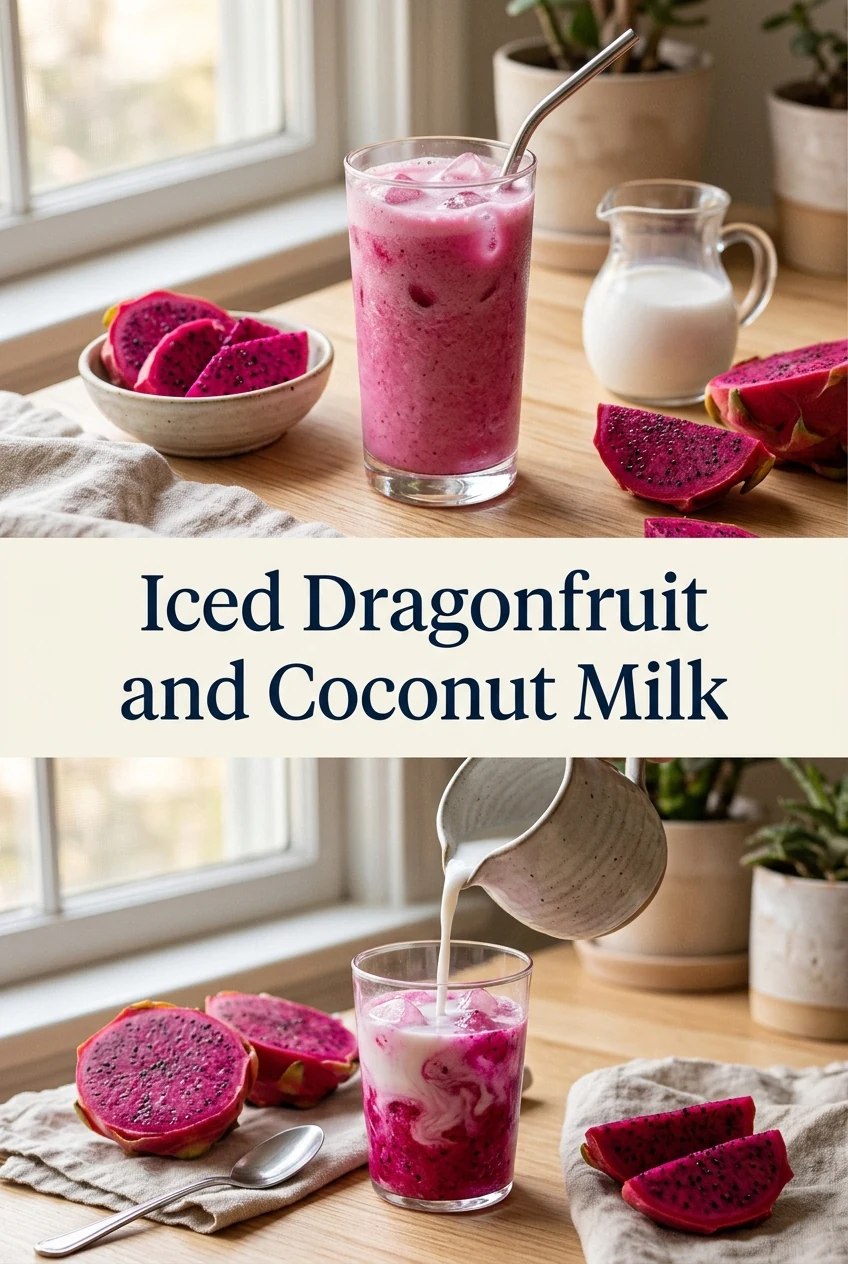
AI-generated editorial concept created for this article. The image is not a technical diagram or a tested result.
Choosing and preparing the dragonfruit
Both white-fleshed and red-fleshed dragonfruit work in this drink. Red-fleshed varieties produce a deeper colour and a slightly more pronounced flavour, which holds up better against coconut milk. Use ripe fresh fruit or fruit that has been frozen and fully thawed; thawed fruit blends more smoothly than fresh in most home blenders. Scoop the flesh away from the skin, discard the skin, and remove any large surface blemishes. Cut the flesh into rough chunks before blending.
Finding the ratio where dragonfruit registers
As an illustrative starting point for a single 350-millilitre serving: blend 120 grams of dragonfruit flesh with 180 millilitres of cold coconut milk. At this ratio the dragonfruit flavour is present but the coconut milk is still clearly detectable. Increasing the fruit to 150 grams shifts the balance toward the fruit and thickens the texture. Reducing it to 90 grams lets the coconut dominate. These figures are a working reference, not a guaranteed outcome, as fruit ripeness and coconut milk fat content both affect the result.
Selecting the coconut milk
Full-fat canned coconut milk produces a richer, creamier drink that blends smoothly with fruit puree. Coconut milk from a carton is thinner and lower in fat, which gives a lighter result but can make the drink watery at higher fruit ratios. Shake or stir canned coconut milk before measuring, as the fat separates during storage. Measure the coconut milk cold, straight from the refrigerator, so the finished drink stays cold longer once poured over ice.
Blending and straining decisions
Blend the fruit and coconut milk together for 30 to 45 seconds until smooth. Dragonfruit seeds are small and soft and do not require straining in most cases. If the blended mixture has visible fibrous texture from the fruit, pour it through a fine mesh strainer and press gently with a spoon. Do not force it through; straining is optional and depends on the fruit's texture. Taste the blended mixture before adding ice to assess sweetness and adjust if needed.
Sweetening and serving over ice
Add a measured amount of simple syrup if the fruit is not sweet enough on its own; start with 10 millilitres per serving and stir before tasting. Pour the blended mixture over a cup filled with ice rather than blending ice into the drink, which dilutes the coconut flavour quickly. Fill the cup with ice first, then pour the mixture over it. Serve immediately. Do not prepare this drink in advance and refrigerate it; the mixture separates and the texture changes on standing.
A little more
to know.
Can I use coconut cream instead of coconut milk for a thicker drink?
Coconut cream has a higher fat content and produces a noticeably thicker result. Reduce the coconut cream quantity by roughly 20 to 30 millilitres compared with coconut milk to avoid a texture that is too dense to drink comfortably through a straw.
How long can the blended mixture sit before it must be discarded?
Refrigerate any unused blended mixture promptly at 4 degrees Celsius or below and use within 24 hours. Discard it if it has been at room temperature for more than two hours, or one hour if the ambient temperature exceeds 32 degrees Celsius.
Original editorial guidance and recipe formulations, not independently kitchen-tested. Times are estimates and depend on equipment and product directions. Cooked bases need additional cooling and refrigeration before cold serving. Images are AI-generated illustrations; appearance and yield may vary. Check actual ingredient labels, allergens, and any certification you require. We do not certify products. Read our approach.
Save to Pinterest ↗ANOTHER IDEA FOR THE COUNTER