Fold Dried Cranberries Into Oat Cookie Dough Without Breaking the Fruit
Dried cranberries added too early in the mixing process get crushed against the bowl wall and lose their distinct chew. Adding them at the final fold stage, after the oats are already incorporated, keeps each piece whole and distributes them evenly through a small batch of twelve to sixteen cookies without overworking the dough or smearing the fruit into the base.
Read the note ↓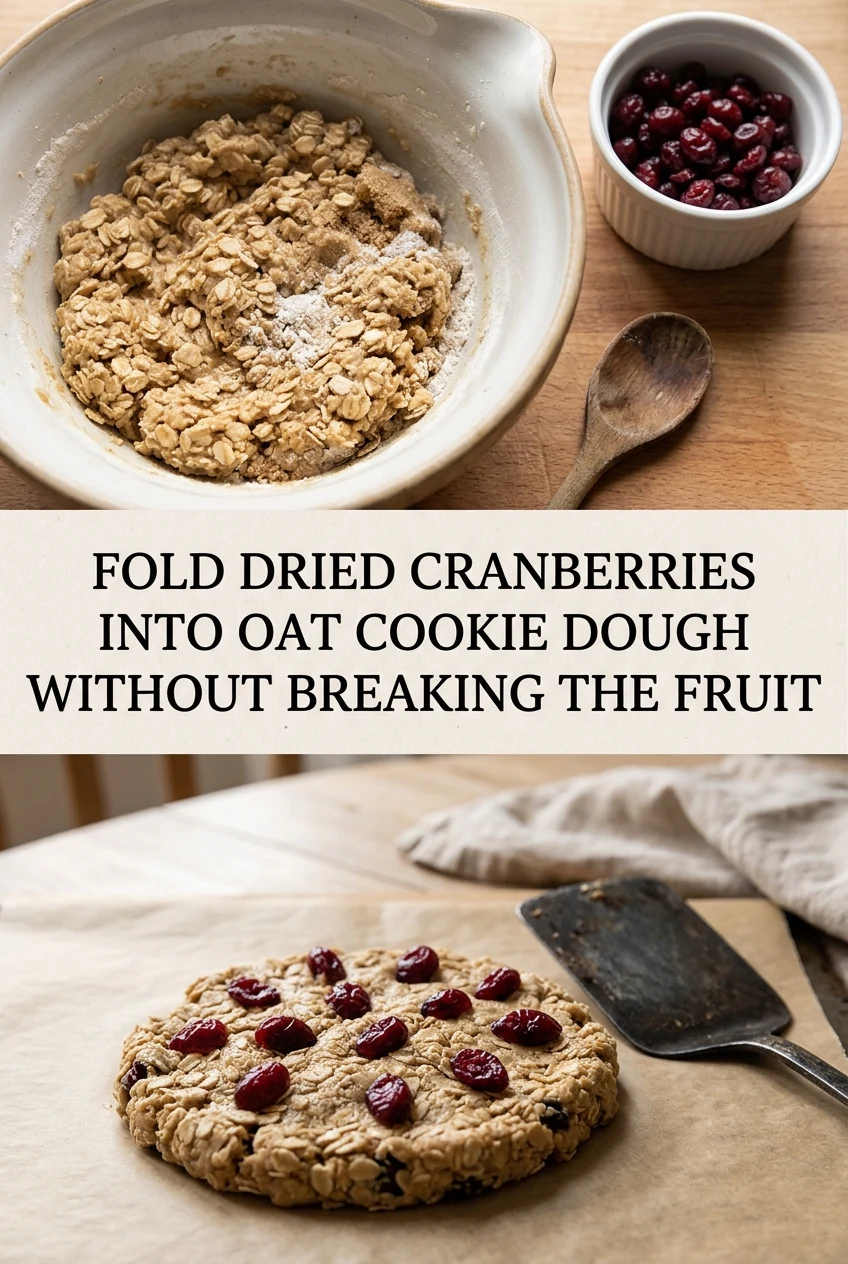
AI-generated editorial concept created for this article. The image is not a technical diagram or a tested result.
Why Timing the Addition Matters
Electric mixers and vigorous hand stirring apply repeated shear force to anything in the bowl. Dried cranberries are pliable but not resilient under that pressure. If they go in with the butter and sugar, they break down into sticky red streaks. Adding them after the flour and oats are combined means the dough is already cohesive and resists further aggressive mixing, giving you a reason to stop and switch tools.
Choosing the Right Tool for the Fold
A flexible silicone spatula with a broad, thin blade lets you slide under the dough mass and lift rather than push. A wooden spoon or stiff metal spoon drags through the dough and shears the fruit. For a batch using roughly 200 grams of rolled oats and 80 grams of dried cranberries, four to six deliberate fold strokes from the bottom of the bowl upward are usually enough to distribute the fruit without tearing it.
Preparing the Cranberries Before They Go In
If the cranberries feel very dry or have clumped together in the bag, separate them by hand before folding. Clumps fold in as a single mass and create uneven pockets. You do not need to soak them; soaking adds moisture that can alter the dough consistency. Simply pull apart any clusters and spread the measured quantity on a small plate so you can add them in one even pour rather than pinching from the bag.
Worked Example With a Small Batch
For a twelve-cookie batch, the dough is mixed to the point where the oats are just incorporated and the mixture pulls away from the bowl sides. Scatter 80 grams of separated cranberries across the surface of the dough. Use the spatula to fold from the far edge of the bowl toward you, rotating the bowl a quarter turn between each fold. After six folds, check for even distribution before scooping. This is an illustrative sequence, not a timed guarantee.
Scooping Without Displacing the Fruit
A spring-loaded cookie scoop portions the dough without the repeated pressing that a spoon requires. Press the scoop into the dough once, release, and place the ball directly on the lined tray. Pressing the scoop multiple times to fill it compacts the dough and can push cranberries to the outside edge, where they may burn before the cookie center sets. Scoop in one motion and accept slight size variation across the batch.
A little more
to know.
Can I fold in the cranberries if the dough has been chilled?
Cold dough is stiffer and resists folding, which increases the force needed and raises the chance of breaking the fruit. Fold the cranberries in before chilling, then refrigerate the finished dough so the fruit is already distributed when you scoop.
Does the type of dried cranberry, sweetened versus unsweetened, affect how it folds?
Sweetened dried cranberries are slightly softer and more pliable, so they hold their shape a little better under folding pressure. Unsweetened varieties tend to be firmer and drier, making prior separation by hand more important to avoid tearing during the fold.
Original editorial guidance and recipe formulations, not independently kitchen-tested. Times are estimates and depend on equipment and product directions. Cooked bases need additional cooling and refrigeration before cold serving. Images are AI-generated illustrations; appearance and yield may vary. Check actual ingredient labels, allergens, and any certification you require. We do not certify products. Read our approach.
Save to Pinterest ↗ANOTHER IDEA FOR THE COUNTER