Fold Chopped Toasted Walnuts Into Oat Cookie Dough Without Breaking the Texture
Stiff oat cookie dough resists mix-ins. Pressing a full cup of chopped walnuts into it at once compresses the dough unevenly and can shear apart the oat structure, producing crumbly cookies that spread too thin. Dividing the walnuts into two additions and folding with a wooden spoon rather than stirring keeps the dough cohesive, distributes the nuts evenly, and preserves the chewy texture that makes oat cookies worth baking.
Read the note ↓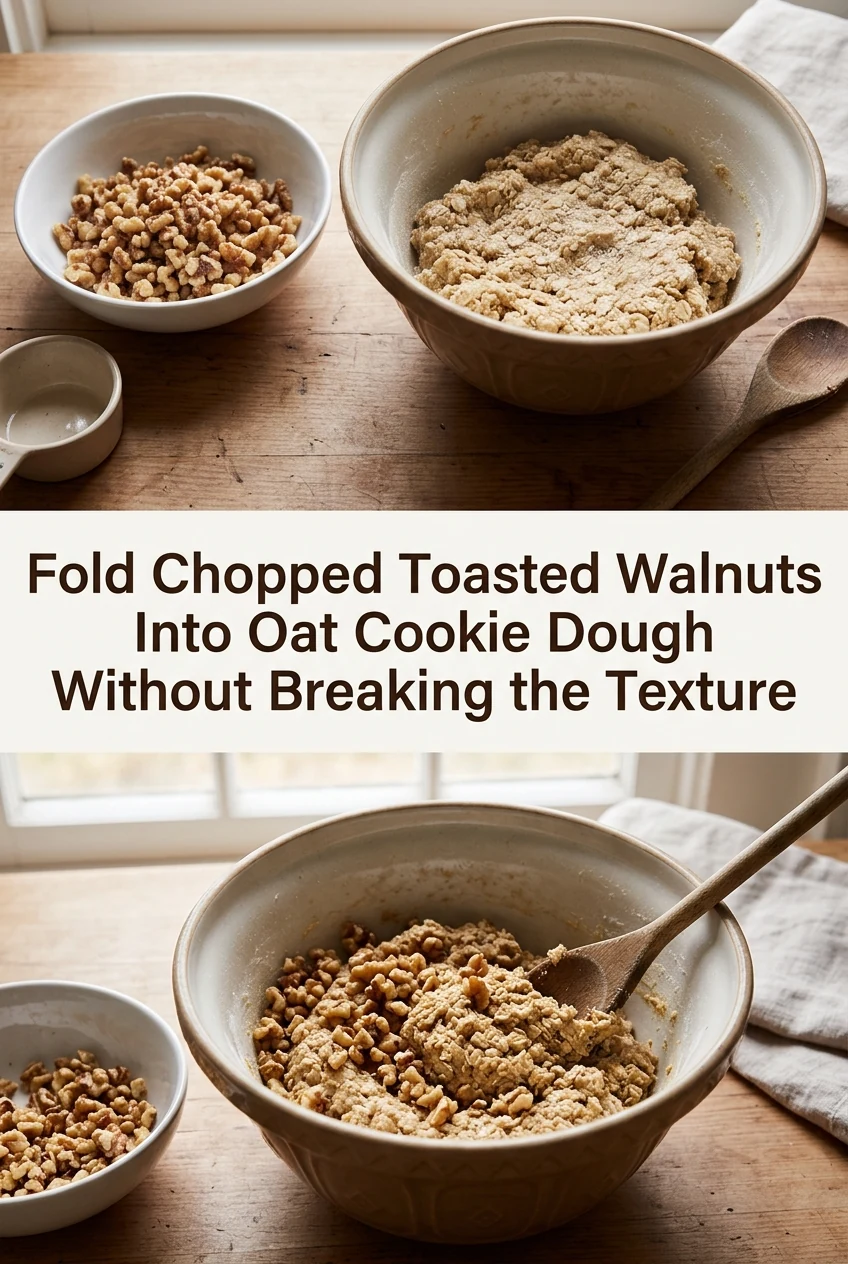
AI-generated editorial concept created for this article. The image is not a technical diagram or a tested result.
Toast and Chop Walnuts to the Right Size Before the Dough Is Mixed
Toast raw walnut halves in a dry pan over medium-low heat for 4 to 5 minutes, stirring occasionally, until fragrant. Spread them on a board and let them cool completely before chopping. Aim for pieces roughly 8 to 10 millimetres across. Pieces smaller than this turn powdery during folding and absorb moisture from the dough. Pieces larger than 12 millimetres create uneven pockets that cause cookies to crack at the edges during baking.
Prepare the Oat Dough to the Correct Stiffness First
Complete your oat cookie dough fully before adding any walnuts. The dough should hold its shape when pressed but not crumble when pinched. If it is too soft, the walnuts will sink rather than distribute. If it is too dry, folding will fracture the dough. A dough made with 180 grams of rolled oats, 120 grams of plain flour, 100 grams of butter and 80 grams of brown sugar is used here as an illustrative working example, not a universal formula.
Add the First Half of the Walnuts and Fold Gently
Divide your chopped walnuts into two equal portions. Scatter the first portion over the surface of the dough in the bowl. Using a wooden spoon, fold from the bottom of the bowl upward and over, rotating the bowl a quarter turn after each fold. Aim for 8 to 10 folds before assessing distribution. The goal at this stage is not full incorporation but partial distribution so the second addition has room to integrate without crowding.
Add the Second Portion and Complete the Fold
Scatter the remaining walnuts over the partially mixed dough and repeat the folding motion for another 8 to 10 passes. Stop as soon as the nuts appear evenly distributed throughout the dough. Overworking at this stage tightens the gluten in the flour portion and makes the cookies tough. If a few walnut pieces sit near the surface, press them in lightly with your fingers rather than continuing to fold the entire batch.
Portion and Bake Without Delay
Scoop the dough into portions immediately after folding is complete. Resting walnut-studded dough too long before portioning allows the nut oils to migrate into the surrounding dough, softening it unevenly. Place portions on a lined baking tray with adequate spacing and bake according to your specific recipe instructions. Do not flatten the portions before baking if your recipe does not call for it, as the walnuts already add weight that will encourage natural spreading.
A little more
to know.
Does toasting the walnuts change how they behave in the dough?
Yes. Toasted walnuts have lower surface moisture, so they absorb less liquid from the dough during folding and baking. Raw walnuts can release moisture as they heat, slightly softening the dough structure around them and affecting the final cookie texture.
Can I fold in walnuts if the dough has already been refrigerated?
Cold dough is significantly stiffer and more likely to crack during folding. Allow refrigerated dough to sit at room temperature for 10 to 15 minutes until it yields slightly when pressed before attempting to fold in any additions.
Original editorial guidance and recipe formulations, not independently kitchen-tested. Times are estimates and depend on equipment and product directions. Cooked bases need additional cooling and refrigeration before cold serving. Images are AI-generated illustrations; appearance and yield may vary. Check actual ingredient labels, allergens, and any certification you require. We do not certify products. Read our approach.
Save to Pinterest ↗ANOTHER IDEA FOR THE COUNTER