Fold Chopped Dried Mango Into Scone Dough Without Sinking or Clumping
Dried mango pieces are stickier than most dried fruits because of their high sugar content and soft, pliable texture, which causes them to press together into clusters the moment they contact each other or the dough. Those clusters create dense, gummy pockets in the finished scone and prevent the surrounding dough from rising evenly during baking. A simple pre-coating step using a small portion of the recipe flour separates the pieces before they ever touch the dough, making even distribution straightforward without adding extra ingredients or changing the recipe balance.
Read the note ↓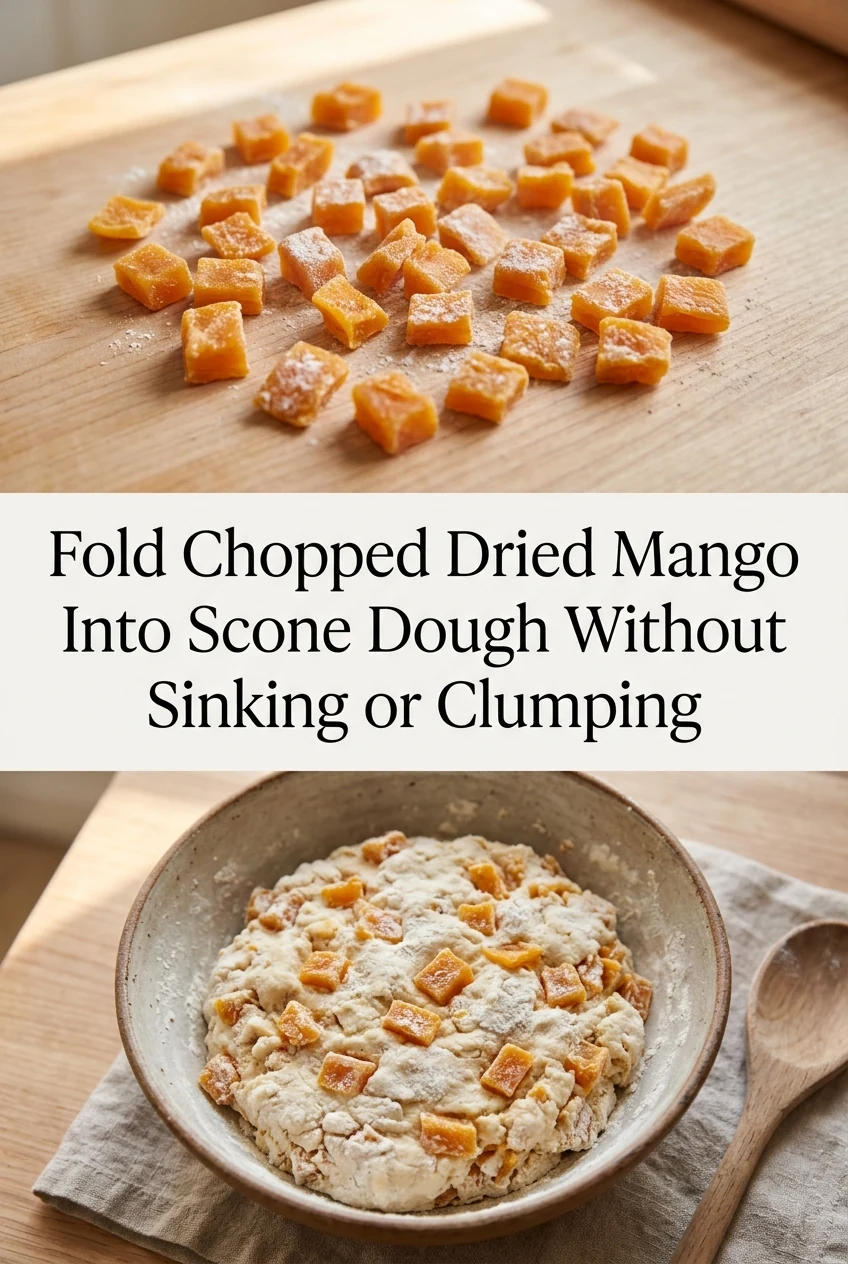
AI-generated editorial concept created for this article. The image is not a technical diagram or a tested result.
Chop the Dried Mango to a Consistent Size
Cut dried mango strips into pieces roughly one centimetre square before coating them. Pieces larger than this disrupt the dough structure, tear the layers during folding, and create large, damp pockets that prevent the crumb from baking through evenly. Extremely small fragments, by contrast, mash into the crumb and lose their distinct chewy texture. Consistent sizing also ensures that each scone receives a similar amount of fruit for even baking and uniform portions. Use a sharp knife and a lightly oiled cutting board to prevent the pieces from sticking to the blade and board.
Measure the Flour Coating Carefully
Take one tablespoon of flour directly from the total recipe quantity rather than adding extra. Placing the chopped mango pieces in a small bowl and adding the tablespoon of flour, then tossing gently with your fingers until each piece is lightly coated, is all that is needed. Using flour already in the recipe means the final dough hydration stays accurate. Adding extra flour beyond the recipe total would alter the dough texture and potentially make the scones dry.
Time the Addition Correctly Within the Mixing Sequence
Add the flour-coated mango pieces after the wet ingredients have been incorporated into the dry mix but before the dough has fully come together. At this stage the dough is still slightly shaggy and open, which means the fruit pieces can be distributed with minimal folding. Adding them before the liquid is introduced can cause incoming liquid to wash away the dry flour barrier, allowing sticky fruit surfaces to bond. Adding them too late, once the dough is cohesive, requires over-working to distribute them.
Fold Rather Than Stir
Use a bench scraper or a flexible dough scraper to fold the dough over the fruit pieces rather than stirring, which would break the pieces apart and smear their sugars through the dough. Aim for six to eight folds, rotating the bowl a quarter turn between each one. Stop as soon as the pieces appear evenly spread and no large clusters are visible. Over-folding develops gluten and toughens the scone crumb, so restraint at this stage directly affects the final texture.
Check Distribution Before Shaping
Pat the dough into a rough rectangle on a lightly floured surface and look at the cross-section when you cut it into portions. If you see a cluster of pieces in one area, gently press that section flat, fold it once, and re-cut. This visual check takes ten seconds and prevents one scone from being overloaded while another has almost no fruit. Once portions are cut, transfer them to the lined baking tray without re-rolling, and bake according to your recipe instructions.
A little more
to know.
Does the flour coating change the outside texture of the scone?
No noticeable change occurs because one tablespoon of flour distributed across the fruit pieces represents a very small addition relative to the total dough mass, and it fully incorporates during folding rather than remaining as a separate layer.
Can I use the same flour-coating method with other sticky dried fruits like dates or apricots?
Yes, the method applies to any sticky dried fruit. Chop to similar one-centimetre pieces, coat with one tablespoon of recipe flour, and add at the same shaggy-dough stage. Adjust chop size if the fruit is naturally larger or denser than mango.
Original editorial guidance and recipe formulations, not independently kitchen-tested. Times are estimates and depend on equipment and product directions. Cooked bases need additional cooling and refrigeration before cold serving. Images are AI-generated illustrations; appearance and yield may vary. Check actual ingredient labels, allergens, and any certification you require. We do not certify products. Read our approach.
Save to Pinterest ↗ANOTHER IDEA FOR THE COUNTER