Decide Whether to Use a Scale or a Measuring Cup When Portioning Oat Flour for Café Cookies
Oat flour behaves differently from all-purpose flour inside a measuring cup. Its fine, soft texture compresses the moment a scoop presses against the bag, so two cups measured by different people can vary noticeably in actual weight. For a small café batch where dough consistency matters across every tray, that variation shows up as spread, density, or dry crumble. Understanding why the tool choice matters helps you pick the right method before mixing begins.
Read the note ↓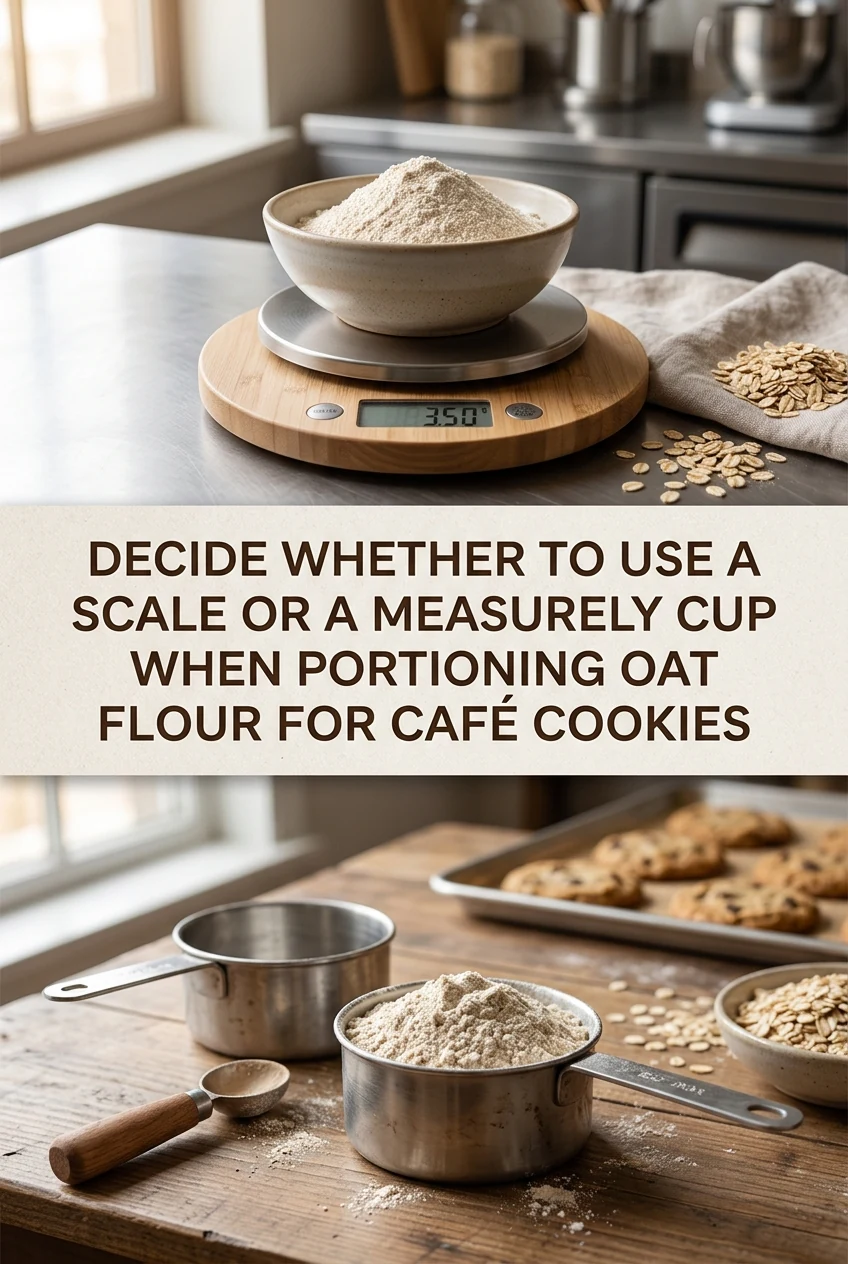
AI-generated editorial concept created for this article. The image is not a technical diagram or a tested result.
Why Oat Flour Compresses More Than Other Flours
Oat flour is milled from whole oats, leaving a slightly coarser, more porous particle than refined wheat flour. Those particles pack together under light pressure, which happens naturally when you dip a cup into a bag or tap the cup on a counter. A standard 240 ml measuring cup filled by dipping can hold anywhere from 90 g to 115 g of oat flour depending on how firmly it settles. That 25 g swing is enough to change cookie texture from soft to noticeably dense within the same recipe.
How a Kitchen Scale Removes That Variable
A digital kitchen scale reads the actual mass sitting on its platform regardless of how loosely or tightly the flour was scooped. If your recipe calls for 200 g of oat flour, the scale confirms 200 g every time. Tare the bowl to zero, spoon flour in gradually, and stop when the display reaches your target. This approach is especially useful when doubling or halving a small batch, because cup fractions like three-quarters of a cup introduce their own rounding errors.
When a Measuring Cup Is Still Acceptable
Cup measures work acceptably if you apply the same technique every single time: spoon the oat flour lightly into the cup rather than scooping, then level the top with a straight edge without pressing down. This spoon-and-level method reduces compression and brings volume portions closer together across attempts. It is a reasonable choice when no scale is available, but it still depends on consistent hand pressure, which varies between staff members during a busy café prep session.
A Worked Example Comparing Both Methods
Consider a small batch calling for one cup of oat flour, typically formulated around 90 g to 100 g in standard baking formulas. If prep staff scoop directly from the bag, settling can easily add 15 g or more of unintended flour to that single cup measure. In contrast, placing the mixing bowl on a digital scale and measuring directly to a target weight removes that variation completely. Avoiding accidental over-portioning keeps cookie dough hydration balanced so trays bake with consistent spread and texture.
Making the Decision for Your Setup
If your café bakes the same cookie recipe more than twice a week, a scale pays back its cost in consistent product. Place it on a stable, level surface away from drafts that might affect the sensor. If you use cup measures, write the spoon-and-level instruction directly on your recipe card so every person follows the same step. Whichever tool you choose, commit to it for the full recipe rather than switching between weight and volume mid-batch.
A little more
to know.
Does sifting oat flour before measuring help with cup accuracy?
Sifting loosens the particles and reduces compression, which brings cup measurements closer to a consistent weight. It adds a step, but if you sift every time using the same sieve, volume portions become more repeatable than unsifted dip-and-pack scooping.
Can the same scale be used for both flour and liquid ingredients?
Yes. A scale that reads in grams can weigh liquids in a bowl or jug by mass. Water measures 1 g per milliliter, so 100 ml of water equals 100 g, making it straightforward to switch between dry and liquid ingredients without changing tools.
Original editorial guidance and recipe formulations, not independently kitchen-tested. Times are estimates and depend on equipment and product directions. Cooked bases need additional cooling and refrigeration before cold serving. Images are AI-generated illustrations; appearance and yield may vary. Check actual ingredient labels, allergens, and any certification you require. We do not certify products. Read our approach.
Save to Pinterest ↗ANOTHER IDEA FOR THE COUNTER