Decide Whether to Sweeten a Fruit Cooler in the Jug or in Each Individual Glass
When you make a fruit cooler for several people, the sweetening decision shapes every glass that follows. Stirring syrup into the jug locks in one level for everyone, which works well when preferences are known and consistent. Leaving the base unsweetened and offering syrup at the table gives each guest control without requiring you to prepare multiple batches. Understanding the trade-off before you start saves you from diluting or over-sweetening a batch you cannot easily correct.
Read the note ↓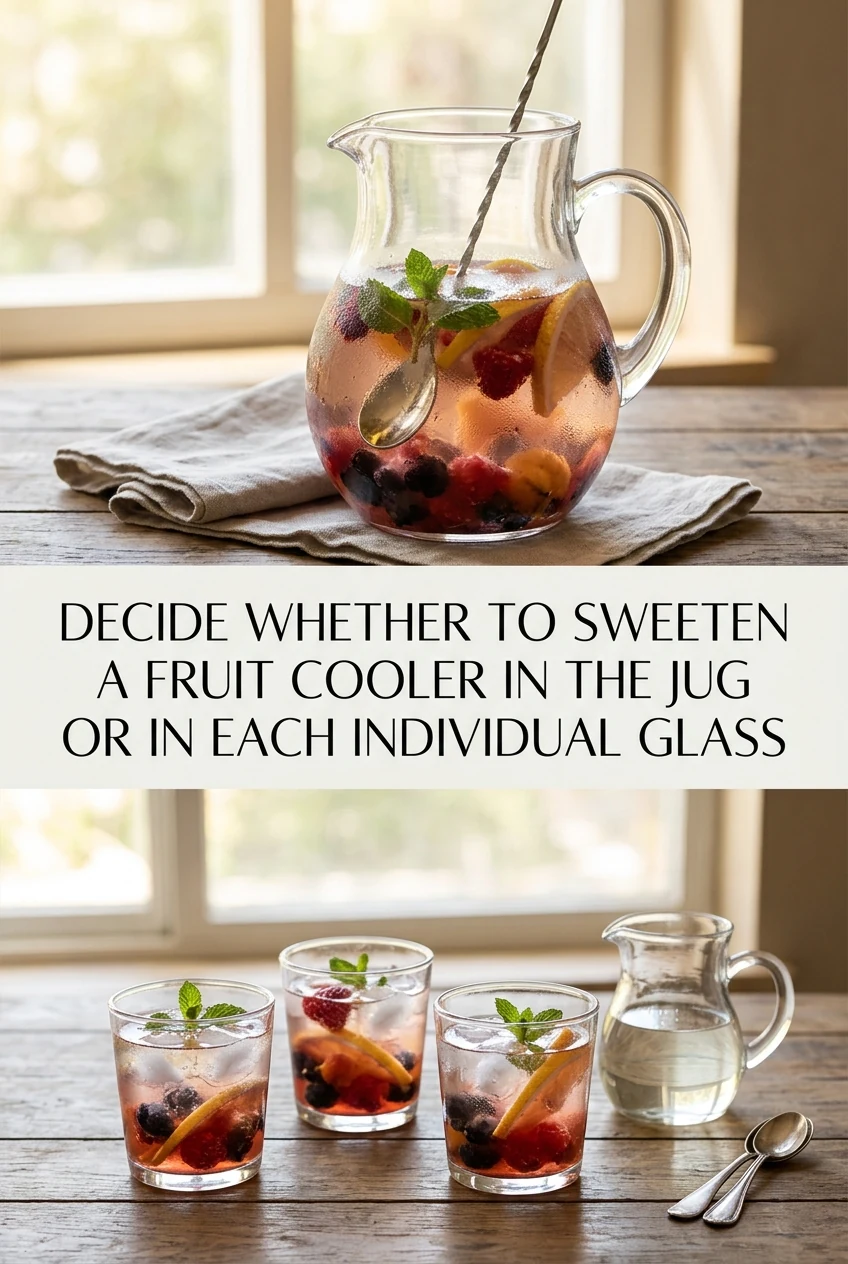
AI-generated editorial concept created for this article. The image is not a technical diagram or a tested result.
What Changes When You Sweeten the Whole Jug
A jug-sweetened cooler is convenient for service because guests pour and drink without any extra step. The limitation is that the sweetness level is fixed. If the fruit base is already tart, a single syrup quantity may suit some guests and fall short for others. Once syrup is stirred in and the jug is chilled with ice, adjusting the sweetness later means re-stirring a completely full container, which risks spilling and can dilute the batch as the ice shifts during vigorous stirring.
How Per-Glass Sweetening Works in Practice
Place a small pitcher of simple syrup on the table alongside the unsweetened cooler jug. A useful starting point to offer guests is five to ten milliliters of syrup per 250-milliliter glass, adjusting to taste. Because syrup is liquid, it incorporates quickly with a single stir even in a cold drink. This method suits gatherings where guests have different preferences or where the fruit base varies in natural sweetness from batch to batch.
Making a Simple Syrup for the Table
Combine equal parts white sugar and water by volume in a small saucepan, for example 120 milliliters of each. Stir over medium heat only until the sugar fully dissolves, then remove from heat. Do not boil longer than necessary, which would evaporate water and alter the syrup concentration. Cool the mixture completely before pouring it into a clean serving pitcher or bottle. Keep the syrup covered and refrigerated until service. Discard any syrup that shows cloudiness, off odors, or signs of mold.
When Jug Sweetening Is the Better Choice
If you are serving a large group at a set event where stopping to adjust each glass is impractical, sweetening the jug in advance makes service faster. Taste the fruit base before adding syrup and add in small increments, stirring and tasting between each addition. A reasonable starting point for a moderately tart citrus cooler is 30 milliliters of syrup per liter of base, though the right amount depends entirely on the fruit used.
Keeping Both Options Open at Once
A practical middle approach is to sweeten the jug lightly, below what most guests would want, and still offer syrup at the table. This gives a pleasant baseline flavor while preserving individual adjustment. Label the syrup pitcher clearly so guests know it is available. Keep any remaining cooler base and syrup covered in the refrigerator in separate clean containers, keeping fresh fruit garnishes out of prolonged storage to prevent them from becoming soggy or bitter.
A little more
to know.
Does the type of sweetener affect how well it mixes into a cold drink?
Liquid sweeteners such as simple syrup or honey dissolved in warm water incorporate more easily into cold drinks than granulated sugar, which can settle before it dissolves. If using granulated sugar directly in a glass, stir vigorously for longer to avoid a gritty residue at the bottom.
Can I use fruit juice to sweeten the cooler instead of syrup?
Yes, though juice also adds its own flavor and dilutes the existing fruit character. A small amount of apple or white grape juice can add gentle sweetness without sharpening the flavor the way citrus-based sweeteners might. Taste as you add to avoid overpowering the base.
Original editorial guidance and recipe formulations, not independently kitchen-tested. Times are estimates and depend on equipment and product directions. Cooked bases need additional cooling and refrigeration before cold serving. Images are AI-generated illustrations; appearance and yield may vary. Check actual ingredient labels, allergens, and any certification you require. We do not certify products. Read our approach.
Save to Pinterest ↗ANOTHER IDEA FOR THE COUNTER