Decide How Many Drinks to Batch Versus Make to Order for a Small Gathering
Preparing drinks for four to six people at home involves a genuine planning decision: some components improve or hold well when made ahead, while others deteriorate within minutes of assembly. Batching everything risks serving flat, separated, or off-temperature drinks. Making everything to order under pressure leads to delays and inconsistent results. The practical answer is a split approach based on what each component actually does over time. This guide identifies which parts of a drink menu belong in each category and why.
Read the note ↓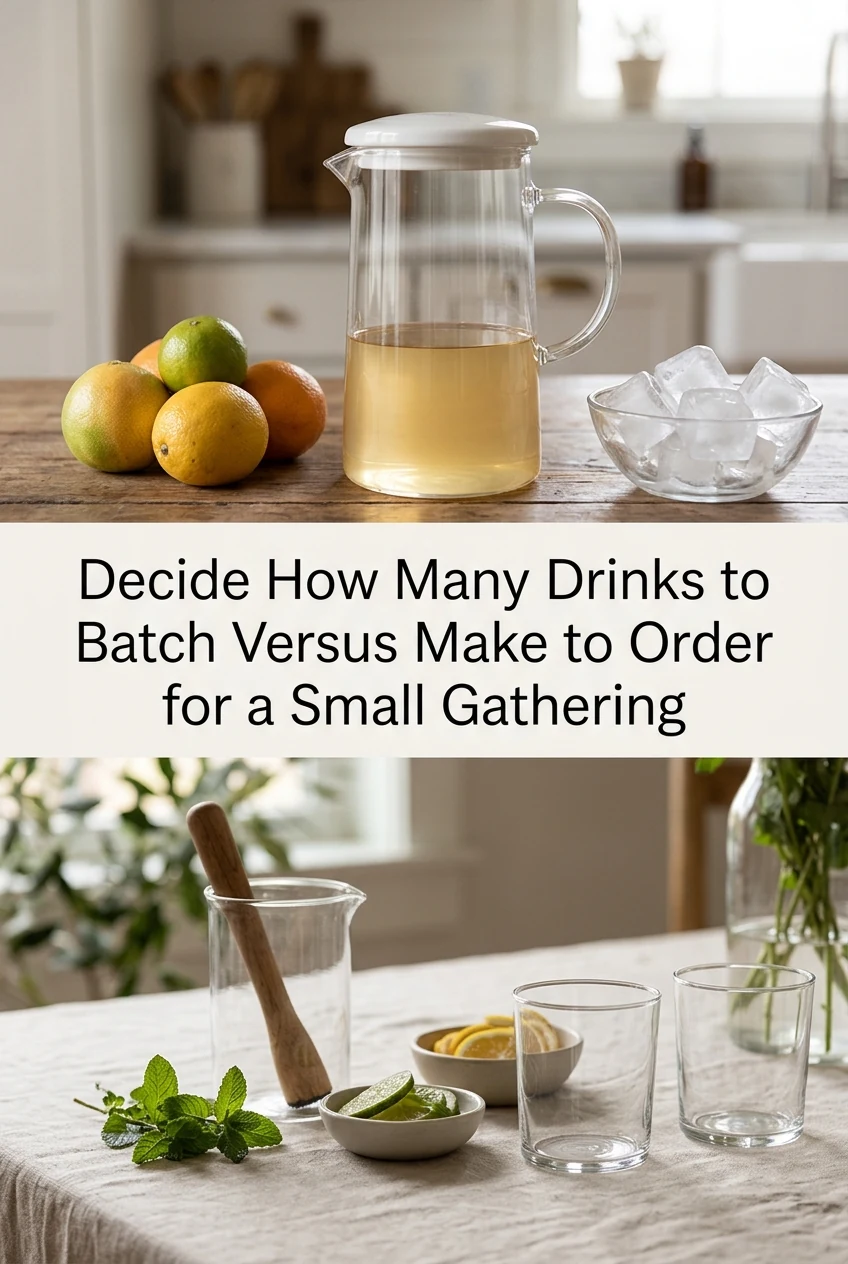
AI-generated editorial concept created for this article. The image is not a technical diagram or a tested result.
What Holds Well When Made Ahead
Simple syrups, spice concentrates, and brewed tea all hold well when refrigerated promptly. A sugar syrup made with a 1 to 1 ratio of sugar to water by weight keeps for up to two weeks refrigerated. Brewed tea, cooled and stored in a sealed container at 4 degrees Celsius or below within two hours of brewing, is usable for up to three days. These components are the correct candidates for advance preparation because they do not change in texture or require fresh assembly to taste correct.
What Must Be Made to Order
Any drink containing steamed or frothed milk should be assembled immediately before serving. Milk foam collapses within a few minutes and cannot be held in a batch. Similarly, drinks with carbonated water or juice mixed in lose their texture quickly and should be poured to order. Matcha whisked into water or milk is best prepared per cup; it separates on standing. For a group of six, assembling these drinks takes two to three minutes per cup if all other components are pre-measured and within reach.
Setting Up a Practical Mise en Place
Before guests arrive, measure each pre-made component into small labelled pitchers or jars. For example, if serving a spiced warm milk drink for six people, have 180 millilitres of spice concentrate already in a small pitcher, six cups set out, and milk measured into a saucepan ready to heat. This setup means the to-order steps, heating milk and combining, take under three minutes per round. The goal is to eliminate all decisions and measurements from the live assembly process, not to eliminate the assembly itself.
Managing Temperature Across a Serving Window
Warm drinks served over a thirty-minute window present a temperature challenge. Rather than making all six drinks at once and letting them cool, consider making drinks in two rounds of three. The first round goes out immediately; the second round is assembled ten to fifteen minutes later. This keeps the second round at the correct serving temperature without requiring a warming station. Cold drinks can be assembled in one batch if served immediately over ice, since ice manages the temperature during the serving window.
A Simple Decision Rule for Your Menu
For each item on your drink menu, ask two questions: does this component change in texture or quality within fifteen minutes of preparation, and does it require active equipment to assemble? If yes to either, it belongs in the to-order category. If no to both, it can be batched. Illustrative example: for a menu of iced tea, warm spiced oat milk, and hot cocoa for six people, the tea is batched, the spice concentrate and cocoa paste are pre-made, and only the milk heating and final combining happen to order.
A little more
to know.
How long can brewed coffee sit in a thermal carafe before quality drops noticeably?
Brewed coffee held in a preheated thermal carafe typically maintains acceptable flavour for around thirty to forty-five minutes. Beyond that, oxidation and continued extraction from any fine particles cause noticeable bitterness and flat aroma.
Can I batch cold brew tea the night before a morning gathering?
Yes. Cold brew tea steeped overnight in the refrigerator at 4 degrees Celsius is a practical option. Strain out the leaves after the overnight steep is complete to prevent over-extraction, and keep the finished tea sealed in the refrigerator until serving to preserve aroma.
Original editorial guidance and recipe formulations, not independently kitchen-tested. Times are estimates and depend on equipment and product directions. Cooked bases need additional cooling and refrigeration before cold serving. Images are AI-generated illustrations; appearance and yield may vary. Check actual ingredient labels, allergens, and any certification you require. We do not certify products. Read our approach.
Save to Pinterest ↗ANOTHER IDEA FOR THE COUNTER