Compare Date Syrup and Maple Syrup in a Cold Milk Drink
Date syrup and maple syrup behave differently the moment they meet cold milk. Date syrup is thicker and denser, so it tends to sink and cling to the glass rather than dispersing quickly. Maple syrup is thinner and spreads more readily through cold liquid. Tasting each in a small measured sample before building a full drink lets you calibrate sweetness and texture without wasting an entire batch or serving an unbalanced glass to a customer.
Read the note ↓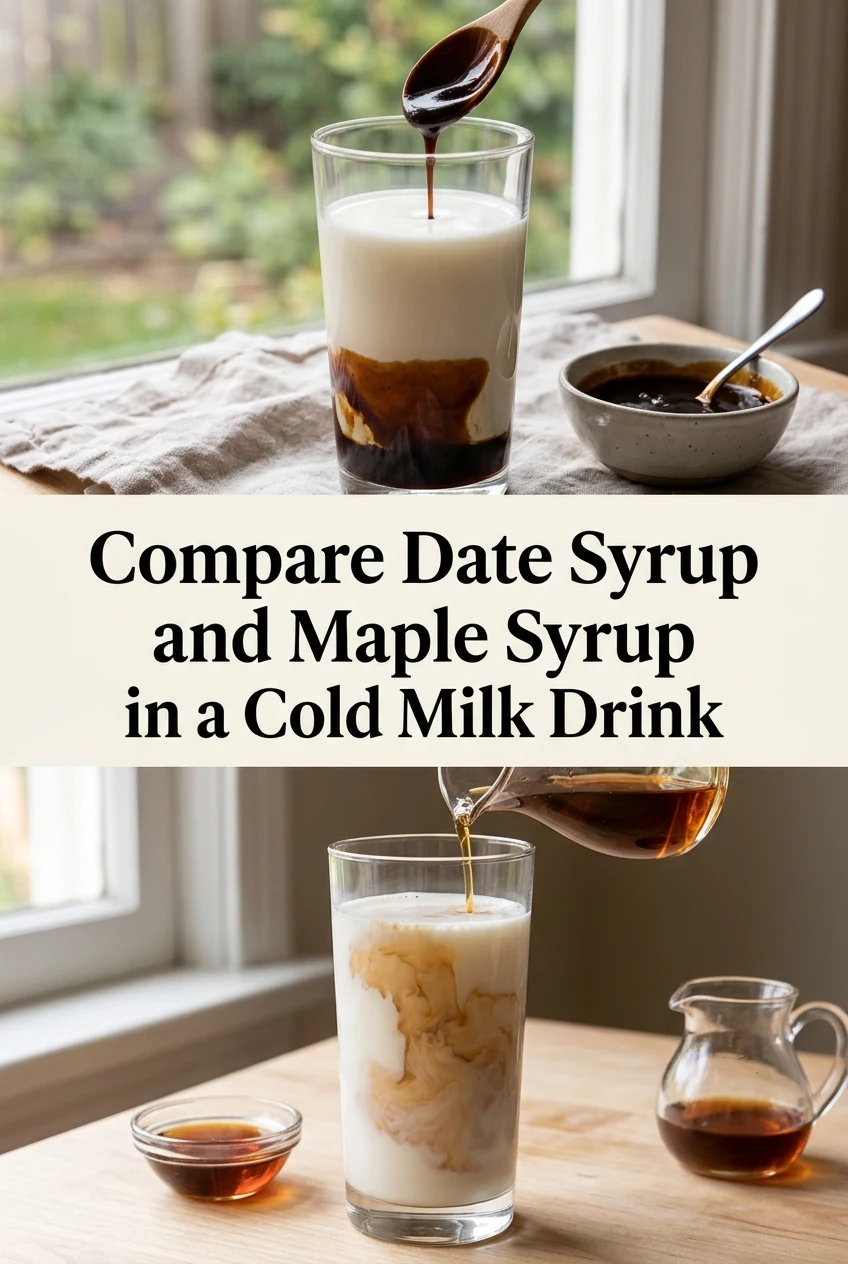
AI-generated editorial concept created for this article. The image is not a technical diagram or a tested result.
Run a Side-by-Side Sample First
Pour 120 ml of cold whole milk into each of two small glasses. Add 10 ml of date syrup to one and 10 ml of maple syrup to the other. Stir each for the same duration, about fifteen seconds, using a long spoon. Taste both immediately. This controlled comparison at equal volume reveals the real sweetness gap before you scale up. Date syrup at this ratio typically reads noticeably richer and darker in flavour than maple syrup at the same measure.
Account for Viscosity When Stirring
Date syrup requires more deliberate stirring to break its body in cold milk. If you stir only briefly, streaks of syrup remain at the bottom, making the first sip far sweeter than the last. Maple syrup integrates faster but can still settle if the milk is very cold. For either syrup, stir from the base of the glass upward in a slow circular motion for at least twenty seconds before adding ice, so the sweetener is fully distributed before temperature drops further.
Adjust Quantity Based on Your Sample Result
If the 10 ml date syrup in your 120 ml sample tasted too sweet, scale down to 7 ml and re-taste in a fresh 120 ml sample before scaling up to a full drink. This is an illustrative starting point, not a guaranteed ratio, because date syrup sweetness varies by brand and processing method. Maple syrup grades also differ in intensity. Always let your palate, not a fixed number, confirm the final quantity before preparing multiple servings.
Choose Your Mixing Method for the Full Glass
For a 300 ml cold milk drink, add the syrup to the glass with a small splash of milk first and stir to loosen its thick body before pouring the rest. Pouring milk gently down the wall leaves dense syrup pooled at the base because low-shear flow prevents mixing. Once the syrup is loosened into an even liquid with that initial splash, pour in the remaining cold milk and stir thoroughly from bottom to top. Add ice only after the syrup is fully incorporated to avoid diluting the mixture mid-stir.
Record What Worked for Consistency
Once you find a ratio that tastes balanced, write down the exact syrup volume, milk volume, milk temperature at the time of mixing, and stirring duration. Cold milk straight from a refrigerator at around 4 degrees Celsius will behave differently from milk that has been sitting out for thirty minutes. Keeping a brief note means your next batch starts from a confirmed baseline rather than repeating the tasting process from scratch each time.
A little more
to know.
Can I mix date syrup and maple syrup together in one drink?
You can combine them, but run a small sample first because the flavours compete. A common starting point is two parts date syrup to one part maple syrup in a 240 ml glass, though your preferred balance may differ.
Does warming the milk help date syrup dissolve faster?
Yes, slightly warmer milk reduces date syrup viscosity and speeds integration, but it changes the drink from cold to warm. If you need a cold result, stir longer at refrigerator temperature rather than warming the milk.
Original editorial guidance and recipe formulations, not independently kitchen-tested. Times are estimates and depend on equipment and product directions. Cooked bases need additional cooling and refrigeration before cold serving. Images are AI-generated illustrations; appearance and yield may vary. Check actual ingredient labels, allergens, and any certification you require. We do not certify products. Read our approach.
Save to Pinterest ↗ANOTHER IDEA FOR THE COUNTER