Compare a Bamboo Chasen and a Small Balloon Whisk for Mixing Cocoa Into Warm Milk
Mixing cocoa powder into warm milk without lumps depends as much on your vessel shape as on the tool you choose. A bamboo chasen and a small balloon whisk both create enough agitation to disperse cocoa, but they interact differently with curved bowls versus straight-sided jugs. Understanding where each tool works well helps you pick the right one for your actual kitchen setup rather than defaulting to whichever is closest.
Read the note ↓
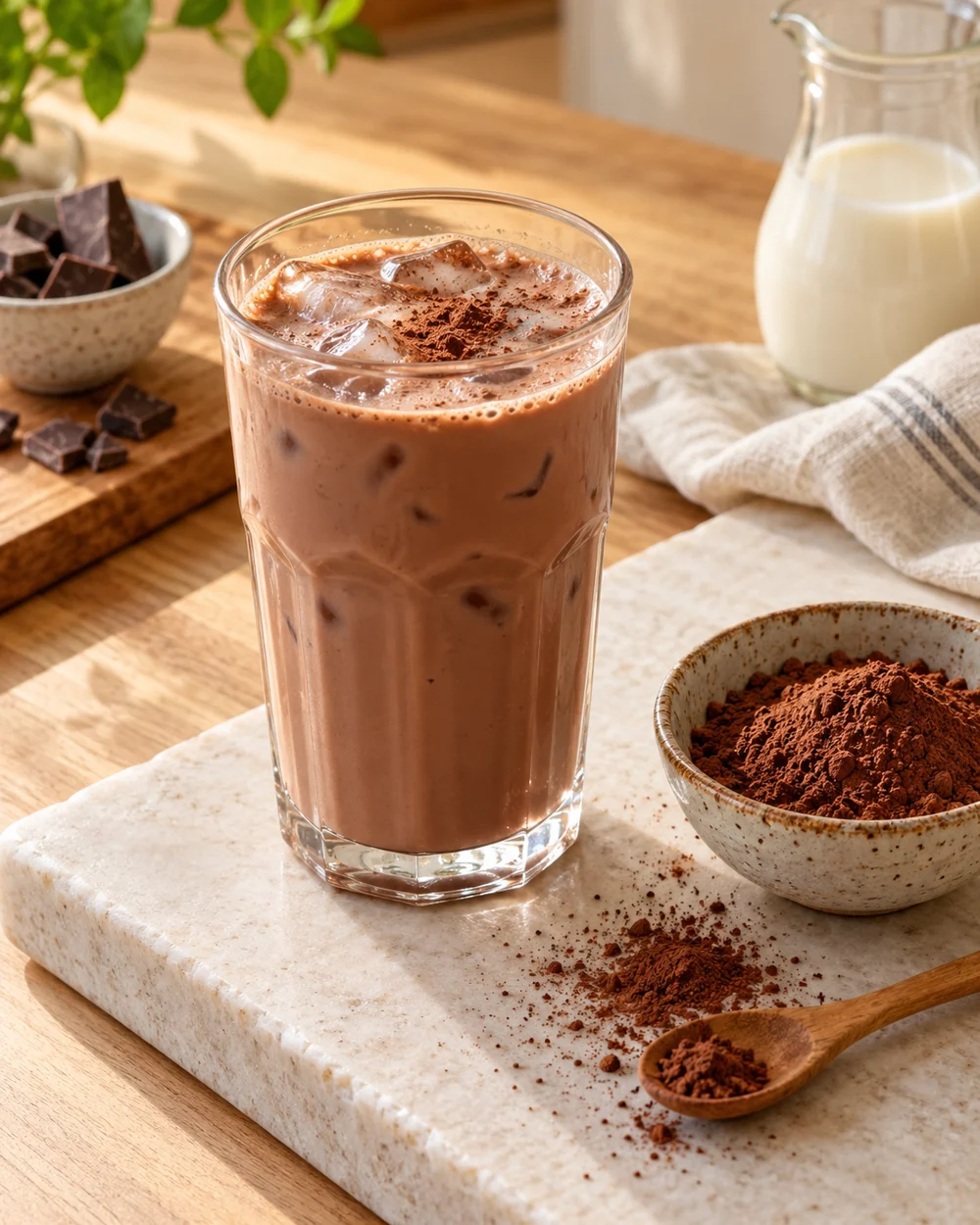
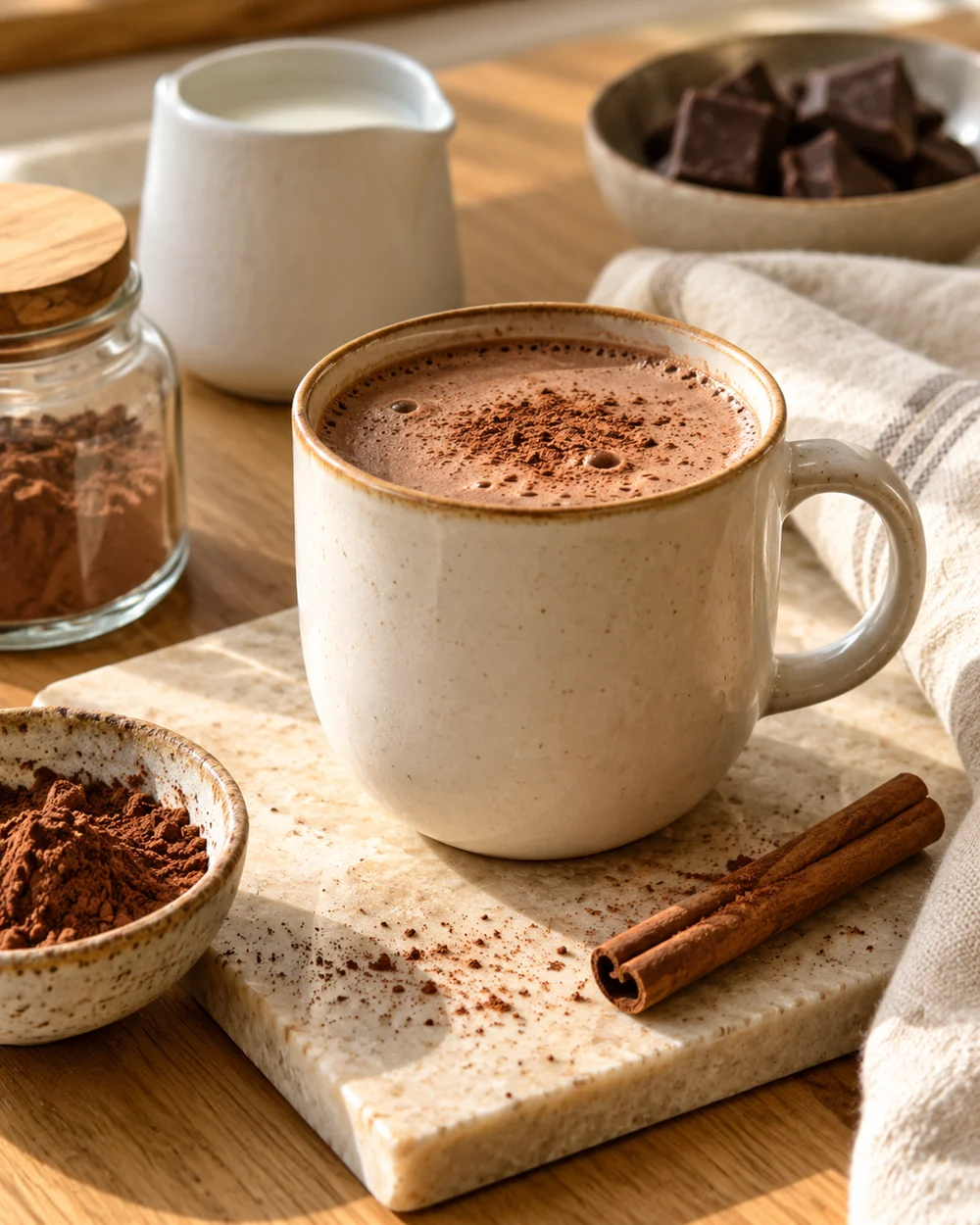
AI-generated editorial concept created for this article. The image is not a technical diagram or a tested result.
How Each Tool Moves Through Liquid
A bamboo chasen uses many fine tines arranged in a tight circle to create rapid, small-radius agitation. It works by moving in a brisk W or M pattern across the base of a bowl. A small balloon whisk uses fewer, wider wires that sweep a larger arc. The chasen excels at surface-level frothing in a small curved bowl, while the balloon whisk pushes liquid up the sides of a jug, which is useful when you need to incorporate cocoa into a larger volume.
Vessel Shape Determines Which Tool Fits
A chasen needs a bowl with a rounded base so its tines reach the bottom without the handle striking the rim. A standard 300 millilitre matcha bowl works well. A balloon whisk needs enough depth and width to complete a full circular stroke without splashing. A 500 millilitre straight-sided jug suits it well. Using a chasen in a tall narrow jug causes the tines to bend against the sides, and using a balloon whisk in a shallow bowl pushes liquid over the edge.
Cocoa Trapping in the Chasen Tines
Dry cocoa powder can lodge between the chasen tines if you add it before any liquid. To avoid this, stir a small amount of warm milk into the cocoa first with a spoon to form a loose paste, then introduce the chasen. This pre-wetting step takes about 20 seconds and significantly reduces the amount of cocoa that clings to the tines rather than dispersing into the drink. Rinse the chasen in warm water immediately after use.
Balloon Whisk Technique for a Jug
In a jug, sift 15 grams of cocoa powder into 250 millilitres of milk warmed to around 65 degrees Celsius. Hold the jug at a slight angle and use the balloon whisk in a circular motion, keeping the whisk head fully submerged to avoid splashing. The wider wire spread covers the full base of the jug in two or three strokes. This method produces a smooth result with less surface foam than the chasen, which suits a drink served without a froth layer.
Cleaning Differences That Affect Your Choice
A balloon whisk rinses quickly under running water and can go in a dishwasher. A bamboo chasen requires gentle rinsing in warm water without soap, and should be stored on a chasen holder or upright so the tines dry in their original shape. If you make cocoa daily and value minimal cleanup, the balloon whisk in a jug is the more practical routine choice. The chasen adds a tactile element to the preparation that some home cafe setups prioritise for presentation.
A little more
to know.
Does the chasen create more foam than the balloon whisk?
Yes, the rapid fine-tine motion of a chasen introduces more air at the surface, producing a light foam layer. A balloon whisk in a jug creates less surface foam because its strokes stay submerged. Choose based on whether your cocoa drink is served with or without a froth layer.
Can I use a milk frother wand instead of either tool?
A handheld frother wand disperses cocoa effectively in a tall cup or jug and requires minimal technique. However, it produces significant foam and works best when the cocoa is pre-wetted into a paste first, otherwise dry powder can scatter before the wand reaches full speed.
Original editorial guidance and recipe formulations, not independently kitchen-tested. Times are estimates and depend on equipment and product directions. Cooked bases need additional cooling and refrigeration before cold serving. Images are AI-generated illustrations; appearance and yield may vary. Check actual ingredient labels, allergens, and any certification you require. We do not certify products. Read our approach.
Save to Pinterest ↗ANOTHER IDEA FOR THE COUNTER