Cocoa Powder, Drinking Chocolate Mix or Chopped Chocolate for Hot Chocolate
Three tins or packets in the same pantry can produce mugs that taste completely different from one another, and one will be far sweeter than expected. The difference is not about quality; it is about what each product already contains. Unsweetened cocoa powder, pre-sweetened drinking chocolate mix, and chopped chocolate bars each need a different approach to milk temperature, added sugar, and stirring. Comparing ingredient lists first prevents the surprise of an undrinkably sweet or thin result.
Read the note ↓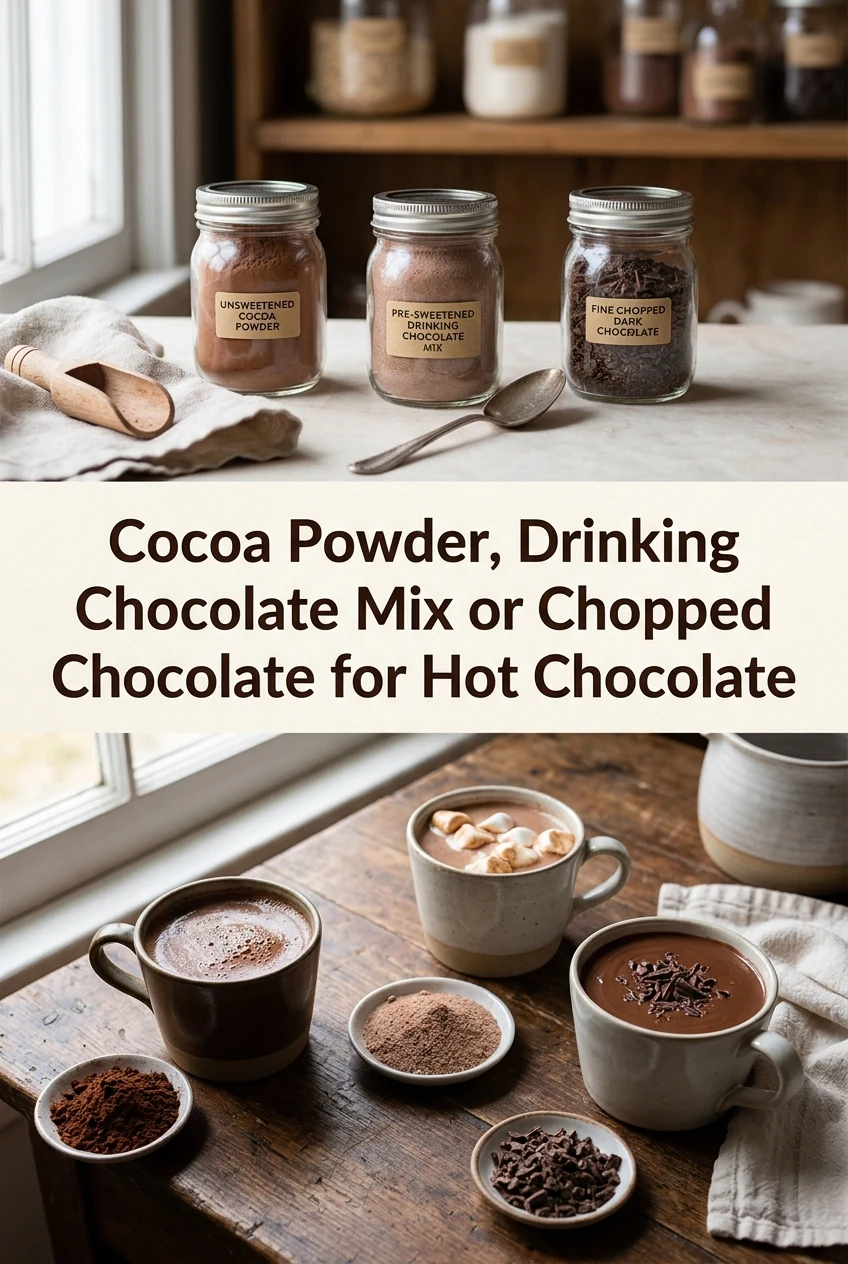
AI-generated editorial concept created for this article. The image is not a technical diagram or a tested result.
Compare Ingredient Lists Before Measuring
Unsweetened cocoa powder lists only cocoa or cocoa processed with alkali. Drinking chocolate mixes typically list sugar first or second, followed by cocoa, milk powder, and sometimes salt or vanilla. Chopped chocolate from a bar lists cocoa mass, sugar, cocoa butter, and often an emulsifier. Knowing this tells you immediately that the mix already contains sweetener and dairy solids, so adding the same amount of sugar you would use with plain cocoa powder will make the drink unpleasantly sweet.
Adjust Sweetener and Milk for Each Type
For unsweetened cocoa powder, start with one heaped teaspoon of cocoa and one teaspoon of sugar per 200 milliliters of milk, then taste and adjust. For a drinking chocolate mix, follow the packet's own quantity directions first and taste before adding any extra sugar. For chopped chocolate, use roughly 20 grams per 200 milliliters of milk; the bar's own sugar content varies, so taste before adding sweetener. These are starting points for your own notebook, not universal ratios.
Heat Milk Gently and Follow Product Directions
Warm pasteurized milk in a small saucepan over low to medium-low heat, stirring frequently. Do not bring it to a rolling boil; a gentle steam is enough to dissolve cocoa powder and melt chopped chocolate. For drinking chocolate mixes, the packet often specifies a temperature or method; follow those instructions rather than improvising. Chopped chocolate melts more smoothly if you add it to the milk in small pieces and stir continuously. Scorched milk at the bottom of the pan will affect the flavor of all three types.
Make One Mug of Each and Record the Results
As an illustrative exercise, prepare one 200-milliliter mug from each product on the same day using the same saucepan and the same pasteurized whole milk. Note the color of each finished drink, how much stirring each needed, how sweet each tasted before any adjustment, and whether the texture felt thin or coating. This comparison is specific to your brands and your milk. Another brand of drinking chocolate mix or a different percentage chocolate bar will produce different results.
Store and Refrigerate Leftovers Promptly
Any prepared hot chocolate made with milk is a perishable dairy drink. If you make more than one mug, transfer leftovers to a clean covered container and refrigerate at 4 degrees Celsius or below within two hours of preparation, or within one hour if your kitchen is above 32 degrees Celsius. Reheat only the portion you plan to drink, and do not reheat the same batch more than once. Dry cocoa powder and sealed mixes should be stored according to the package directions, away from moisture.
A little more
to know.
Can I use non-dairy milk with any of these three products?
Non-dairy milks vary in fat content and sweetness, which changes the final flavor and how well cocoa dissolves. Oat and soy milks tend to produce a creamier result than rice milk. Follow the same gentle heating approach and taste before adding sweetener.
Why does my chopped chocolate sometimes turn grainy instead of smooth?
Overheating or adding chocolate to milk that is too hot can cause the cocoa solids to seize. Keep the heat low, add chocolate pieces gradually, and stir continuously. If it seizes, removing from heat and stirring vigorously sometimes helps recover the texture.
Original editorial guidance and recipe formulations, not independently kitchen-tested. Times are estimates and depend on equipment and product directions. Cooked bases need additional cooling and refrigeration before cold serving. Images are AI-generated illustrations; appearance and yield may vary. Check actual ingredient labels, allergens, and any certification you require. We do not certify products. Read our approach.
Save to Pinterest ↗ANOTHER IDEA FOR THE COUNTER