Choose Between Canned and Carton Coconut Milk for a Cold Drink
Canned full-fat coconut milk and shelf-stable carton coconut beverage share a name but behave very differently once poured into a cold glass. One adds body and richness; the other blends lightly without weighing down fruit flavours. Understanding the fat difference and how each product pours at refrigerator temperature helps you choose the right one before you open anything, rather than adjusting after the drink is already assembled.
Read the note ↓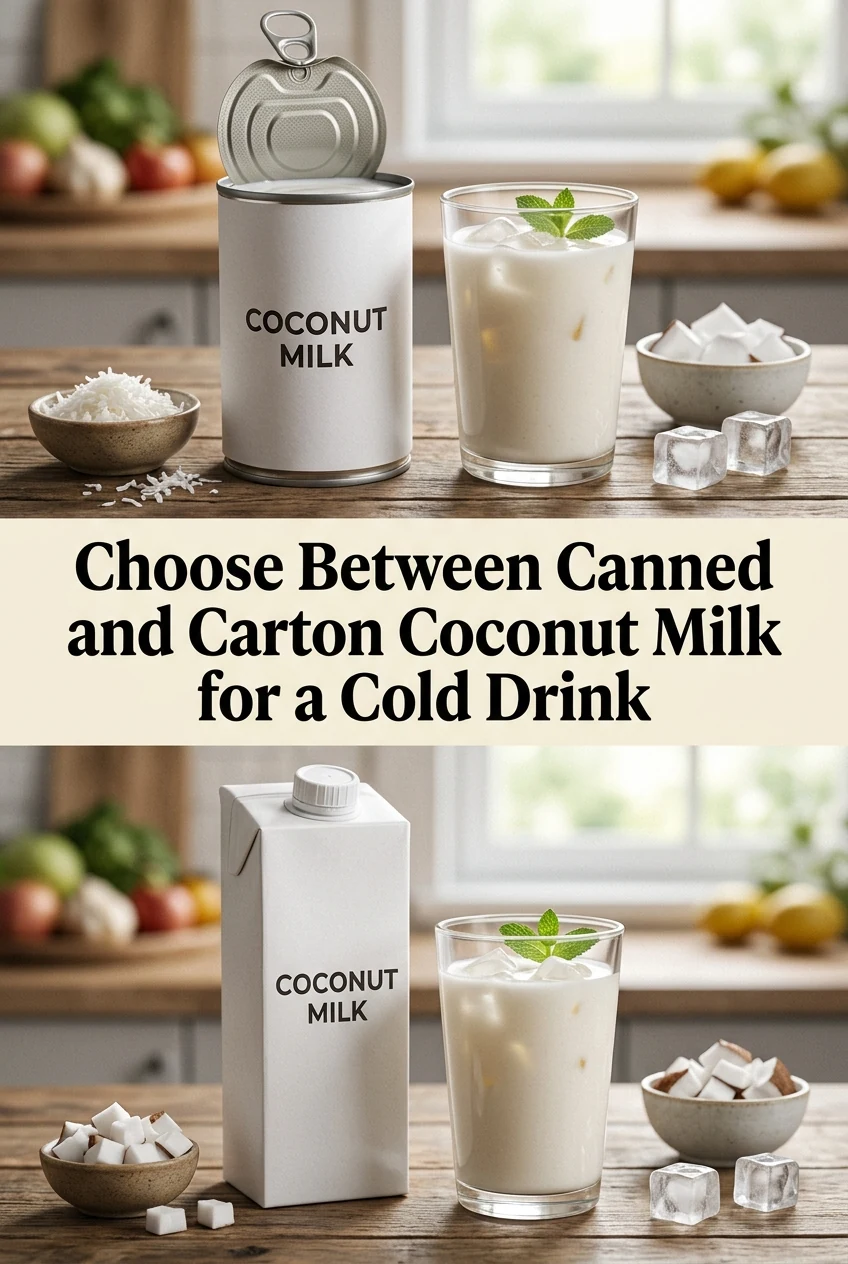
AI-generated editorial concept created for this article. The image is not a technical diagram or a tested result.
Fat Content Sets the Starting Point
Canned full-fat coconut milk typically contains around seventeen to twenty-four grams of fat per one hundred millilitres, though exact figures vary by brand. Carton coconut beverage is heavily diluted and usually contains one to two grams of fat per one hundred millilitres. That gap determines everything downstream: richness, mouthfeel and whether the drink separates quickly in the glass. Check the nutrition panel on your specific product rather than assuming a fixed number.
How Each One Pours at Cold Temperature
Refrigerated canned coconut milk often separates into a thick cream layer sitting above thinner liquid. Before measuring, stir or shake the opened can thoroughly so fat is redistributed. Carton coconut beverage stays uniformly pourable because stabilisers keep it homogeneous even when cold. If your recipe calls for sixty millilitres of coconut milk and you pour from an unstirred can, you may get mostly cream or mostly water depending on which layer you reach first.
Texture in the Finished Glass
A drink built with sixty millilitres of canned full-fat coconut milk over ice will feel noticeably creamy and coat the inside of the glass. The same volume of carton beverage produces a thinner, more translucent result closer to lightly flavoured water. For a fruit drink where mango or pineapple juice is the lead flavour, the carton version lets the fruit stay forward. For a drink where coconut richness is the point, the canned version delivers it.
Measuring Each Product Accurately
Use a small liquid measuring jug placed on a flat surface. Pour canned coconut milk slowly after stirring, reading the meniscus at eye level. Because carton beverage is thinner, it settles faster and is easier to read immediately. An illustrative example: sixty millilitres of canned full-fat coconut milk added to one hundred and twenty millilitres of cold pineapple juice produces a visibly layered, creamy drink before stirring. The same swap with carton beverage blends almost instantly with no visible layer.
Storage and Leftover Handling
Once opened, transfer unused canned coconut milk to a clean sealed container and refrigerate promptly. Return it to four degrees Celsius or below within two hours of opening, or within one hour if your kitchen is above thirty-two degrees Celsius. Use within three to four days and stir again before each use. Carton beverage follows the same refrigeration rule after opening and typically carries a manufacturer use-by window printed on the carton that should be followed.
A little more
to know.
Can I freeze leftover canned coconut milk to avoid waste?
You can freeze it in a sealed container, but the fat and water separate further on thawing. Stir vigorously after thawing before using. Texture in a cold drink may be slightly grainier than fresh, though flavour is generally unaffected.
Does shaking a carton of coconut beverage before pouring make any difference?
Stabilisers in carton beverage keep it fairly uniform, but a brief shake before opening is still a reasonable habit. It ensures any minor settling near the bottom is redistributed, giving you a consistent pour from the first glass to the last.
Original editorial guidance and recipe formulations, not independently kitchen-tested. Times are estimates and depend on equipment and product directions. Cooked bases need additional cooling and refrigeration before cold serving. Images are AI-generated illustrations; appearance and yield may vary. Check actual ingredient labels, allergens, and any certification you require. We do not certify products. Read our approach.
Save to Pinterest ↗ANOTHER IDEA FOR THE COUNTER