Choose Between a Tall Jug and a Wide Bowl for Whisking Matcha
The vessel you whisk matcha in is not a minor detail. A bamboo whisk needs room to move in a rapid back-and-forth motion, and the shape of the container either supports or fights that movement. A wide, shallow bowl lets the whisk travel freely and froth the surface efficiently. A tall, narrow jug restricts the whisk head, traps clumps at the bottom, and causes the liquid to splash up the walls. Knowing which to reach for depends on what you are making and what you have available.
Read the note ↓
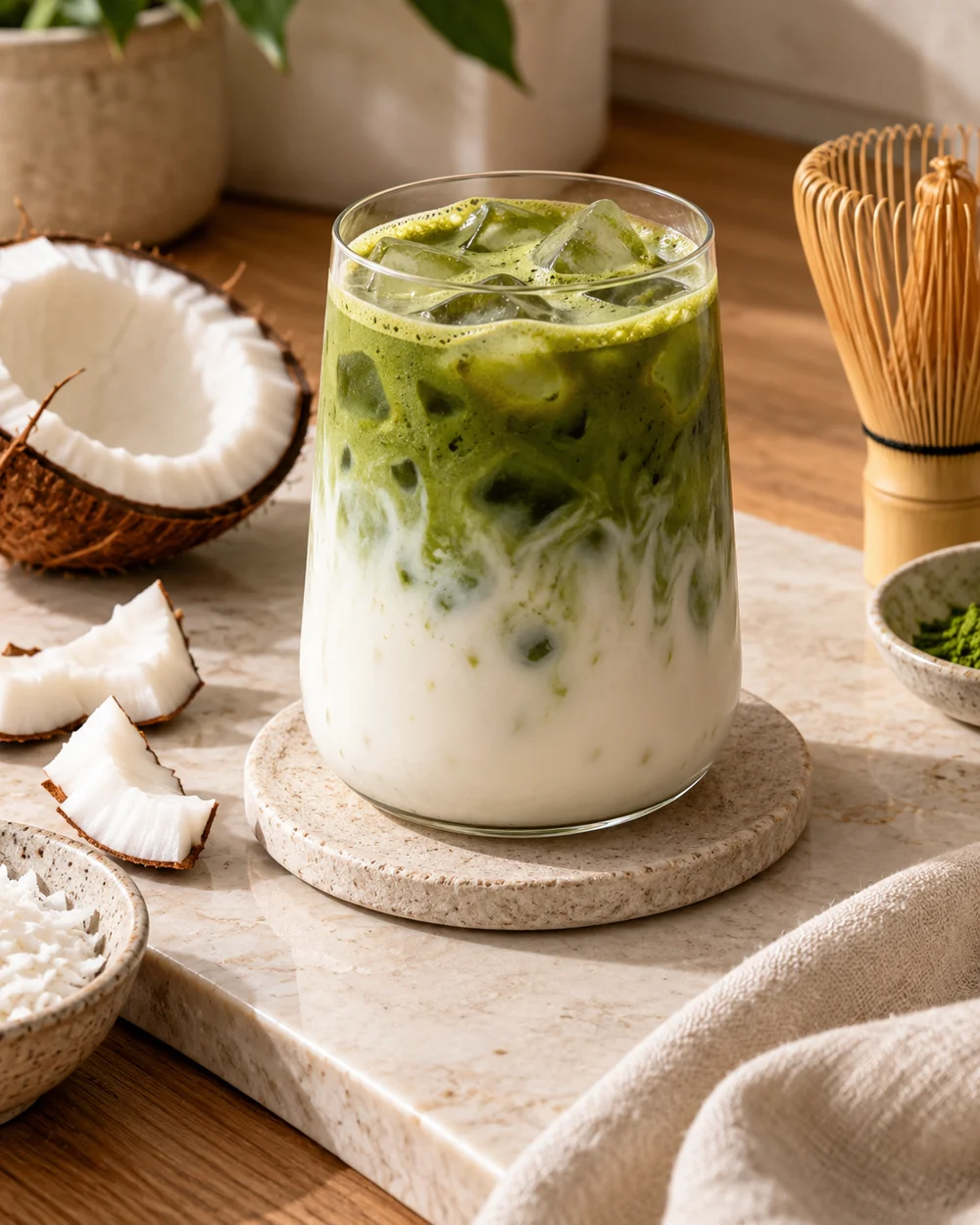
AI-generated editorial concept created for this article. The image is not a technical diagram or a tested result.
How Whisk Movement Differs by Vessel Shape
A bamboo whisk, or chasen, works through rapid lateral movement across the liquid surface. In a wide bowl with a diameter of 11 to 13 centimetres, the tines spread naturally and skim the surface in a W or M pattern without hitting the walls. In a tall jug with an opening of 7 centimetres or less, the tines compress against the sides on each stroke, reducing their effective range and preventing the surface agitation needed to build foam. The whisk also wears faster when it repeatedly contacts hard walls.
Clump Formation and the Role of Vessel Depth
Matcha powder clumps when it contacts water, and those clumps settle toward the bottom of the vessel. In a wide, shallow bowl, the whisk reaches the bottom easily on each stroke and breaks clumps up before they consolidate. In a deep jug, the whisk head may not reach the bottom consistently, leaving a layer of undissolved powder sitting below the foam. Sifting the matcha through a fine sieve before adding water reduces initial clumping regardless of vessel choice.
Water Temperature and Volume Relative to Vessel Size
For a standard thin matcha preparation, around 1 to 2 grams of matcha powder is whisked with 70 to 80 millilitres of water at approximately 70 to 80 degrees Celsius. In a wide bowl, that volume sits at a shallow depth, making the whisk effective from the first stroke. In a tall jug, the same volume sits deeper and the whisk must be angled more steeply to contact the liquid, which reduces control. These are working figures; follow your matcha supplier's guidance for their specific product.
When a Jug Has a Practical Advantage
A tall jug is genuinely useful when you are making a matcha latte and need to pour the whisked matcha concentrate directly into a cup of steamed or cold milk. The jug's spout gives you a controlled pour that a wide bowl cannot. In this case, whisk in the jug with the smallest possible opening that still allows reasonable whisk movement, accept that foam will be limited, and prioritise dissolving the powder fully over building surface froth. A small electric frother is an alternative for latte preparation.
Practical Decision at the Counter
If you are serving matcha as a standalone hot or cold drink and want visible foam, use the widest bowl you have that is dedicated to hot liquids. If you are making a poured latte, use a small jug and focus on full dissolution rather than foam. If you only own a jug, sift the matcha carefully, use slightly more water to raise the liquid level, and accept a less frothy result. A wide bowl is not required, but it does make the whisking step noticeably easier and more consistent.
A little more
to know.
Does the material of the bowl affect the whisking result?
Ceramic bowls retain heat well and keep the water temperature stable during whisking, which helps with dissolution. Glass and thin plastic cool faster. The interior surface texture has minimal effect on foam formation compared to vessel width and whisk movement range.
Can I use a regular kitchen whisk instead of a bamboo chasen?
A small metal whisk can dissolve matcha powder but produces a different texture. The fine tines of a chasen create smaller bubbles and a smoother foam. A metal whisk tends to produce larger, coarser bubbles that dissipate quickly. It works as a substitute but the result differs noticeably.
Original editorial guidance and recipe formulations, not independently kitchen-tested. Times are estimates and depend on equipment and product directions. Cooked bases need additional cooling and refrigeration before cold serving. Images are AI-generated illustrations; appearance and yield may vary. Check actual ingredient labels, allergens, and any certification you require. We do not certify products. Read our approach.
Save to Pinterest ↗ANOTHER IDEA FOR THE COUNTER