Check Whether a Cocoa Product Is Unsweetened Before Baking
Reaching for the wrong tin can quietly shift the sugar balance of an entire bake. Sweetened drinking chocolate powders and unsweetened cocoa powder sit side by side in many home-cafe pantries, and their labels can look similar at a glance. Before you measure anything, a quick read of the ingredient list tells you exactly what you are working with and lets you match the product to what your recipe actually calls for.
Read the note ↓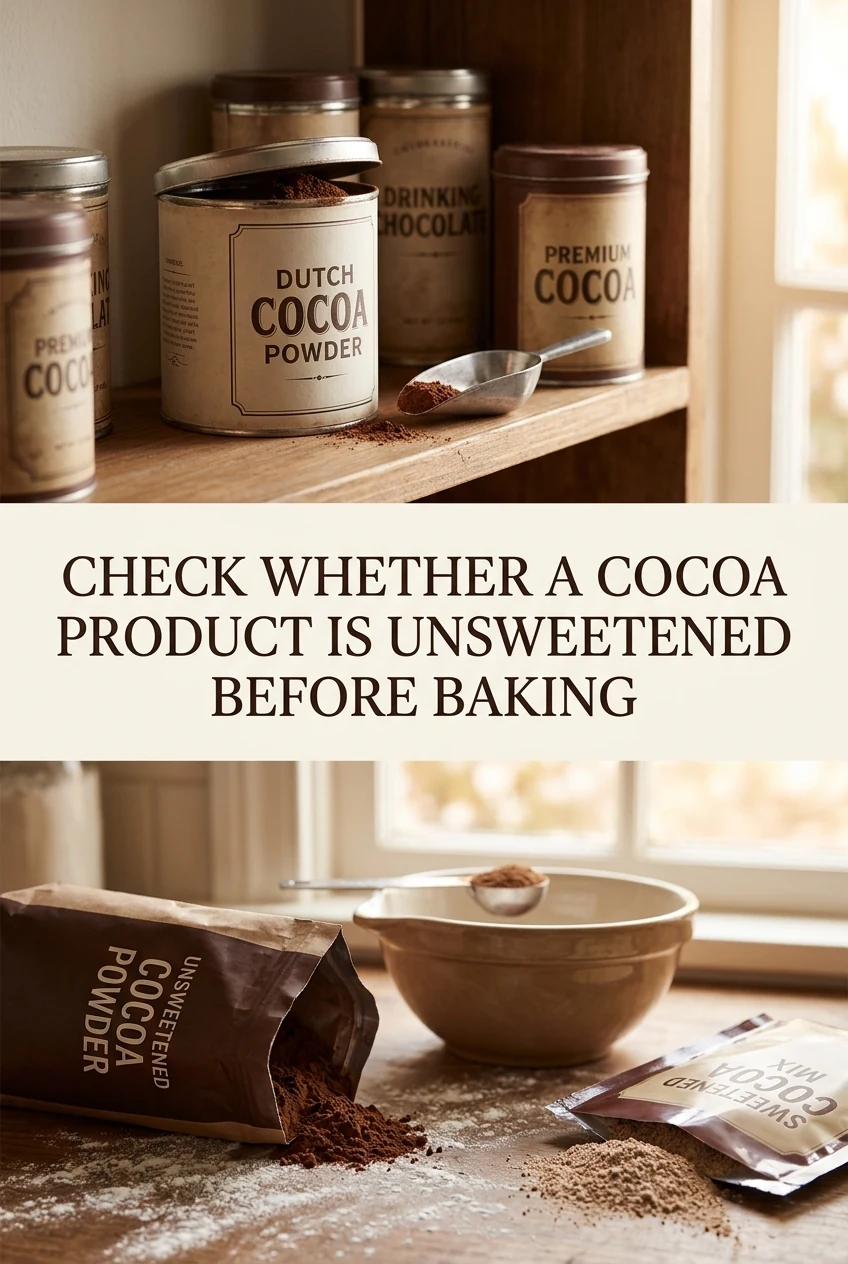
AI-generated editorial concept created for this article. The image is not a technical diagram or a tested result.
Why the Label Check Matters
Recipes that call for unsweetened cocoa powder are built around the assumption that all the sweetness in the finished bake comes from the sugar the recipe itself specifies. A sweetened drinking chocolate powder typically contains added sugar, sometimes milk solids, and occasionally other flavourings, so substituting it gram for gram introduces extra sugar and changes the dry-to-wet ratio. The result may be a bake that is noticeably sweeter than intended, with a slightly different crumb texture. Catching this before you begin costs nothing; catching it after the batter is mixed is far more difficult to correct.
How to Read the Ingredient List
Turn the tin or packet over and find the ingredient list, not the nutritional table. On a true unsweetened cocoa powder, the list will read something like 'cocoa powder' or 'cocoa mass, reduced fat cocoa powder' with no sugar entry. On a sweetened drinking chocolate, sugar will appear, often as the first or second ingredient, and you may also see flavourings, emulsifiers, or dried milk. If sugar appears anywhere in the ingredient list of the product you are holding, treat it as a sweetened product and do not use it as a direct substitute for unsweetened cocoa in a baking recipe without adjusting the recipe's own sugar quantity. Because adjusting sugar ratios in baking involves more than a simple subtraction, the safest practical step for a home-cafe setting is to source the correct unsweetened product rather than attempt a formula correction on the spot.
A Worked Example at the Pantry Stage
Suppose you plan to make a small batch of cocoa-flavoured shortbread and the recipe asks for 30 g of unsweetened cocoa powder. You have two tins on the shelf. Tin A lists 'cocoa powder' as its only ingredient. Tin B lists 'sugar, cocoa powder, flavouring.' Tin A is the correct choice. You measure 30 g from Tin A, add it to the bowl alongside the recipe's stated 60 g of caster sugar, and proceed. Tin B would have added an unknown quantity of extra sugar and altered the intended flavour profile. This is an illustrative plan showing the decision process, not a record of a kitchen-tested result.
Keeping Your Pantry Organised to Avoid Confusion
One practical home-cafe habit is to store unsweetened cocoa powder and sweetened drinking chocolate in clearly different areas of the pantry, or to add a small handwritten label to the front of each tin noting 'unsweetened baking' or 'sweetened drink mix.' If you decant either product into a generic jar, write the full product name and the word 'sweetened' or 'unsweetened' on the jar label before the original packaging is discarded. Opened tins of cocoa powder should be sealed tightly and stored in a cool, dry place away from moisture, following the storage guidance printed by the maker on the packaging. Do not rely on invented shelf-life figures; use the best-before date on the original tin as your reference.
Vanilla and Other Flavourings in the Same Recipe
Many cocoa-based bakes also include vanilla. When selecting vanilla flavouring for a halal kitchen, choose a product that is explicitly labelled alcohol-free, such as a vanilla flavouring or vanilla paste made without alcohol-based extraction. Read that label with the same care you applied to the cocoa tin: the ingredient list should not include ethanol or alcohol. If the recipe calls for a small quantity of vanilla alongside the cocoa, confirm both products meet your requirements before you begin measuring. Combining a correctly sourced unsweetened cocoa with a confirmed alcohol-free vanilla flavouring means every ingredient in the bake aligns with both the recipe's technical requirements and your kitchen standards.
A little more
to know.
Can I use Dutch-process cocoa wherever unsweetened natural cocoa is called for?
Dutch-process and natural unsweetened cocoa are both unsweetened, so neither adds extra sugar to a recipe. However, they behave differently with leavening agents because of their differing acidity levels. If your recipe specifies one type, check whether it also specifies baking soda or baking powder, as swapping cocoa types without adjusting the leavening can affect how the bake rises. This is a separate consideration from the sweetened-versus-unsweetened question, but worth noting when you are reading labels at the pantry stage.
What should I do if I have already mixed a sweetened powder into the batter before noticing the error?
At that point, the sugar from the sweetened powder is fully incorporated and cannot be removed. The most straightforward option is to start the batch again with the correct unsweetened cocoa powder. Attempting to compensate by reducing sugar elsewhere in a baking recipe is complex because sugar affects texture and moisture retention as well as sweetness, and an on-the-spot adjustment without testing is unlikely to produce a reliable outcome. The label check described in this article is specifically designed to catch the issue before mixing begins.
Original editorial guidance and recipe formulations, not independently kitchen-tested. Times are estimates and depend on equipment and product directions. Cooked bases need additional cooling and refrigeration before cold serving. Images are AI-generated illustrations; appearance and yield may vary. Check actual ingredient labels, allergens, and any certification you require. We do not certify products. Read our approach.
Save to Pinterest ↗ANOTHER IDEA FOR THE COUNTER