Calibrate Beverage Cup Volume Against Scale Weight
Mismatched vessel volumes frequently cause accidental spills, diluted drinks, and incorrect extraction yields on a home beverage counter. Commercial glassware ratings rarely represent the operational fill line of a cup, leading to miscalculations when transferring hot espresso, frothed milk, or ice. Taring empty service cups directly on an ordinary digital gram scale and recording their true capacity in plain water provides an exact benchmark for your bar. This straightforward verification standardizes daily drink builds without requiring proprietary labware, guesswork, or messy overflow adjustments during service.
Read the note ↓
Representative category illustration reused from our editorial library; it does not depict this specific project or a tested result.
Set the Dry Baseline
Place an empty, completely dry ceramic cup or glass tumbler onto the center of your digital kitchen scale. Ensure the scale rests upon a flat, level counter away from vibrating appliances. Press the tare function to reset the display readout to exactly zero grams. Confirming an accurate dry baseline isolates the weight of added liquid from manufacturing variations in the base material, ensuring that subsequent additions reflect real operational fluid capacities rather than container density differences.
Measure Total Brim Capacity
Slowly pour plain tap water at room temperature into the tared cup until the meniscus reaches the absolute upper rim without spilling over the exterior edges. Record the final display reading in grams. Because pure water weighs almost exactly one gram per milliliter at typical room temperatures, this total weight serves as an illustrative measurement of complete volumetric boundary rather than a certified metric standard, exposing the ultimate mechanical threshold of the vessel.
Determine the Safe Service Margin
Drinking vessels cannot be transported or sipped comfortably when filled to the physical brim. Use an eye dropper, teaspoon, or small syringe to remove water until the surface drops roughly six to ten millimeters below the lip. Note the resulting display weight on the scale. This secondary figure represents the practical service capacity, which prevents liquid from sloshing onto the counter or scalding your fingers as you carry the drink to the table.
Account for Ice Displacement
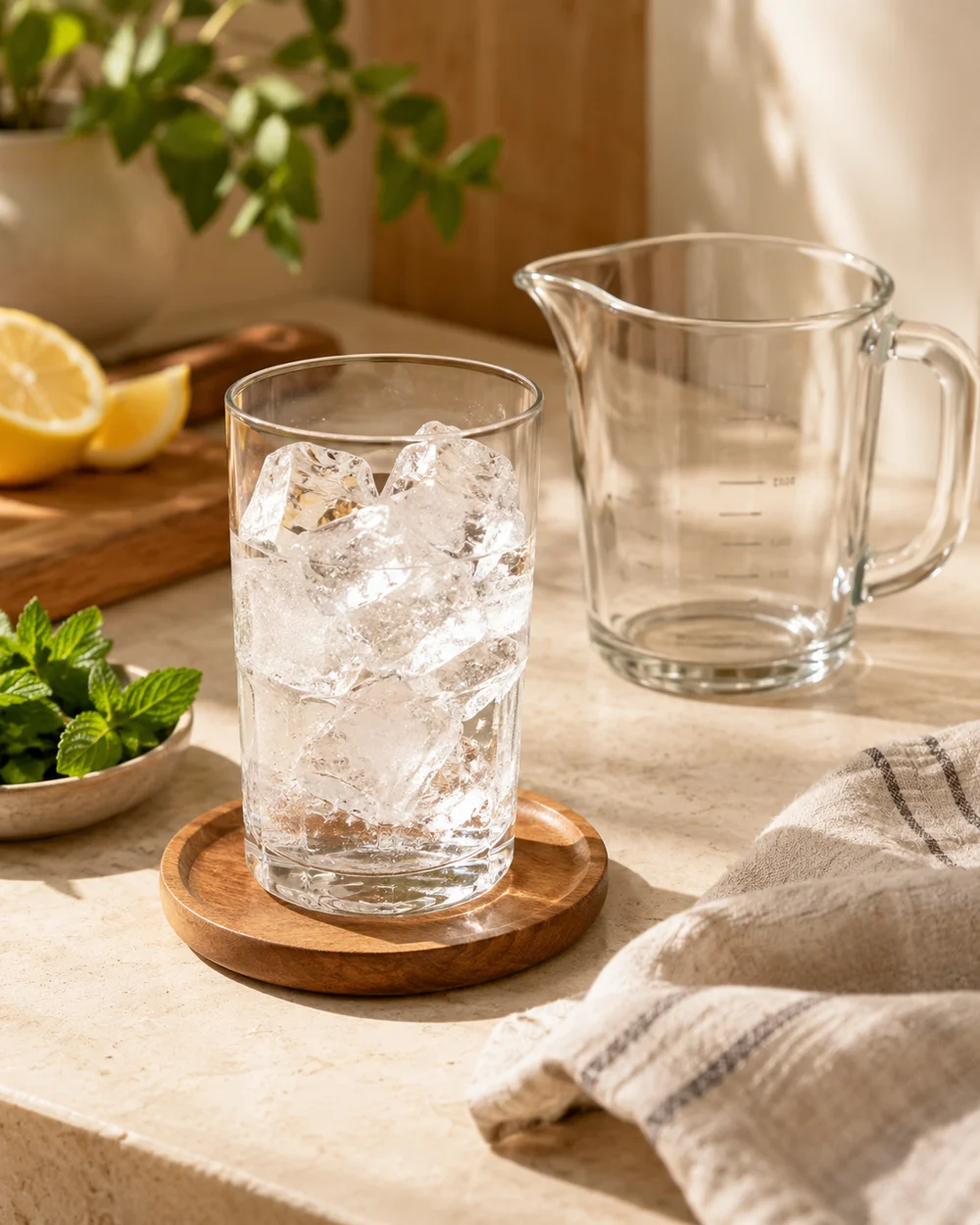
Ice displaces beverage volume substantially, making iced drink sizing deceptive. To map an iced beverage workflow, clear the water, dry the cup, tare it again, and fill it with your standard serving of solid ice cubes. Read the ice weight, then add water up to the safe service margin. The difference between total service weight and initial ice weight defines the precise liquid volume your iced beverage can accommodate without overflowing.
Apply the Data to Recipes
As an illustrative example, a ceramic mug marketed as 300 ml might measure 280 grams to the brim and 245 grams at safe service height. If your brewed coffee yields 200 grams, you possess precisely 45 grams of allowable headroom for milk additions. Keep a small index card or masking tape label beneath your cup storage shelf with these calibrated figures to assemble multiple drinks swiftly and cleanly without repeated checks.
A little more
to know.
Does dairy milk weigh the same as water during this calibration?
Pasteurized cow milk is slightly denser than water, weighing roughly 1.03 grams per milliliter. For domestic beverage building, treating one gram as one milliliter remains sufficiently accurate to prevent cup overflow while keeping prep steps straightforward.
Why do identical glasses from the same set show different weights?
Standard glassware and glazed ceramics undergo factory variations during molding and firing. While their empty weights often vary noticeably, their internal liquid volumes tend to stay relatively uniform within a narrow three-to-five gram tolerance range.
Original editorial guidance and recipe formulations, not independently kitchen-tested. Times are estimates and depend on equipment and product directions. Cooked bases need additional cooling and refrigeration before cold serving. Images are AI-generated illustrations; appearance and yield may vary. Check actual ingredient labels, allergens, and any certification you require. We do not certify products. Read our approach.
Save to Pinterest ↗ANOTHER IDEA FOR THE COUNTER