Calculate the Number of Paper Cases Needed for a Muffin Batch
Running short of paper cases mid-bake is one of those small frustrations that disrupts an otherwise smooth home-cafe session. The fix is straightforward arithmetic: match your recipe's stated yield to your tin's actual capacity, then decide what to do with any batter that is left over. This article walks through a clear worked example so you can count cases confidently before you preheat the oven.
Read the note ↓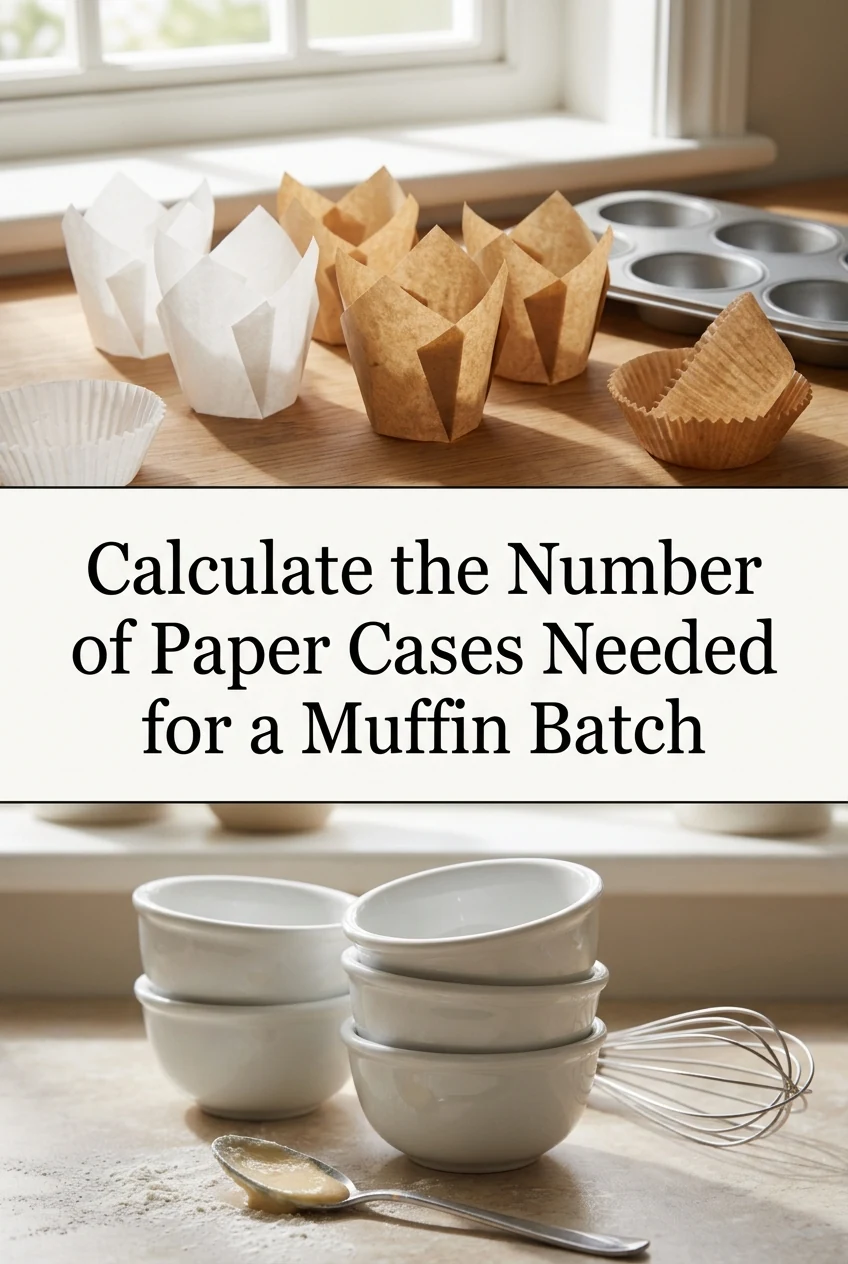
AI-generated editorial concept created for this article. The image is not a technical diagram or a tested result.
Start With the Recipe Yield
Every reliable muffin recipe states a yield, such as 'makes 12 standard muffins' or 'makes 24 mini muffins.' That number is the baseline for your case count. Read it carefully, because yield figures are usually based on filling each cavity to a specific level, often two-thirds to three-quarters full, as noted in the recipe itself. If your recipe says 12, plan to have at least 12 cases ready before you begin mixing. Buying a few extra cases from the same pack is sensible, since paper cases are inexpensive and a torn or misshapen case is unusable.
Check Your Tin's Actual Cavity Count
A standard muffin tin sold in many home-kitchen ranges holds 12 cavities, but tins also come in 6-cavity, 9-cavity, and 24-cavity mini versions. Count the cavities in your specific tin rather than assuming. If your recipe yields 12 and your tin holds 12, one tin and 12 cases is the straightforward answer. If your recipe yields 18 and your tin holds 12, you will need two tins or two sequential bakes, and you will need 18 cases in total. Knowing your tin count prevents you from discovering a mismatch only after the batter is already mixed.
A Worked Example: Matcha Muffins Yielding 15
Suppose your matcha muffin recipe, made with alcohol-free vanilla flavoring and halal-certified ingredients throughout, states a yield of 15 standard muffins. Your tin holds 12 cavities. Here is an illustrative planning approach, not a kitchen-tested result. Round one fills 12 cases and uses your tin at full capacity. The remaining batter is enough for 3 more muffins. For round two you line just 3 cavities with cases and leave the other 9 empty. Many bakers add a small amount of water to the empty cavities during the second bake to help the tin heat evenly; check your tin manufacturer's instructions to see whether they recommend this practice for your specific tin. Total cases needed: 15. Buy 18 to allow for any that are damaged when you unpack them.
Matching Case Size to Cavity Size
Paper cases are sold in sizes described as mini, standard, and tulip or jumbo. A standard case is designed to sit inside a standard muffin cavity and hold its shape during baking. A tulip case is taller and wider at the top, suited to a deeper cavity or a recipe that intentionally bakes a tall, domed muffin. If you use a tulip case in a standard cavity, the paper will fold awkwardly and the muffin may bake unevenly. Check the case dimensions on the packaging and compare them with your tin's cavity diameter before purchasing. When the sizes match, the case sits flush, the batter fills it properly, and the finished muffin releases cleanly.
Handling Leftover Batter Safely
If your plan produces leftover batter after all cases are filled, decide what to do with it before you start mixing, not after. Muffin batter containing dairy, eggs, or fresh matcha paste is perishable. Refrigerate any unused batter promptly and use it within the timeframe your recipe specifies, or discard it if no guidance is given. Do not leave perishable batter at room temperature while waiting for the oven to free up. A better approach is to scale the recipe down to match your tin's exact capacity, or scale it up to a clean multiple of your tin size, so every case is filled and no batter is left waiting. Adjusting yield before mixing is simpler and safer than managing leftover batter after the fact.
A little more
to know.
Can I bake muffins directly in the tin cavities without paper cases?
Yes, if you grease each cavity thoroughly with butter or a neutral oil according to your recipe's instructions. Paper cases make removal easier and keep the muffins neater for serving, but they are not structurally required. If you choose to skip cases, your case count is simply zero and you rely entirely on proper greasing to prevent sticking.
What if my recipe yield does not divide evenly into my tin's cavity count?
Plan for a partial second bake, as shown in the worked example above. Line only the number of cavities you need for the remaining batter, and follow your tin manufacturer's guidance on whether to add water to the empty cavities. Your total case count is still equal to the recipe's stated yield, rounded up by a few extras to cover any damaged cases.
Original editorial guidance and recipe formulations, not independently kitchen-tested. Times are estimates and depend on equipment and product directions. Cooked bases need additional cooling and refrigeration before cold serving. Images are AI-generated illustrations; appearance and yield may vary. Check actual ingredient labels, allergens, and any certification you require. We do not certify products. Read our approach.
Save to Pinterest ↗ANOTHER IDEA FOR THE COUNTER