Build a Still Pomegranate and Pear Cooler From Juice and Fresh Fruit in a Measured Jug
Bottled pomegranate juice is intensely tart and deeply colored, and combining it with fresh pear slices in a measured jug softens both the flavor and the visual weight of the drink. The proportion of juice to water and the timing of the pear infusion determine whether the result tastes balanced or sharp. This guide works through the volume decisions, the chilling window, and the serving steps for a jug that serves two to three people comfortably.
Read the note ↓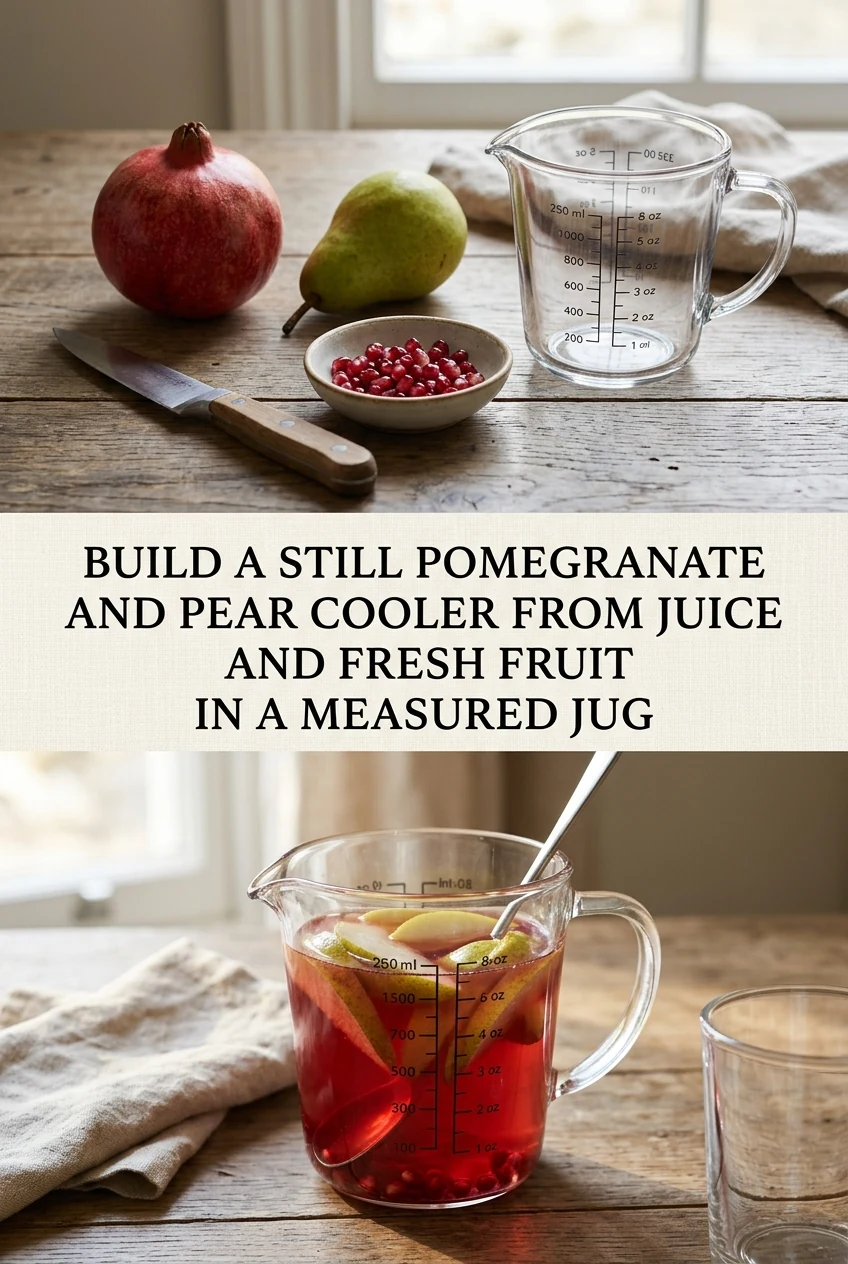
AI-generated editorial concept created for this article. The image is not a technical diagram or a tested result.
Establish Your Base Proportions
A workable starting proportion for a balanced cooler is 200 ml of pure bottled pomegranate juice to 400 ml of cold still water in a 1-litre jug, leaving room for fruit and ice. This two-to-one dilution reduces sharpness without washing out the pomegranate color. If your bottled juice is labeled as a blend or drink rather than pure juice, it may already be diluted; in that case, reduce the added water to 250 ml and taste before adjusting. Always measure rather than estimate so you can repeat results.
Prepare and Add the Pear
Choose a firm pear variety that holds its shape when sliced, such as a Bosc or Conference pear. Wash, halve, and core it, then cut into slices about 5 mm thick. Thinner slices release more juice into the cooler and soften faster; thicker slices stay firmer for longer and contribute less flavor. Add roughly half a medium pear, about 6 to 8 slices, to the jug before pouring the liquids. This lets the slices sit at the bottom rather than floating and tipping when you pour.
Combine Liquids and Chill
Pour the measured pomegranate juice over the pear slices, then add the cold water. Stir once gently with a long spoon to distribute without bruising the fruit. Cover the jug with a lid or cling film and refrigerate at 4 degrees Celsius or below for at least 30 minutes before serving. This resting period allows the pear to release a faint sweetness into the juice and lets the mixture reach a consistent temperature throughout. Chilling for longer than two hours is fine but the pear slices will soften noticeably.
Taste and Adjust Before Serving
After chilling, pour a small amount into a glass and taste it. If it reads too tart, stir in a teaspoon of plain sugar dissolved in a tablespoon of warm water before adding it to the cold jug; this avoids undissolved granules. If it tastes flat, add a 30 ml squeeze of fresh lemon juice to lift the flavor. These are illustrative adjustment steps, not a formula; your bottled juice brand and pear ripeness will shift the balance. Adjust in small increments and retaste.
Serve and Handle Leftovers
Pour over ice in individual glasses and include one or two pear slices from the jug in each glass for presentation. The cooler is best served the day it is made. If any remains, keep it covered in the refrigerator and consume within 24 hours, as the pear slices will continue to soften and the juice may become slightly cloudy from suspended fruit pulp. Do not leave the jug at room temperature for more than two hours, or one hour if the room temperature exceeds 32 degrees Celsius.
A little more
to know.
Can I use pear juice instead of fresh pear slices?
Yes, but add it in small amounts, around 50 ml, and reduce the water accordingly to avoid an overly sweet result. Fresh slices also add a visual element and slight texture that bottled pear juice cannot replicate.
Will the cooler stay clear or will it turn cloudy in the jug?
Pomegranate juice is naturally deep red and not fully clear. The water dilution lightens it to a translucent ruby. Fine pear pulp or pectin released over time can add slight cloudiness, which is harmless but more noticeable after the first hour of chilling.
Original editorial guidance and recipe formulations, not independently kitchen-tested. Times are estimates and depend on equipment and product directions. Cooked bases need additional cooling and refrigeration before cold serving. Images are AI-generated illustrations; appearance and yield may vary. Check actual ingredient labels, allergens, and any certification you require. We do not certify products. Read our approach.
Save to Pinterest ↗ANOTHER IDEA FOR THE COUNTER