Build a Still Pomegranate and Orange Cooler From Juice in a Measured Jug
A still fruit cooler built from measured juice in a jug is easier to reproduce consistently than one assembled by eye. Pomegranate juice brings deep colour and tartness while fresh orange juice adds brightness and natural sweetness. Balancing these two against cold water and ice in a fixed-volume jug means you can adjust the ratio deliberately rather than tasting and guessing. This guide walks through a one-litre build that can be scaled up or thinned down once you know how the base ratio tastes to you.
Read the note ↓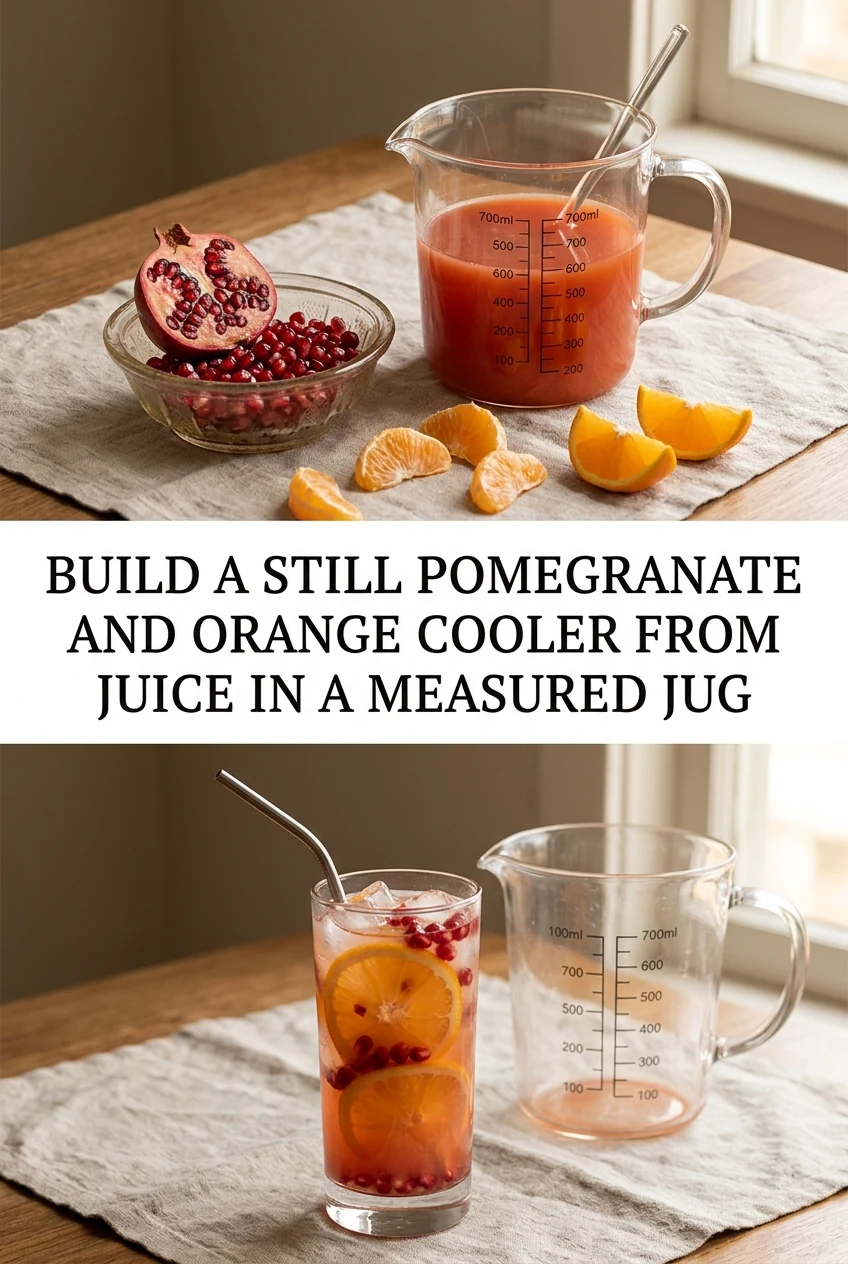
AI-generated editorial concept created for this article. The image is not a technical diagram or a tested result.
Set Up a One-Litre Jug as Your Working Measure
Use a clear jug marked in 50 ml increments so you can read each addition without pouring into a separate measuring cup. For a one-litre finished cooler, plan for 200 ml pomegranate juice, 150 ml freshly squeezed orange juice, 400 ml cold still water and enough ice to bring the total volume to the one-litre line. This starting ratio gives a drink that is noticeably fruity but not intensely concentrated. Adjust water upward if you prefer a lighter result after tasting.
Juice the Oranges and Measure Before Adding
Squeeze oranges at room temperature rather than straight from the refrigerator; they yield more juice. Strain the juice through a fine sieve into a small bowl to remove pulp and seeds, then pour into the jug up to the 150 ml mark. Measure pomegranate juice separately and add it next. Pouring them into the jug in sequence rather than pre-mixing lets you confirm each volume against the markings before committing. Two medium oranges typically yield between 120 and 160 ml, so have a third on hand.
Add Water and Taste the Concentrate Before Ice
Pour in 400 ml of cold water and stir gently. Taste the mixture at this stage, before ice dilutes it further. The drink should taste slightly stronger than you want the finished cooler to be, because ice will melt and thin it. If it tastes too tart, add another 50 ml of water now and note the adjustment for next time. This tasting step is the most useful moment to calibrate the recipe to your preference and your specific juice brands.
Add Ice to Volume and Serve Promptly
Fill the jug with ice until the liquid reaches the one-litre line. Stir once to combine and lower the temperature evenly. Serve immediately into glasses over additional ice if preferred. If you need to hold the cooler briefly before serving, keep the jug refrigerated so the ice does not melt prematurely, and stir again before pouring because fresh juices settle over time.
Scale the Batch for a Larger Group
To build two litres, double every measured quantity: 400 ml pomegranate juice, 300 ml orange juice and 800 ml water, then ice to the two-litre line. The ratio stays identical and the flavour should be consistent. For a more concentrated version intended for a juice bar where guests add their own water, omit the 400 ml water entirely and serve 350 ml of the juice blend over ice in individual glasses, letting each person dilute to taste at the table.
A little more
to know.
Can bottled orange juice replace freshly squeezed in this build?
Yes, though the flavour will be less bright. Use a chilled, not-from-concentrate variety and measure the same 150 ml. Check the label to confirm no added sugar, which would shift the sweetness balance against the tart pomegranate.
How do you keep the cooler from tasting flat when made ahead?
Flat flavour usually comes from ice melt diluting the mix over time. Build the concentrate without ice, refrigerate it sealed, and add ice only at the moment of service. This preserves the intended juice-to-water ratio until the drink is poured.
Original editorial guidance and recipe formulations, not independently kitchen-tested. Times are estimates and depend on equipment and product directions. Cooked bases need additional cooling and refrigeration before cold serving. Images are AI-generated illustrations; appearance and yield may vary. Check actual ingredient labels, allergens, and any certification you require. We do not certify products. Read our approach.
Save to Pinterest ↗ANOTHER IDEA FOR THE COUNTER