Build a Still Hibiscus and Pear Cooler in a Measured Jug
A still hibiscus and pear cooler relies on two separate preparations that meet in the jug: a small brewed hibiscus concentrate and a measured pour of pear juice. Getting the ratio right before adding ice keeps the drink from tasting either too tart or too watery. This guide walks through brewing the concentrate, measuring the juice and combining both in a way that produces a clear, still drink rather than a cloudy or over-diluted one.
Read the note ↓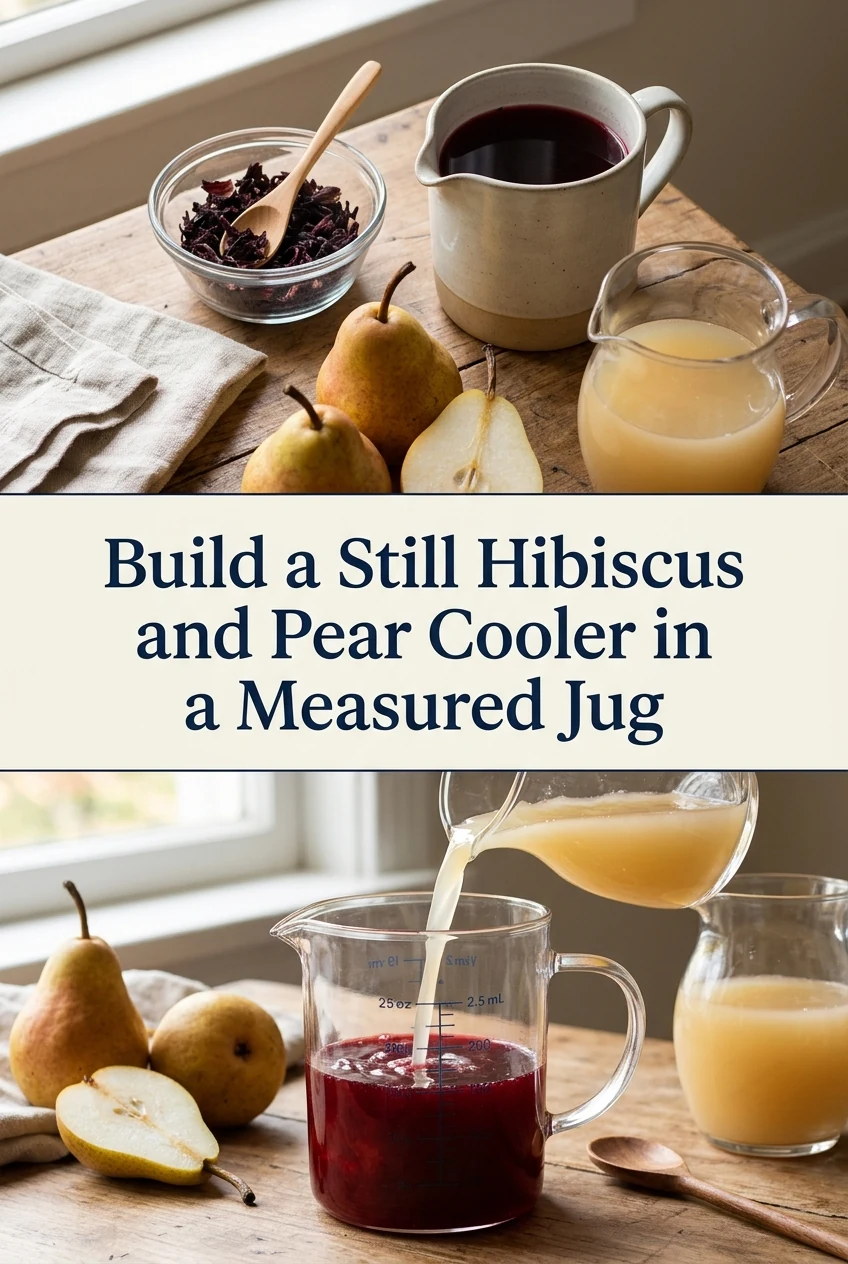
AI-generated editorial concept created for this article. The image is not a technical diagram or a tested result.
Brew a Small Hibiscus Concentrate First
Place eight grams of dried hibiscus petals into a small heatproof jug or bowl. Pour two hundred millilitres of water that has just come off the boil over the petals. Steep for eight minutes, then strain through a fine mesh strainer into a clean container, pressing the petals gently to extract liquid without forcing sediment through. Discard the spent petals. You now have a deep ruby concentrate. Allow it to cool to room temperature before combining with juice, or refrigerate it if preparing ahead.
Measure the Pear Juice Separately
Measure one hundred and fifty millilitres of commercially produced, pasteurised pear juice using a separate liquid measuring vessel. Read the measurement at eye level on a flat surface. Pear juice is naturally sweet and mild, which balances hibiscus tartness without overpowering it. If your pear juice is from concentrate, the flavour will be slightly more intense than single-pressed juice, so the ratio still works but the result will taste a little sweeter. Both are suitable for this drink.
Combine in the Jug and Taste Before Adding Ice
Pour one hundred millilitres of the cooled hibiscus concentrate into the measured jug first, then add the one hundred and fifty millilitres of pear juice. Stir gently with a long spoon for ten seconds. Taste the mixture before ice goes in. As an illustrative example, this two-hundred-and-fifty-millilitre combined volume typically reads as tart-forward with a floral note; if it tastes sharp, stir in one teaspoon of plain sugar until dissolved. This is a working guide rather than a guaranteed outcome, as hibiscus petal intensity varies between suppliers.
Add Ice and Serve Without Sparkling Water
Fill a serving glass with ice cubes, then pour the combined liquid over the ice. Do not add sparkling water; the drink is designed to be still, and the ice provides dilution as it melts. Pouring over ice rather than adding ice to the jug keeps the jug clean for refills. If you are serving two glasses, this quantity fills two standard two-hundred-and-fifty-millilitre glasses roughly halfway, leaving room for ice without overflow.
Store Any Remainder Promptly
If you have leftover combined drink in the jug, cover it and refrigerate within two hours of preparation, or within one hour if your kitchen is above thirty-two degrees Celsius. The hibiscus concentrate on its own can be refrigerated separately in a sealed container for up to three days. Pear juice should be refrigerated after opening and used within the timeframe printed on the packaging. Do not store the combined drink at room temperature for extended periods.
A little more
to know.
Can I brew the hibiscus concentrate with cold water instead of hot?
Cold brewing hibiscus petals is possible but requires a much longer steep, typically several hours in the refrigerator. The colour extracts well cold, but the flavour is generally milder and less tart than a hot-brewed concentrate. Adjust the ratio to taste if you use this method.
What happens if I use hibiscus tea bags instead of loose dried petals?
Hibiscus tea bags work as a substitute. Use two standard bags in place of eight grams of loose petals and steep for the same eight minutes. Squeeze the bags gently before removing them. Flavour intensity varies by brand, so taste and adjust pear juice quantity accordingly.
Original editorial guidance and recipe formulations, not independently kitchen-tested. Times are estimates and depend on equipment and product directions. Cooked bases need additional cooling and refrigeration before cold serving. Images are AI-generated illustrations; appearance and yield may vary. Check actual ingredient labels, allergens, and any certification you require. We do not certify products. Read our approach.
Save to Pinterest ↗ANOTHER IDEA FOR THE COUNTER