Build a Still Cherry and Pomegranate Cooler From Juice in a Measured Jug
Tart cherry juice and pomegranate juice both carry strong, distinct flavours that can easily overpower each other or turn the finished drink too sweet if you add syrup without first tasting the combined juices. Measuring each juice separately into a jug before mixing gives you a clear starting point and lets you adjust the water ratio and syrup amount in small steps. This guide explains a measured approach to building a balanced batch without committing the whole jug to a proportion that does not work.
Read the note ↓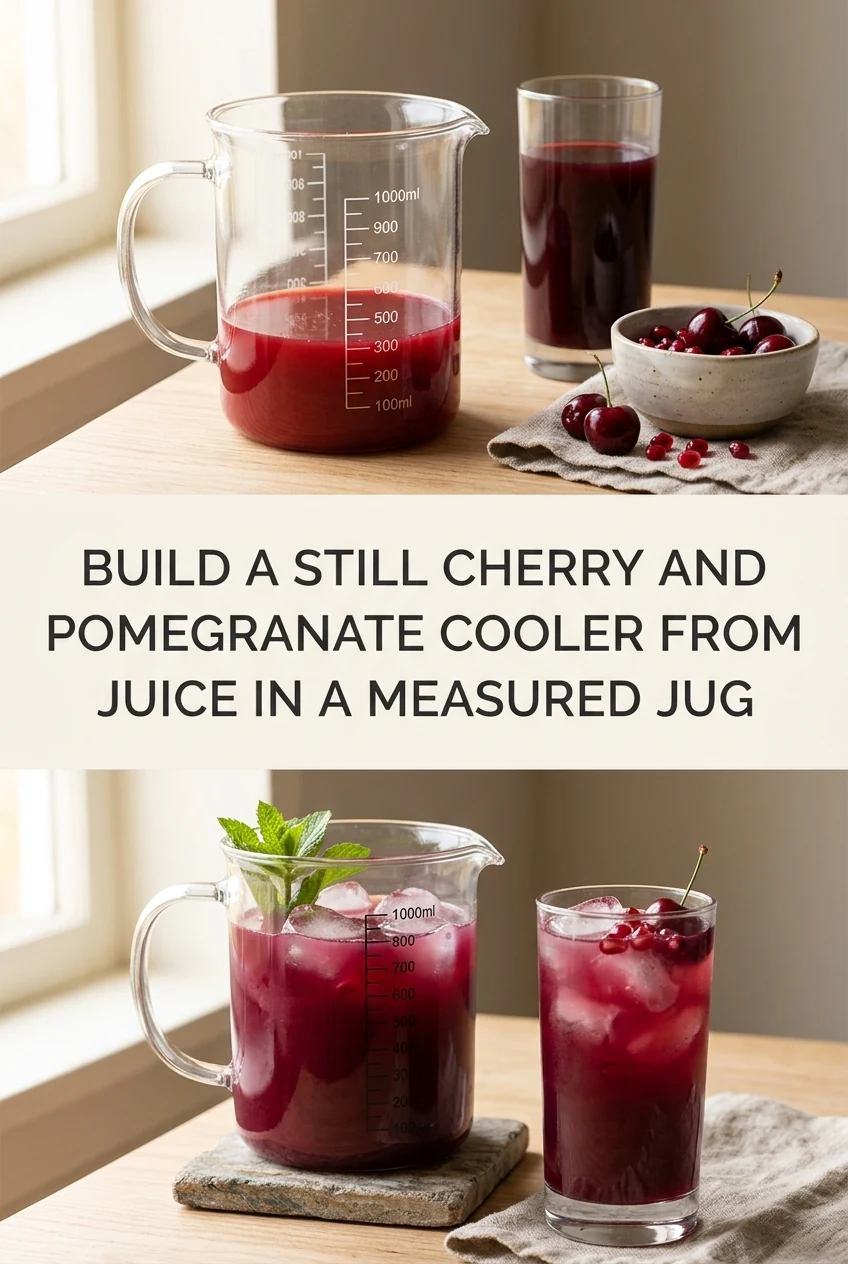
AI-generated editorial concept created for this article. The image is not a technical diagram or a tested result.
Measure Each Juice Into the Jug Separately
Pour 120 ml of tart cherry juice into the jug first, then 80 ml of pomegranate juice. These amounts are an illustrative starting ratio, not a guaranteed result, because juice brands vary in sweetness and tartness. Measuring separately before combining means you can stop and taste each juice individually, which helps you predict how the blend will behave before you add water. Write down the volumes you used so you can repeat or adjust the batch next time.
Add Still Water Gradually and Taste as You Go
Add 300 ml of still water to the combined juices and stir briefly. Taste the mixture before adding any syrup. At this ratio the drink should be noticeably tart and lightly coloured. If it tastes too concentrated, add water in 50 ml increments and stir after each addition. Stopping to taste at each step prevents you from diluting the whole batch past the point where the fruit flavour reads clearly in the finished glass.
Add Syrup in Small Measured Amounts
Once the water balance feels right, add syrup in 5 ml increments using a small measuring spoon. Stir fully after each addition and taste before adding more. A plain sugar syrup made from equal weights of sugar and water works without introducing a competing flavour. Because pomegranate juice often carries its own residual sweetness, you may find the drink needs less syrup than you expect. Stopping early is easier than correcting an over-sweetened batch.
Chill the Jug Before Service and Serve Over Ice
Once the balance is set, cover the jug and refrigerate it at 4 degrees Celsius or below. Chilling before service means the ice in each glass melts more slowly, which keeps the drink from becoming watery quickly. When serving, fill the glass with ice first, then pour the cooled mixture over it. This order prevents splashing and keeps the ice from floating up and blocking an even pour. Refrigerate any unused portion promptly and use within the same service day.
Record the Final Volumes for Batch Consistency
After settling on proportions that work, note the final volumes of cherry juice, pomegranate juice, water and syrup in a simple written record. Include the brand of juice used, since switching brands may require re-tasting and adjusting. A written record removes the need to rebuild the recipe from memory each time and makes it straightforward for another person to prepare the same batch. This is more reliable than estimating by eye when preparing multiple jugs during a busy period.
A little more
to know.
Can the measured jug be prepared the night before and stored overnight?
Yes, provided the jug is sealed, refrigerated at 4 degrees Celsius or below promptly after mixing, and used the following service day. Stir briefly before serving as the juices may settle slightly overnight.
Does the order in which the juices are combined affect the final flavour?
The order does not change the final flavour once stirred, but measuring cherry juice first lets you use the jug markings more accurately before the darker pomegranate juice colours the liquid and makes the volume line harder to read.
Original editorial guidance and recipe formulations, not independently kitchen-tested. Times are estimates and depend on equipment and product directions. Cooked bases need additional cooling and refrigeration before cold serving. Images are AI-generated illustrations; appearance and yield may vary. Check actual ingredient labels, allergens, and any certification you require. We do not certify products. Read our approach.
Save to Pinterest ↗ANOTHER IDEA FOR THE COUNTER