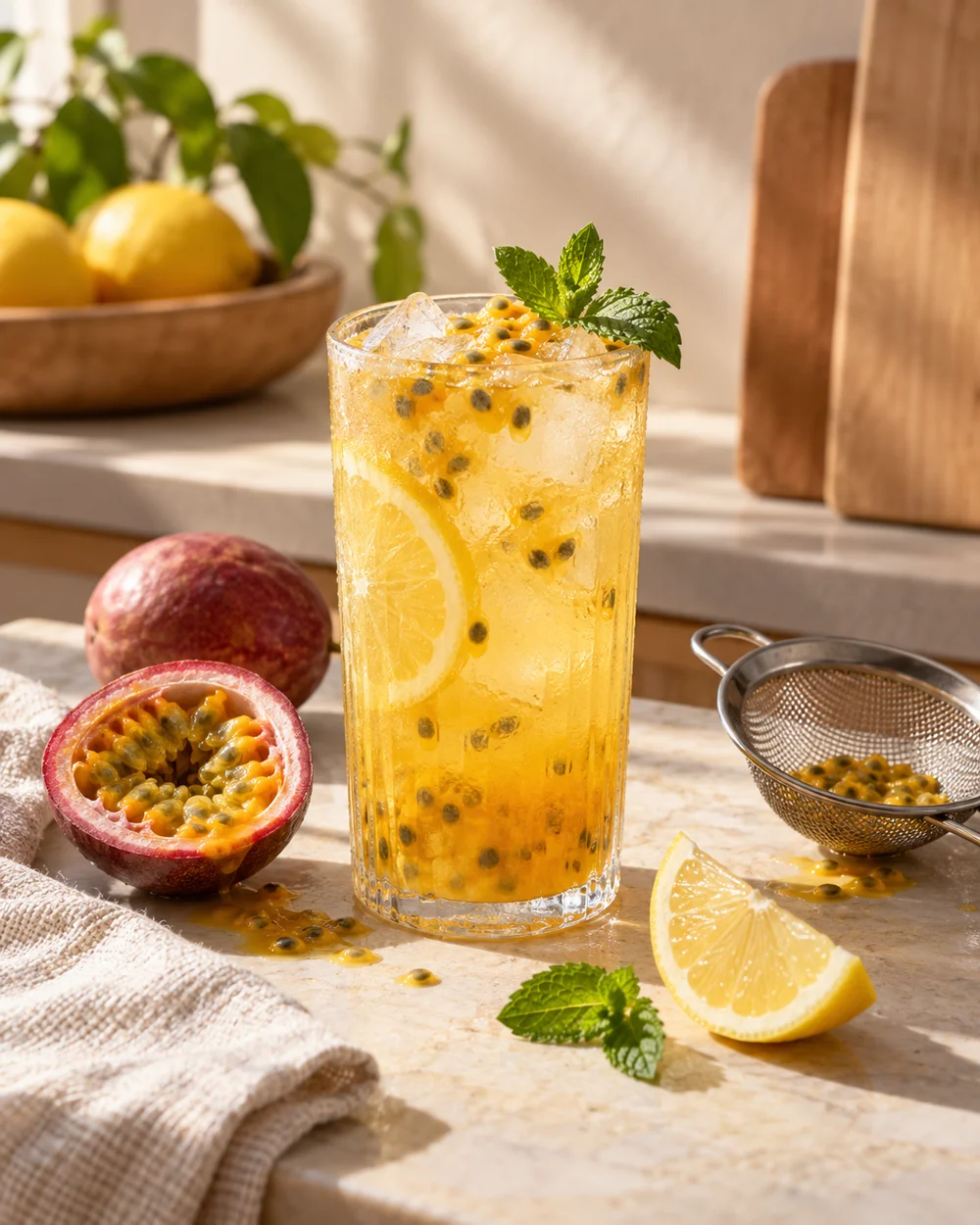
Build a Still Cherry and Lemon Cooler From Fresh Fruit in a Measured Jug
Fresh cherries release a deeply coloured, lightly tart juice when briefly macerated with lemon juice and a small amount of sugar. Straining that mixture into a measured jug lets you see exactly how much concentrated base you have produced, so you can dilute it to a consistent strength with cold still water rather than guessing. This guide covers pitting, macerating, straining and diluting in a repeatable sequence that suits a home café counter.
Read the note ↓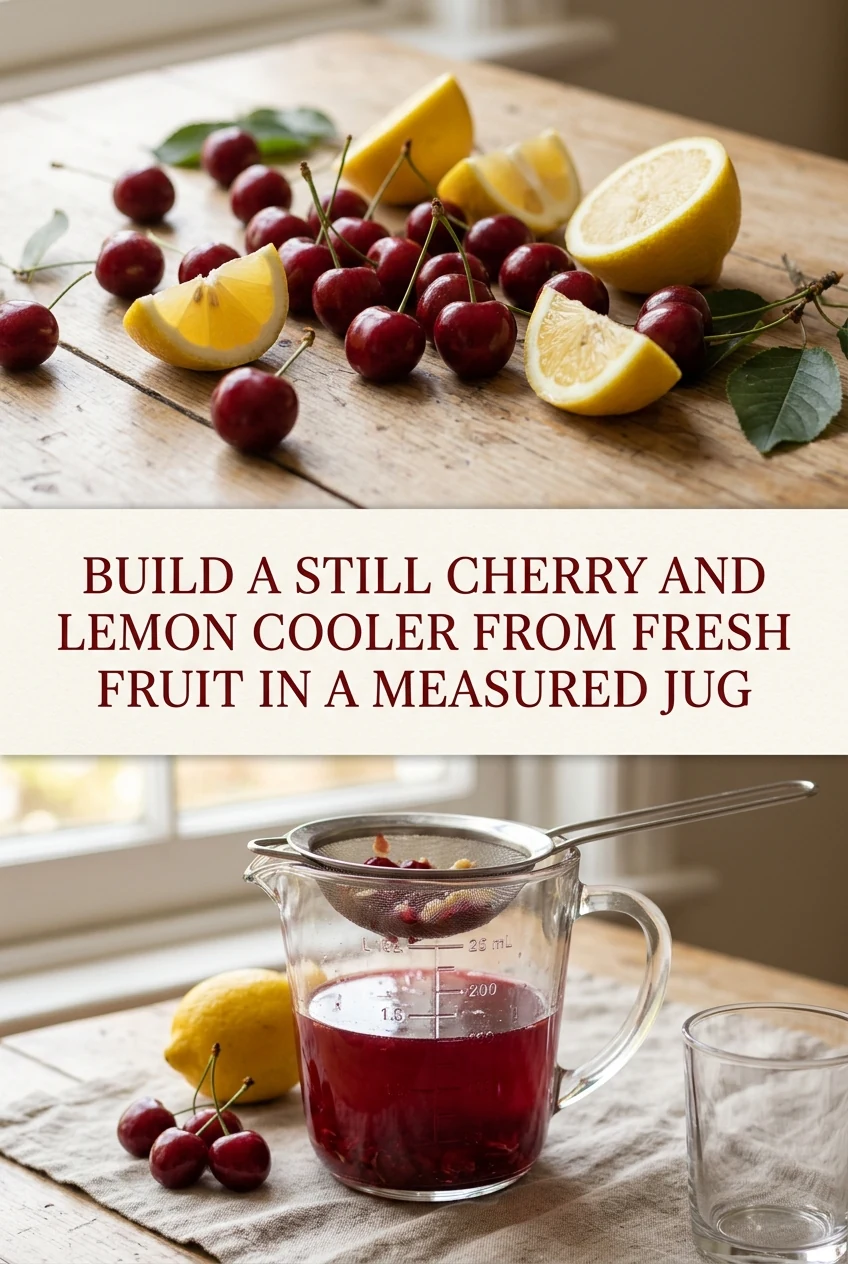
AI-generated editorial concept created for this article. The image is not a technical diagram or a tested result.
Pit and Halve the Cherries
Use a cherry pitter or the tip of a small vegetable peeler to remove stones from 300 g of fresh, ripe sweet cherries. Halving each cherry after pitting exposes more flesh and speeds maceration. Work over a bowl to catch juice that escapes during pitting. Discard any bruised or split fruit that smells fermented. Ripe cherries with firm flesh release cleaner juice than overripe ones, which can produce a muddy-looking base.
Macerate With Lemon Juice and Sugar
Add the halved cherries to a non-reactive bowl. Squeeze 30 ml of fresh lemon juice over them and stir in 40 g of caster sugar. Toss gently to coat every piece, then leave uncovered at room temperature for 20 to 25 minutes. The sugar draws liquid from the fruit by osmosis, and the lemon juice brightens the colour and adds acidity. Stir once at the halfway point to redistribute the sugar that settles at the bottom.
Strain Into a Measured Jug
Set a fine-mesh strainer over a 500 ml measuring jug. Pour the macerated cherries and all pooled liquid into the strainer. Press the solids gently with the back of a spoon to extract juice without forcing pulp through the mesh. A 300 g batch typically yields 120 to 160 ml of concentrated base, though exact volume depends on cherry ripeness and variety. Note the volume on the jug before proceeding, as this guides your dilution ratio.
Dilute to a Drinkable Strength
For a single 250 ml serving, combine 50 ml of the cherry-lemon base with 200 ml of cold still water in a glass over ice. This four-to-one water-to-base ratio is a starting point; taste and add more base or water in 10 ml increments until the balance suits you. Because the base is already sweetened, there is no need to add more sugar unless the cherries were particularly tart. Stir well before tasting, as the base sinks.
Store the Remaining Base Safely
Transfer any unused base to a clean, lidded glass jar and refrigerate at 4 C or below promptly. The base is not shelf-stable and should not be treated as a preserved product, so prepare only what you intend to serve promptly. Before each use, give the jar a gentle swirl, as natural sediment settles. Discard if the colour dulls significantly or the smell becomes off. Do not freeze the base and expect the same clarity after thawing.
A little more
to know.
Can I use frozen cherries if fresh are unavailable?
Yes. Thaw frozen cherries fully in the refrigerator first, then drain off the thaw liquid before macerating. Frozen cherries release more water during thawing, so your base may be thinner and may need less dilution when serving.
Why does the base sometimes look cloudy after refrigeration?
Fine fruit particles that passed through the strainer settle and can make the base appear hazy when cold. Pour slowly or re-strain through a coffee filter before serving if clarity matters. The cloudiness does not indicate spoilage on its own.
Original editorial guidance and recipe formulations, not independently kitchen-tested. Times are estimates and depend on equipment and product directions. Cooked bases need additional cooling and refrigeration before cold serving. Images are AI-generated illustrations; appearance and yield may vary. Check actual ingredient labels, allergens, and any certification you require. We do not certify products. Read our approach.
Save to Pinterest ↗ANOTHER IDEA FOR THE COUNTER