Build a Still Apricot and Lemon Cooler From Fresh Fruit in a Measured Jug
Fresh apricot blended with lemon juice and still water produces a light, portionable cooler that tastes clearly of fruit without relying on concentrate or added carbonation. The method is straightforward but depends on accurate measurement and proper straining to achieve a consistent pour across multiple glasses. Getting the fruit-to-water ratio right on the first attempt requires a few deliberate steps rather than estimating by eye.
Read the note ↓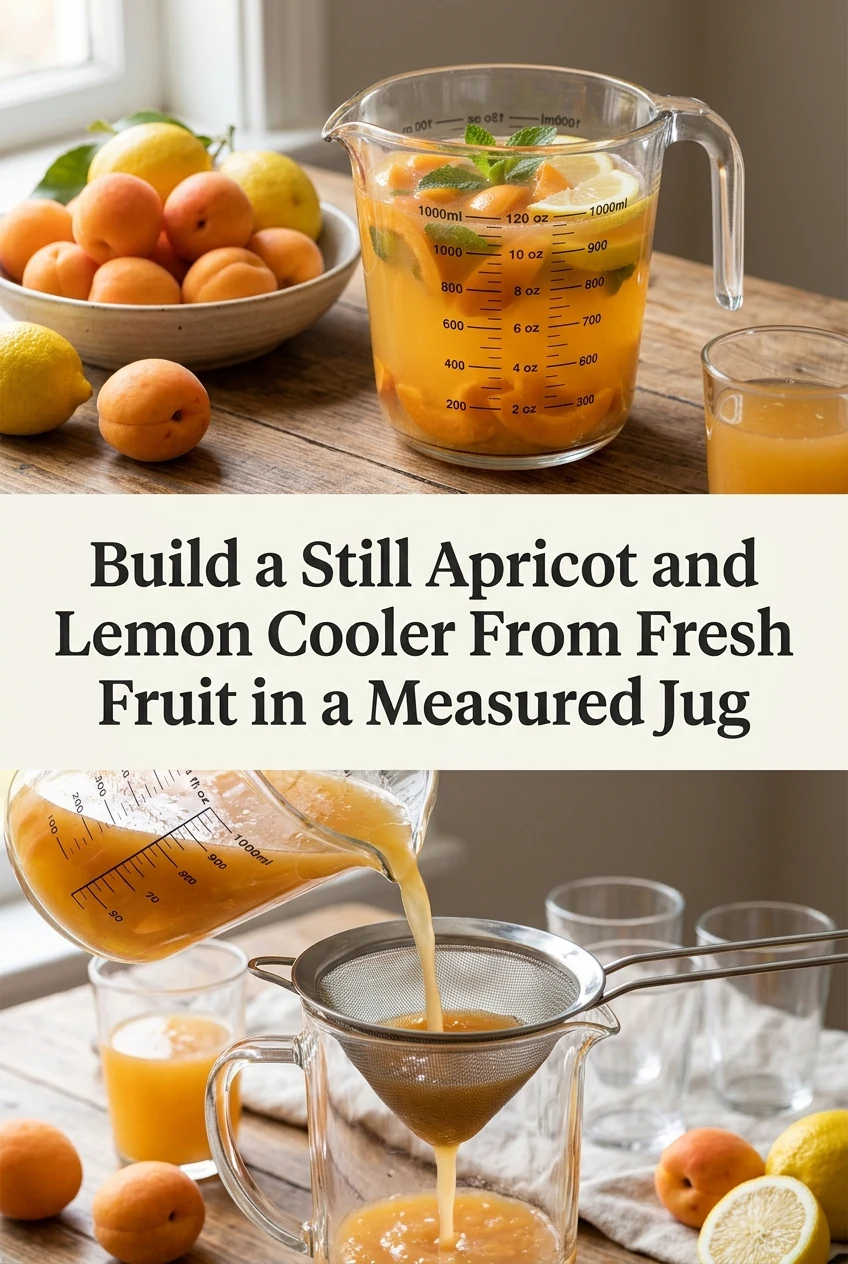
AI-generated editorial concept created for this article. The image is not a technical diagram or a tested result.
Select and Prepare the Apricots
Choose ripe apricots that yield slightly to gentle pressure. Underripe fruit produces a thin, tart liquid with little sweetness, while overripe fruit can taste fermented. Wash, halve, and remove the stones from 300 grams of fresh apricots. There is no need to peel them before blending because the skin softens fully in a blender and the straining step removes it afterward. This quantity is an illustrative starting point for approximately 600 millilitres of finished cooler.
Blend With a Measured Amount of Water
Place the prepared apricot halves in a blender with 300 millilitres of still water and the juice of one medium lemon, approximately 30 millilitres. Blend on high for 45 to 60 seconds until the mixture is fully smooth with no visible fruit pieces. Adding the water before blending rather than after helps the blades move freely and produces a more even puree. Do not add ice at this stage because it dilutes the mixture unpredictably before you have strained it.
Strain Into a Measured Jug
Set a fine mesh strainer over a 1 litre measuring jug and pour the blended mixture through in batches. Press the pulp gently with a spoon to extract liquid without forcing fibrous material through the mesh. Discard the remaining pulp. Note the strained volume in the jug. If the result is below 500 millilitres, add still water in 50 millilitre increments and stir to reach your target. This step lets you adjust dilution based on actual yield rather than assuming a fixed output.
Sweeten and Taste Before Serving
Stir in sugar syrup if needed, starting with one tablespoon and tasting after each addition. To make a simple syrup, dissolve equal parts sugar and water by weight in a small saucepan over low heat, then cool before use. Avoid adding granulated sugar directly to the cold strained liquid because it will not dissolve evenly. Taste for lemon balance as well; a small additional squeeze can lift the flavour if the apricots were very sweet. Adjust before pouring into serving glasses.
Serve Promptly and Store Safely
Pour the cooler over ice in individual glasses immediately before serving. Because this drink contains fresh blended fruit with no preservatives, refrigerate any remainder promptly at 4 degrees Celsius or below within two hours of preparation, or within one hour if your kitchen is above 32 degrees Celsius. Consume refrigerated cooler within 24 hours. Do not store in the blender jug; transfer to a sealed container to reduce oxidation and flavour loss from residual blender odours.
A little more
to know.
Can I use tinned apricots if fresh ones are unavailable?
Tinned apricots in juice work as a substitute but are already softened and often sweeter than fresh fruit. Drain them thoroughly, reduce or omit added sugar, and taste carefully after straining. The colour will be slightly more muted than fresh apricot cooler.
Why does the cooler sometimes turn an unappetising brown colour quickly?
Apricot flesh oxidises rapidly once blended and exposed to air. Adding lemon juice before blending slows this reaction because the acidity inhibits oxidation. Serving over ice immediately and storing in a sealed container rather than an open jug also reduces browning noticeably.
Original editorial guidance and recipe formulations, not independently kitchen-tested. Times are estimates and depend on equipment and product directions. Cooked bases need additional cooling and refrigeration before cold serving. Images are AI-generated illustrations; appearance and yield may vary. Check actual ingredient labels, allergens, and any certification you require. We do not certify products. Read our approach.
Save to Pinterest ↗ANOTHER IDEA FOR THE COUNTER