Build a Still Apricot and Ginger Cooler From Fresh Fruit in a Measured Jug
Fresh apricots have a short season and a flavour that is easy to dilute into something flat if the proportions are not controlled. Adding raw ginger sharpens the drink but can overpower it quickly. Working with a measured jug and a kitchen scale lets you set a repeatable starting point, adjust in small steps, and produce a smooth, balanced cooler rather than a thick, inconsistently spiced one. This guide walks through fruit selection, blending, straining, and final assembly.
Read the note ↓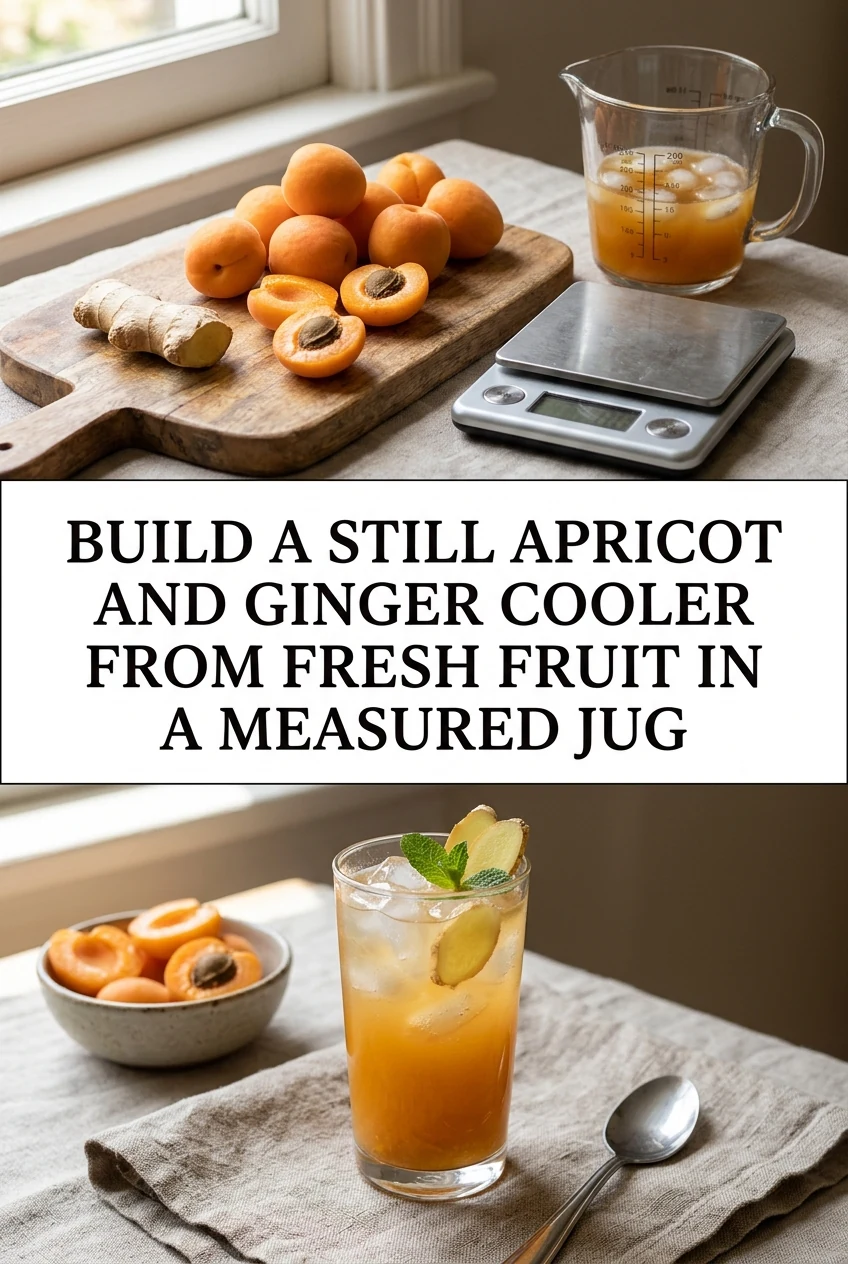
AI-generated editorial concept created for this article. The image is not a technical diagram or a tested result.
Selecting and Preparing the Apricots
Choose ripe apricots that yield slightly to thumb pressure and smell fragrant at the stem end. Underripe fruit produces a thin, acidic base with little sweetness. Wash the fruit, halve it, and remove the stones. For a single 500 ml jug of cooler, about five to seven medium apricots—weighing roughly 250 to 300 grams unpitted—provide a dependable starting point. Actual juice yield varies by variety and ripeness, so treat this weight as a practical guide rather than a rigid rule.
Measuring the Ginger Accurately
Ginger intensity varies significantly between roots depending on age and freshness, so a small, controlled portion is essential. Peel a section and cut a piece roughly 1.5 to 2 cm across as a starting measure. Weigh it on a kitchen scale; it will typically register between 4 and 6 grams. Note the exact weight you used so you can increase or decrease it precisely next time rather than estimating by eye.
Blending and Straining for Clarity
Place the apricot halves and the measured ginger piece into a blender with 100 ml of cold water to help the blades move. Blend until completely smooth, usually 30 to 45 seconds. Pour the blended mixture through a fine mesh strainer set over your measuring jug, pressing the pulp gently with a spoon to extract liquid. Discard the fibrous pulp. The strained liquid will be bright orange, smooth, and free of coarse solids.
Topping With Cold Water to a Fixed Volume
Read the volume of strained juice in the jug. Add cold water until the total reaches 500 ml, or adjust to taste by stopping at 400 ml for a more concentrated drink. Recording the final water volume you preferred gives you a repeatable ratio for future batches. Add a small pinch of fine salt, which lifts the fruit flavour without making the drink taste salty. Stir gently and taste before serving.
Serving and Storing the Cooler
Pour the cooler over ice in individual glasses rather than adding ice directly to the jug, which dilutes the batch unevenly. Keep the prepared cooler covered and refrigerated at or below 4 degrees Celsius, and serve it chilled. Fresh fruit juice loses its bright aroma and flavour quickly once prepared, so prepare only what you intend to serve promptly. Do not store it at room temperature. If the cooler separates slightly while standing, stir before pouring; this settling is normal for fresh fruit juice.
A little more
to know.
Can I add a sweetener, and at what stage should I add it?
Add a liquid sweetener such as simple syrup after straining and before topping with water. Adding it at this stage lets you taste the base first and add only as much as the fruit's natural sweetness requires, keeping the amount controlled and consistent.
Why does the guide recommend straining rather than serving the blended mixture directly?
Straining removes fibrous pulp that settles quickly and creates an uneven texture between first and last sips. A strained cooler stays visually consistent in the glass and has a cleaner flavour that makes the ginger note easier to assess and adjust.
Original editorial guidance and recipe formulations, not independently kitchen-tested. Times are estimates and depend on equipment and product directions. Cooked bases need additional cooling and refrigeration before cold serving. Images are AI-generated illustrations; appearance and yield may vary. Check actual ingredient labels, allergens, and any certification you require. We do not certify products. Read our approach.
Save to Pinterest ↗ANOTHER IDEA FOR THE COUNTER