Build a Fruit Cooler in a Jug and Keep It Cold for a Small Gathering
Assembling a still fruit cooler in a single measured jug before guests arrive removes the need to mix individual glasses during the gathering and ensures every serving has the same balance of juice, water, and fruit. The practical challenge is keeping a perishable juice-based drink safely cold throughout the event. Preparing the jug with adequate ice, refrigerating it until needed, and understanding the two-hour cold-hold limit for perishable drinks at room temperature makes the process both convenient and safe.
Read the note ↓
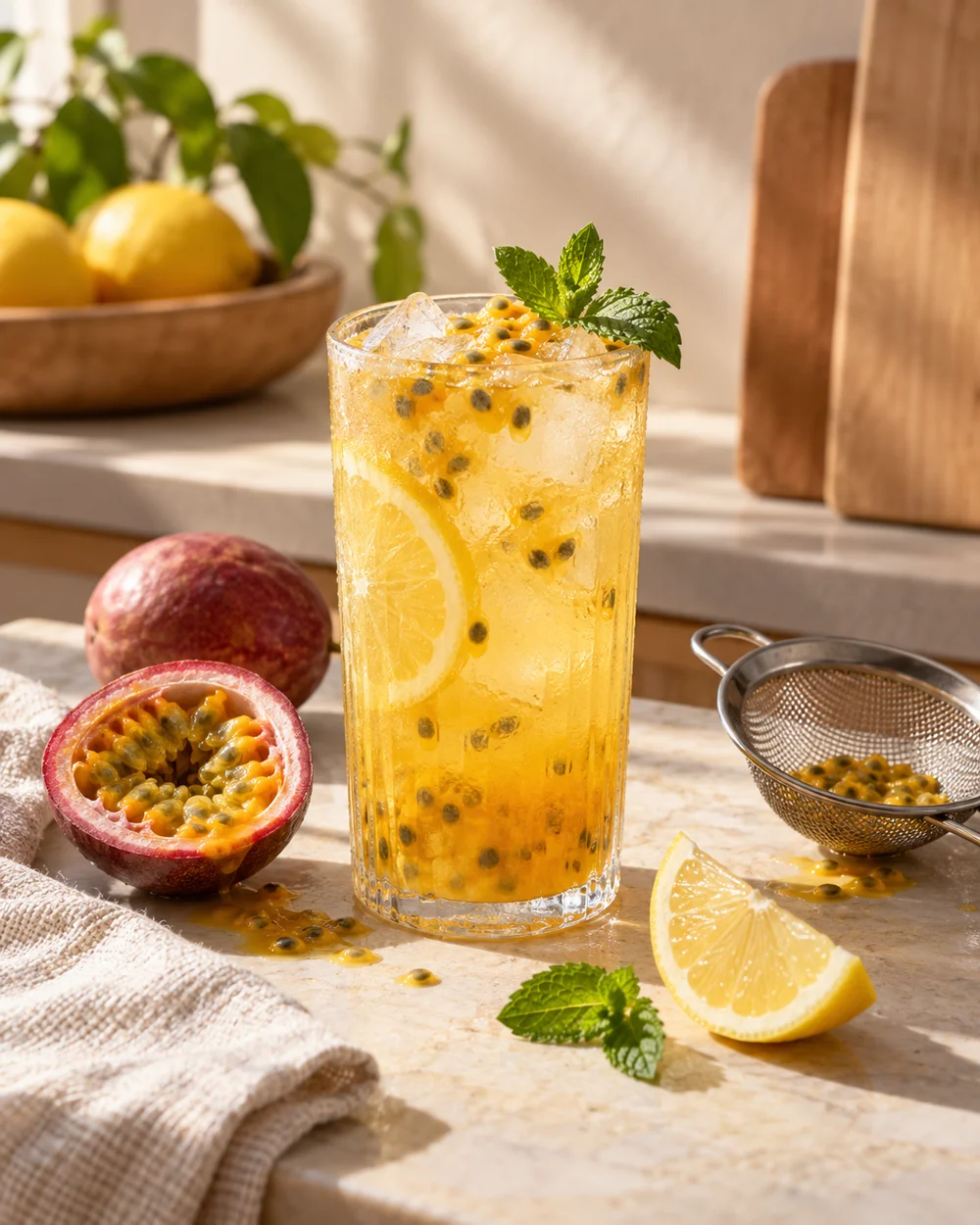
AI-generated editorial concept created for this article. The image is not a technical diagram or a tested result.
Choosing a Jug Size and Calculating Quantities
A two-litre jug serves approximately six to eight 240-millilitre glasses, which suits a small gathering of four to six people with room for a second serving. A practical starting ratio for a fruit cooler is 700 millilitres of pasteurised fruit juice, 900 millilitres of cold still water, and 400 millilitres of ice measured before adding it to the jug. This ratio produces a lightly diluted drink. Adjust the juice-to-water proportion before your first batch to match your preference, then note it for future use.
Selecting and Preparing the Fruit
Use fresh fruit that has been washed and sliced rather than pre-cut packaged fruit, which has a shorter safe window once opened. Citrus slices, cucumber rounds, and whole mint leaves are common additions that hold their appearance well in cold liquid for two to three hours. Add fruit to the jug after the liquid so you can see the fill level clearly. Keep the total fruit volume modest, around 80 to 100 grams, so it does not displace too much liquid in a two-litre jug.
Chilling the Jug Before Guests Arrive
After assembling the jug, place it in the refrigerator at 4 degrees Celsius or below for at least 30 minutes before serving. This ensures the liquid is uniformly cold rather than relying solely on the ice added during assembly. A jug that goes into the refrigerator already cold from the water and juice will chill faster than one assembled with room-temperature ingredients. Pre-chilling the jug itself by rinsing it with cold water before assembly also helps maintain temperature.
Managing Cold Hold During the Gathering
Once the jug leaves the refrigerator, the clock starts on safe cold-hold time. Pasteurised juice-based drinks should not remain above 4 degrees Celsius for more than two hours, or one hour if the room temperature exceeds 32 degrees Celsius. Place the jug in a bowl of ice on the table to slow warming. If the gathering runs longer than two hours, return the jug to the refrigerator between servings or prepare a second smaller jug to bring out later rather than leaving the first out continuously.
Serving and Storing Leftovers
Pour servings using a ladle or by tilting the jug slowly to avoid dislodging fruit pieces into every glass. If guests want fruit in their glass, offer it separately with a small spoon. Leftover cooler that has been held at safe cold temperatures throughout the gathering can be refrigerated promptly and consumed within 24 hours, though the fruit will soften and the ice will have diluted the liquid further. Discard any portion that has been left at room temperature beyond the two-hour limit.
A little more
to know.
Can I use bottled juice that has been open for two days?
Check the juice for off smell or appearance first. Most pasteurised juices are safe for three to five days after opening when refrigerated at 4 degrees Celsius, but always follow the specific product label guidance rather than a general rule.
Does adding ice at assembly count toward the two-hour room-temperature limit?
The two-hour limit begins when the jug leaves refrigeration and sits at room temperature. Ice slows warming but does not reset the clock. Once the ice melts and the liquid warms above 4 degrees Celsius, the limit applies regardless of when ice was added.
Original editorial guidance and recipe formulations, not independently kitchen-tested. Times are estimates and depend on equipment and product directions. Cooked bases need additional cooling and refrigeration before cold serving. Images are AI-generated illustrations; appearance and yield may vary. Check actual ingredient labels, allergens, and any certification you require. We do not certify products. Read our approach.
Save to Pinterest ↗ANOTHER IDEA FOR THE COUNTER