Assemble a Yogurt and Dried Apricot Cup with Crunch Added at Service
This prep note describes a straightforward café assembly concept: a chilled cup of plain pasteurized yogurt layered with chopped dried apricots, finished with a separate halal-certified oat topping added only at the moment of service. Keeping the topping apart preserves its texture until the cup reaches the customer. The quantities below are illustrative for a single serving and have not been kitchen-tested; treat them as a working starting point and adjust to your own operation.
Read the note ↓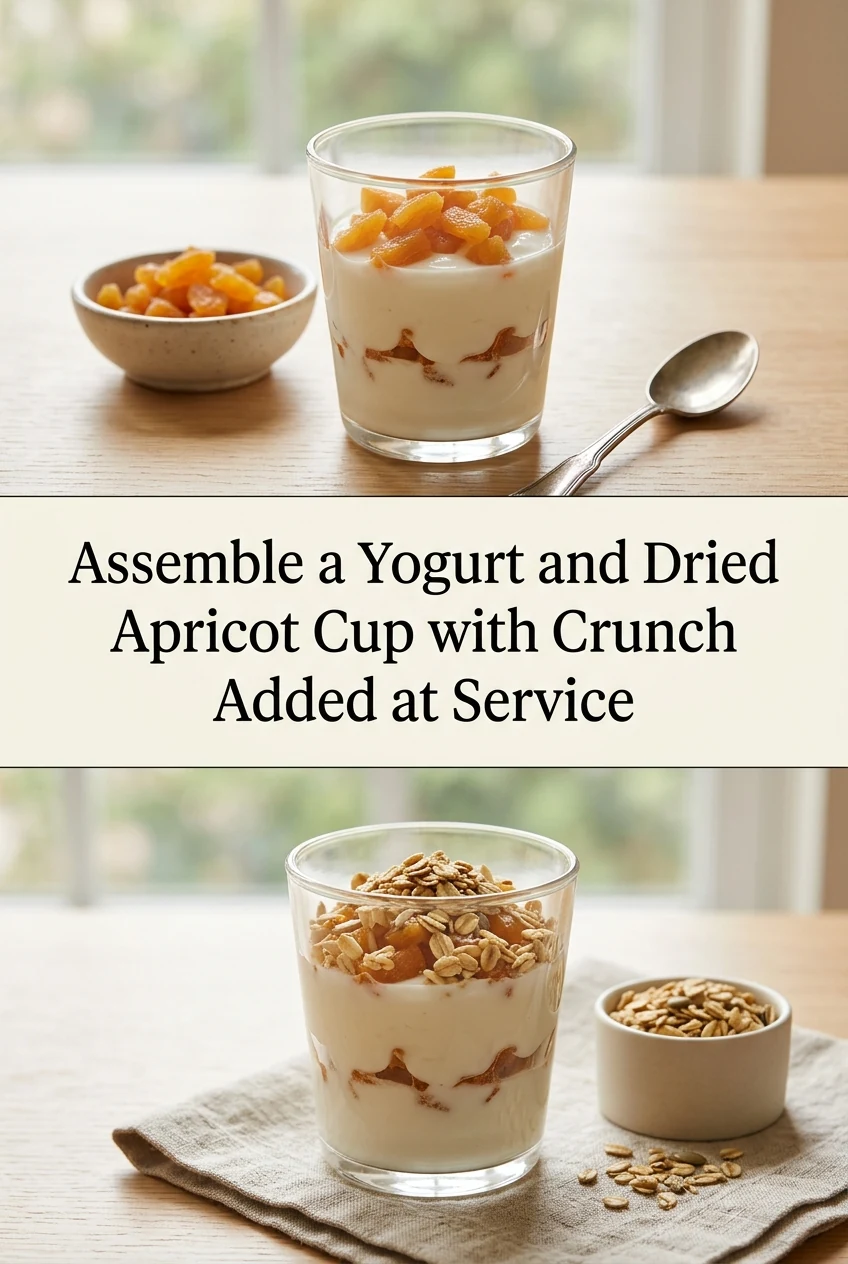
AI-generated editorial concept created for this article. The image is not a technical diagram or a tested result.
Ingredients and Allergen Overview
For one illustrative cup you will need approximately 150 g of plain pasteurized full-fat or low-fat yogurt, 25 g of chopped dried apricots, and 20 g of a halal-certified oat topping such as a lightly toasted rolled-oat cluster or granola that carries a halal certification mark. Yogurt contains milk, a major allergen. Oat products may contain gluten and are frequently processed alongside wheat, barley, or rye; check your supplier's allergen statement and communicate this clearly on your menu. Dried apricots are generally free of the major allergens listed in most jurisdictions, but verify your specific supplier's packaging for cross-contact warnings. Display full allergen information at point of sale in line with local food-labelling requirements.
Preparing the Apricot Pieces
Select dried apricots that are soft enough to cut cleanly with a sharp knife. Place the apricots on a clean chopping board and cut each one into roughly 1 cm pieces. For the illustrative 25 g portion, you will typically work through six to eight medium apricots depending on their size. Aim for pieces that are small enough to distribute evenly through the yogurt without dominating any single spoonful. Transfer the chopped pieces to a clean, lidded container and refrigerate immediately at 4 C or 40 F or below until you are ready to portion cups. Do not leave cut fruit at room temperature for extended periods.
Portioning the Yogurt Cup
Use a clean ladle or portion scoop to transfer approximately 150 g of plain pasteurized yogurt into a clear plastic or paper service cup of at least 250 ml capacity, which gives comfortable headspace for the apricots and topping. Spoon the 25 g of pre-cut dried apricot pieces evenly over the surface of the yogurt. Press them gently so they are distributed across the top rather than piled in the centre. Seal the cup immediately with a fitted lid. Label the cup with the date and time of preparation and any required allergen information. Place the sealed cup in the refrigerator at 4 C or 40 F or below without delay. Prepare only as many cups as your anticipated service volume requires within your operation's food-safety holding guidelines.
Storing the Oat Topping Separately
Measure the halal-certified oat topping into individual pre-portioned paper or small lidded containers, each holding approximately 20 g. Store these at room temperature in a cool, dry area away from moisture and strong odours, in line with the manufacturer's storage instructions printed on the product packaging. Do not store the oat topping inside the refrigerator alongside the yogurt cups, as condensation will soften the clusters before service. Keep the topping containers sealed until the moment a cup is ordered. The goal of this separation is purely practical: a dry topping added at service retains a noticeably different texture compared with one that has been sitting in contact with yogurt.
Service Assembly and Presentation
When a customer orders the cup, retrieve one chilled yogurt-and-apricot cup from the refrigerator. Remove the lid, pour or spoon the 20 g oat topping portion directly onto the surface of the apricots and yogurt, and hand the cup to the customer promptly with a spoon. The combined illustrative weight of the assembled cup is approximately 195 g of food content before the cup and lid. If your operation uses a display case, keep the sealed yogurt cups in the refrigerated section and store the topping containers behind the counter. Do not pre-assemble cups with the topping already added if they will sit before service, as the oats will absorb moisture from the yogurt and lose their texture. Confirm that refrigeration equipment maintains 4 C or 40 F or below and monitor temperatures according to your food-safety plan.
A little more
to know.
Can a flavoured yogurt be used instead of plain?
Yes, a flavoured pasteurized yogurt can be substituted, provided it does not contain any alcohol-based flavourings. Check the ingredient list on the yogurt packaging and confirm that any vanilla or other flavouring used is explicitly alcohol-free. Adjust the sweetness expectation for your customers accordingly, since flavoured yogurts vary considerably between brands.
What if a customer has a gluten intolerance?
Standard rolled-oat or granola toppings are not suitable for customers who must avoid gluten, because oats are frequently processed in facilities that also handle wheat. If your operation wishes to offer a gluten-free alternative, source a topping that is certified gluten-free and produced in a dedicated facility, and verify the certification with your supplier. Always communicate allergen information clearly to customers and follow your local food-safety authority's guidance on allergen management.
Original editorial guidance and recipe formulations, not independently kitchen-tested. Times are estimates and depend on equipment and product directions. Cooked bases need additional cooling and refrigeration before cold serving. Images are AI-generated illustrations; appearance and yield may vary. Check actual ingredient labels, allergens, and any certification you require. We do not certify products. Read our approach.
Save to Pinterest ↗ANOTHER IDEA FOR THE COUNTER