Assemble a Savory Labneh and Roasted Pepper Open Sandwich for a Café Plate
A labneh and roasted pepper open sandwich works as a café plate when the bread thickness, spread depth, and garnish are each kept in proportion. The challenge is preventing the labneh from sliding, the pepper from overwhelming the dairy base, and the plate from looking cluttered. This guide walks through bread selection, spread order, pepper placement, and a restrained garnish approach that keeps the assembly tidy and the flavors balanced without requiring specialist equipment.
Read the note ↓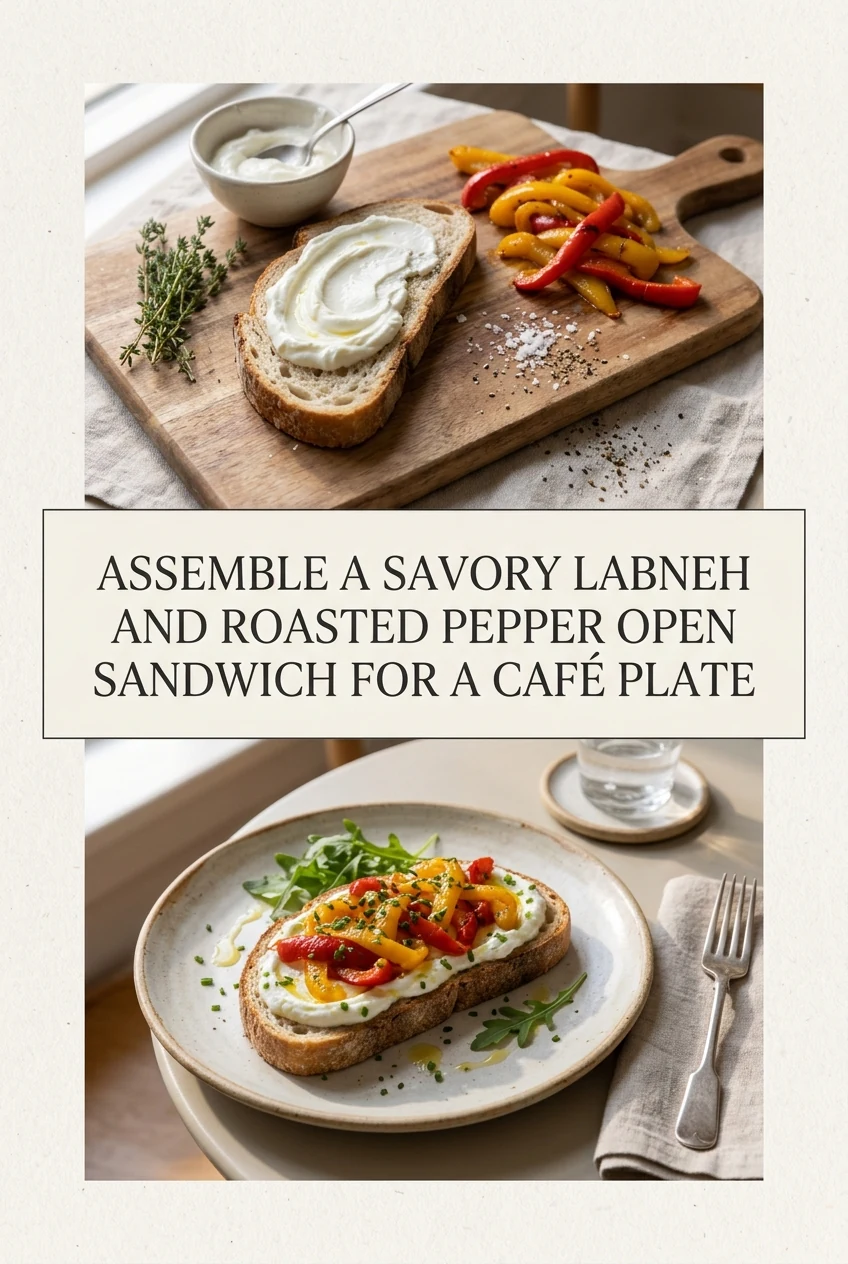
AI-generated editorial concept created for this article. The image is not a technical diagram or a tested result.
Select and Prepare Bread at the Right Thickness
Use a sturdy bread such as sourdough, whole wheat, or a seeded loaf sliced to roughly 1.5 to 2 centimeters thick. Thinner slices flex under the weight of labneh and pepper and become difficult to lift cleanly. Toast the slice lightly so the surface has enough structure to hold the spread without absorbing moisture immediately. Allow the toast to cool for about one minute before spreading so steam does not thin the labneh on contact.
Spread Labneh as the First and Only Base Layer
Apply labneh directly onto the toast as the sole base layer. Use approximately 2 to 3 tablespoons for a standard single slice, spread to within half a centimeter of the edges. Spreading to the edge prevents dry bread borders that look unfinished on a café plate. Do not add oil or butter beneath the labneh; the dairy already provides richness, and an additional fat layer makes the bread soggy faster and the assembly harder to eat neatly.
Place Roasted Pepper Strips in a Single Layer
Use jarred or freshly roasted peppers that have been drained and patted dry. Excess brine or oil from the pepper will pool on the labneh surface and make the plate look wet. Lay strips in a single overlapping layer rather than piling them, covering roughly two thirds of the labneh surface. Leaving some labneh visible at one edge gives the plate visual contrast and signals the ingredient beneath to whoever is eating.
Add One Restrained Garnish Rather Than Several
Choose a single garnish: a few fresh thyme leaves, a small pinch of dried chili flakes, or a light drizzle of good olive oil, roughly half a teaspoon. Applying more than one garnish at this scale crowds a single open slice and competes with the pepper color. If you use olive oil, drizzle it only over the pepper strips rather than the exposed labneh, so the white base stays visually clean. This is a presentation choice, not a flavor rule.
Plate and Serve Promptly to Maintain Texture
Assemble the open sandwich no more than five minutes before serving. Labneh is a fresh dairy product and the assembled plate should not sit at room temperature beyond two hours, or one hour if your kitchen is above 32 degrees Celsius. Place the slice slightly off-center on the plate with a small accompaniment such as a few olives or sliced cucumber on the side. Keep the accompaniment simple so it does not visually compete with the open sandwich itself.
A little more
to know.
Can I prepare the labneh-spread toast in advance and refrigerate it?
Spreading labneh on toast and refrigerating it softens the bread quickly. It is more practical to keep labneh refrigerated separately and toast bread to order, assembling the plate within a few minutes of serving for best texture.
What bread works if sourdough is unavailable?
A dense whole wheat sandwich loaf or a thick-cut seeded bread both provide enough structure. Avoid soft white sandwich bread, which compresses under the labneh weight and loses shape when lifted, making the plate harder to present neatly.
Original editorial guidance and recipe formulations, not independently kitchen-tested. Times are estimates and depend on equipment and product directions. Cooked bases need additional cooling and refrigeration before cold serving. Images are AI-generated illustrations; appearance and yield may vary. Check actual ingredient labels, allergens, and any certification you require. We do not certify products. Read our approach.
Save to Pinterest ↗ANOTHER IDEA FOR THE COUNTER