Weigh Loose Leaf Tea Into a Strainer Basket Before Brewing to Match the Pot Size
Scooping loose leaf tea by eye is one of the most common reasons a home-brewed pot turns out too strong or too weak. The problem compounds when the pot size changes. Weighing the leaf directly into the strainer basket before adding water lets you confirm the dose is appropriate and that the basket is not so full it restricts the leaf from opening. This guide explains how to build that habit into a simple pre-brew check.
Read the note ↓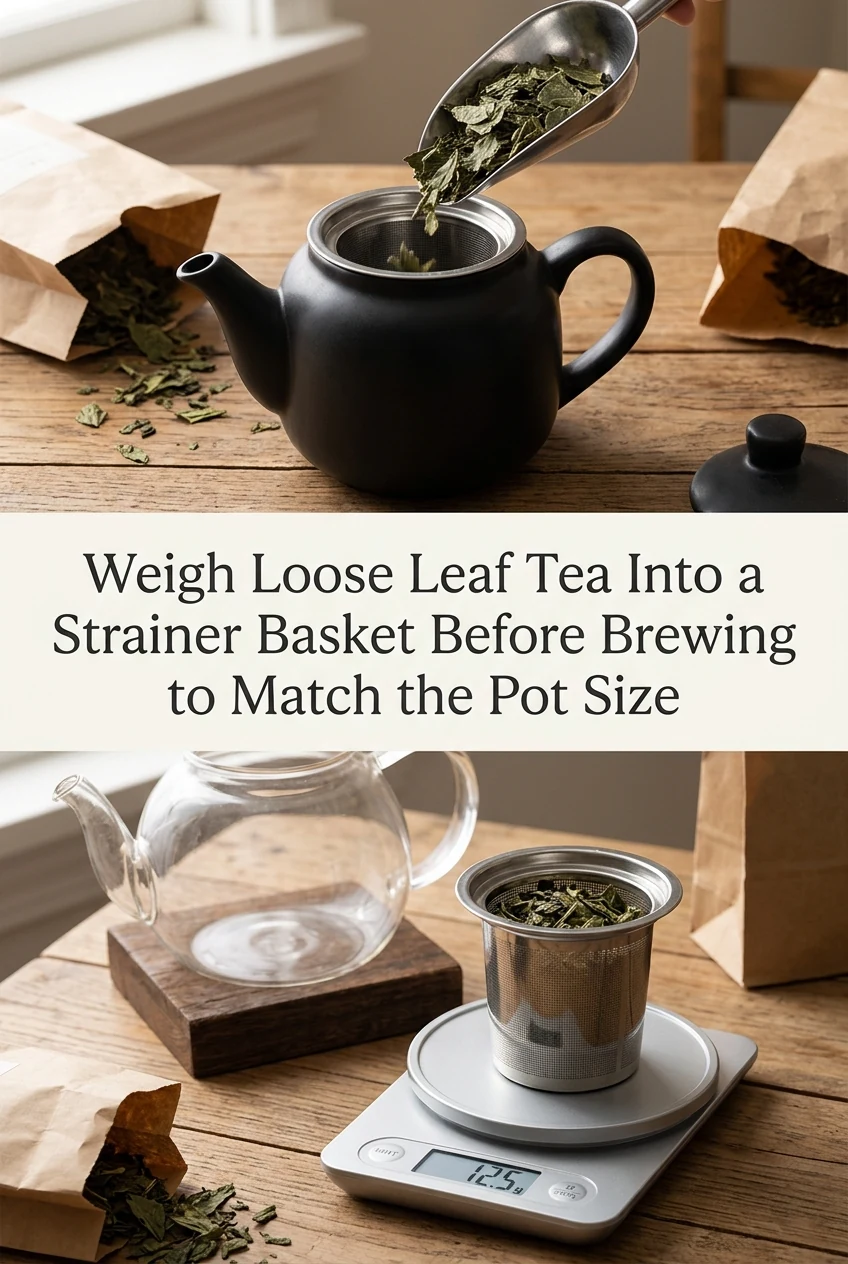
AI-generated editorial concept created for this article. The image is not a technical diagram or a tested result.
Why volume scooping misleads
Loose leaf teas vary widely in density. A teaspoon of tightly rolled oolong pellets weighs significantly more than a teaspoon of large-leaf white tea. Relying on a scoop gives a consistent volume but an inconsistent mass, which means the brew strength shifts every time you switch tea types. Weighing removes that variable. A small digital scale reading to one gram is sufficient for home use and takes only a few seconds to use.
Establishing a starting dose for your pot
A practical starting point for many loose leaf teas is two to three grams per 200 millilitres of water. For a 400-millilitre pot, that suggests four to six grams of leaf. This is an illustrative range, not a universal rule; your preferred strength and the specific tea will shift it. Weigh the leaf, note the amount, brew the pot, and adjust the gram figure up or down on the next attempt. Writing the result down after each session builds a reliable personal reference.
Checking basket capacity before brewing
Place the empty basket on the scale, tare it to zero, then add the weighed leaf. Before moving to the pot, look at how much space remains in the basket. Many basket strainers hold leaf comfortably when it is dry but become packed once the leaf expands during brewing. A basket that is more than two-thirds full of dry leaf before water is added may restrict circulation and produce an uneven extraction. If it looks crowded, reduce the dose or use a larger basket.
Adjusting for different pot sizes in the same session
If you are brewing for one person using a 300-millilitre pot and then a second pot for two people using a 600-millilitre vessel, weigh separately for each. Do not simply double the scoop by eye. Tare the scale with the second basket in place and weigh the correct dose for that volume. This step takes under a minute and prevents the second pot from being noticeably weaker or stronger than the first, which matters when serving guests.
Recording results to avoid repeating the guesswork
After brewing, note the tea name, the gram dose, the water volume, and whether the result was too strong, balanced, or too light. A small notebook kept near the kettle is enough. Over three or four sessions with the same tea, you will have a confirmed dose that suits your taste and your pot. That recorded number replaces the guesswork on every future brew and makes it easy to scale up when pot size changes.
A little more
to know.
What if my scale only reads in two-gram increments?
A two-gram resolution is workable for pots of 400 millilitres or more. For very small cups or delicate teas where one gram makes a noticeable difference, a scale reading to 0.1 grams gives more control and is worth considering.
Should I weigh tea the same way for cold-brew preparation?
Cold brewing typically uses a longer steep time and different water temperature, so the dose-to-volume relationship differs from hot brewing. Weigh as a starting point, but expect to adjust the gram amount separately from your hot-brew reference notes.
Original editorial guidance and recipe formulations, not independently kitchen-tested. Times are estimates and depend on equipment and product directions. Cooked bases need additional cooling and refrigeration before cold serving. Images are AI-generated illustrations; appearance and yield may vary. Check actual ingredient labels, allergens, and any certification you require. We do not certify products. Read our approach.
Save to Pinterest ↗ANOTHER IDEA FOR THE COUNTER