Weigh Loose Leaf Rooibos Into a French Press Before Brewing a Cold Concentrate
Scooping loose leaf rooibos by eye or with a standard teaspoon produces inconsistent results because the needle-like leaves pack differently every time depending on how the bag has settled. For a French press cold concentrate intended for iced service, matching the leaf weight to the press capacity gives you a repeatable starting point. This guide explains how to approach that calculation, brew at room temperature, and dilute correctly at the glass.
Read the note ↓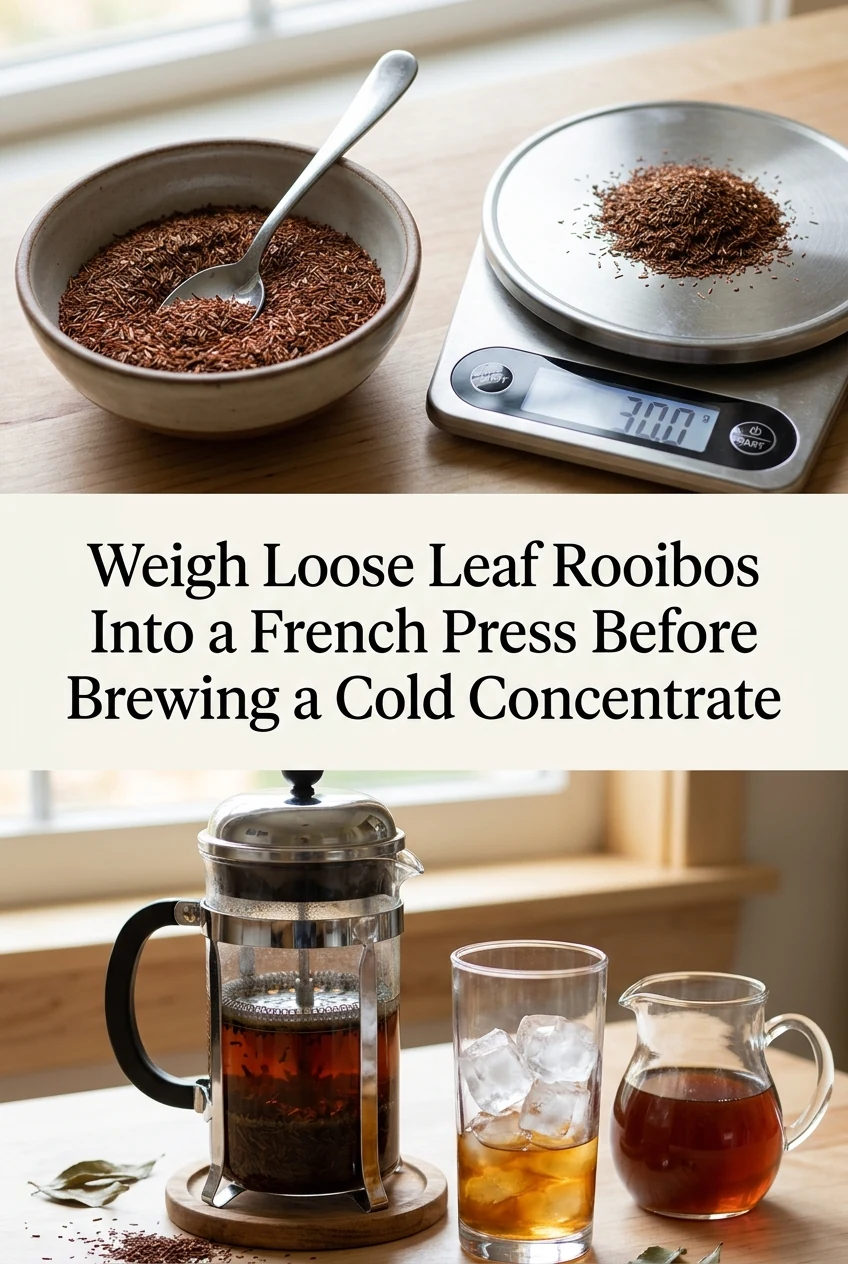
AI-generated editorial concept created for this article. The image is not a technical diagram or a tested result.
Identify your French press capacity before measuring
French press carafes are sold in several sizes, commonly 350 ml, 600 ml, and 1000 ml. Check the manufacturer label or measure water to the fill line to confirm yours. For a cold concentrate, you will fill the press to roughly 80 percent of its marked capacity with cold water, leaving headroom for the plunger. A 600 ml press therefore takes approximately 480 ml of cold water. Knowing this figure is the starting point for calculating your leaf weight.
Calculate a working leaf weight for your press size
A commonly used starting point for rooibos cold concentrate is 4 g of loose leaf per 100 ml of water, which produces a brew strong enough to dilute one-to-one with water or milk at serving. For a 600 ml press using 480 ml of water, that works out to approximately 19 g of rooibos. Weigh this on a kitchen scale rather than scooping. This is a practical starting ratio, not a universal standard; adjust by 2 g up or down based on your preferred strength after tasting the first batch.
Add the leaves and water in the correct order
Place the weighed rooibos in the empty press carafe first, then pour cold water over the leaves. Pouring water over the leaves rather than adding leaves to water ensures even wetting and prevents dry clumps floating at the surface. Use cold water from the tap or filtered water at room temperature. Do not use hot water for this cold concentrate method, as it changes the extraction character and requires a different leaf weight.
Steep at room temperature and manage the plunge
Place the lid on the press with the plunger pulled fully up, but do not plunge yet. Steep at room temperature for three to four hours, or in the refrigerator for eight to twelve hours if you prefer a slower, cooler extraction. When steeping is complete, press the plunger down slowly and steadily. Rooibos leaves are fine and can slip around the mesh; pressing too fast pushes leaf material through the filter and into the concentrate.
Pour, dilute, and store the concentrate correctly
Pour the concentrate into a clean jug or sealed container immediately after pressing. Do not leave it sitting in the press against the spent leaves, as continued contact makes the flavour bitter and grassy. Refrigerate the concentrate at 4 degrees Celsius or below within two hours of finishing the steep. Use within three days. At serving, dilute one part concentrate with one part cold water or cold milk over ice, adjusting the ratio to taste.
A little more
to know.
Can I use the same leaf weight for a hot brew in the same press?
Hot brewing extracts compounds faster and more completely, so the same leaf weight will produce a stronger, sometimes more astringent result. For hot rooibos in a French press, most people find a lower starting weight more appropriate, though preferences vary considerably.
What happens if I accidentally plunge too fast and get leaf sediment in the concentrate?
Pour the concentrate through a fine-mesh strainer or a paper coffee filter set over a jug. This removes most of the fine particles without significantly affecting the flavour. The concentrate is still usable; just strain before refrigerating.
Original editorial guidance and recipe formulations, not independently kitchen-tested. Times are estimates and depend on equipment and product directions. Cooked bases need additional cooling and refrigeration before cold serving. Images are AI-generated illustrations; appearance and yield may vary. Check actual ingredient labels, allergens, and any certification you require. We do not certify products. Read our approach.
Save to Pinterest ↗ANOTHER IDEA FOR THE COUNTER