Weigh Honey Into a Warm Drink Directly From the Jar Without Losing Track of the Dose
Spooning honey into a warm drink leaves residue on the spoon, drips on the counter, and makes it hard to repeat the same dose across several cups. Weighing honey directly from the jar into the cup solves all three problems at once. The method relies on a kitchen scale with a tare function and a steady pour, not any special equipment. This guide walks through the setup, the pour sequence, and how to recover if you overshoot the target weight.
Read the note ↓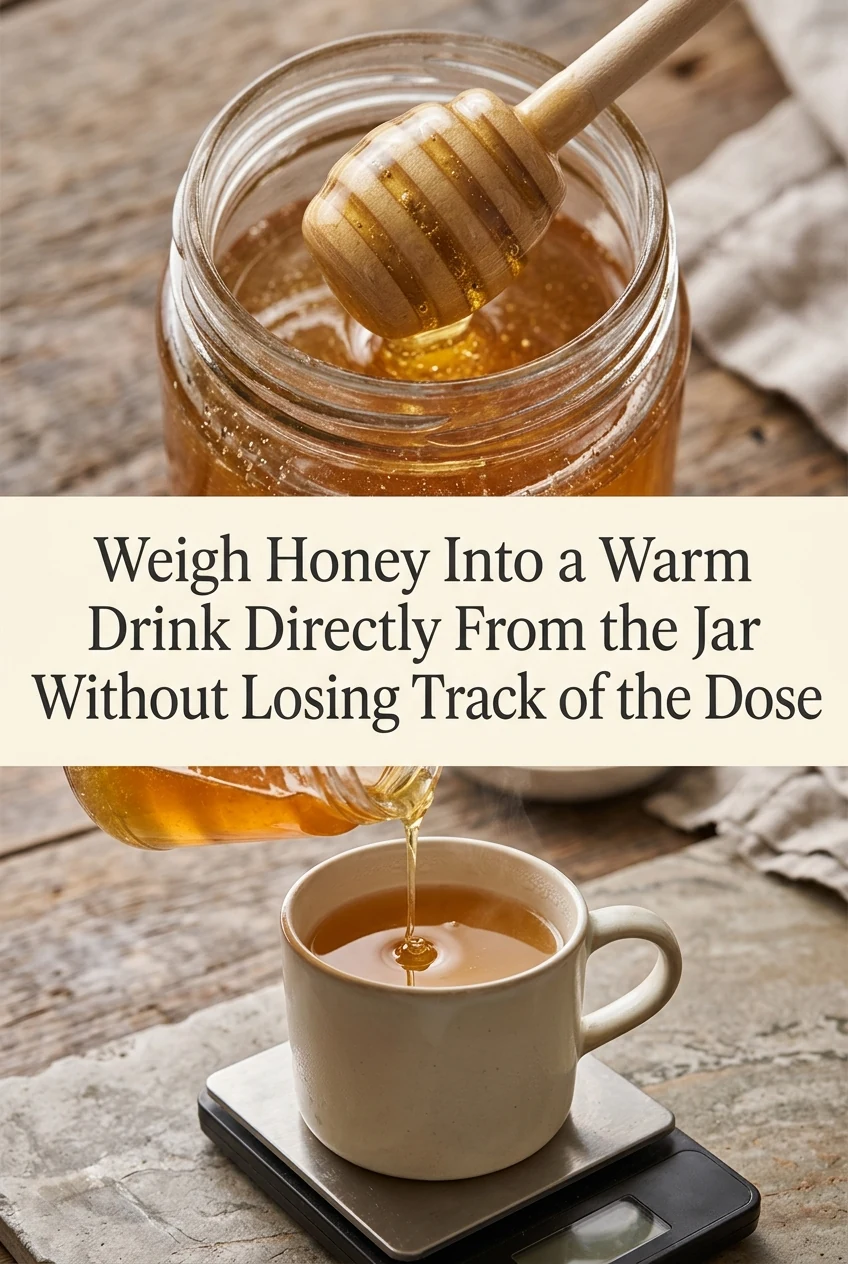
AI-generated editorial concept created for this article. The image is not a technical diagram or a tested result.
Set the cup on the scale before anything else
Place your filled warm cup directly on the scale platform. Press tare so the display reads zero with the cup in place. The cup must be stable and centred so the reading does not drift. If the cup has an uneven base, set it on a small flat plate first, then tare again. You are now measuring only what you add, not the cup or its contents. Do this step before opening the honey jar so the scale is ready the moment you begin pouring.
Tilt the jar slowly over the cup and watch the display
Grip the honey jar near its base and tilt it gradually over the centre of the cup. Honey flows slowly, so the number on the display rises in small increments. Keep your eyes on the scale rather than the jar. For a single drink, a common starting point is 10 to 15 grams, though your preferred sweetness will differ. Stop tilting before you reach your target by about 2 grams, because honey already in motion continues to fall for a moment after you level the jar.
Correct an overshoot without discarding the drink
If the display passes your target, note the exact reading shown. For example, if you aimed for 12 grams and landed on 15 grams, record 15 grams as the dose for this cup and adjust the next cup accordingly rather than trying to remove honey. Attempting to spoon honey back out of a warm drink is impractical and unhygienic. Keeping a small notepad beside the scale during a multi-cup session lets you track each actual dose without relying on memory.
Stir immediately to dissolve the honey fully
Honey sinks and pools at the bottom of a warm cup if left to sit. Stir the drink within ten seconds of completing the pour while the liquid is still hot enough to dissolve the honey without extended effort. A long-handled spoon reaches the base of a tall mug more reliably than a short teaspoon. Stir in a figure-eight pattern for about fifteen seconds. Lift the spoon and let any honey clinging to it drip back into the cup before setting the spoon aside.
Clean the jar rim between sessions to prevent sticky buildup
After each use, wipe the outside of the jar's mouth with a damp cloth and dry it immediately. Honey left on the rim crystallises and makes the lid difficult to open at the next session. A clean rim also prevents drips from running down the jar side onto the scale platform, which would affect future tare readings. Store the jar upright with the lid fully closed. This small habit keeps both the jar and the scale surface ready for the next drink.
A little more
to know.
Does the temperature of the drink affect how accurately the scale reads?
Steam rising from a very hot drink can cause minor display fluctuation on some scales. Letting the drink sit for thirty seconds before taring reduces this. The reading stabilises once airflow across the sensor settles.
Can I tare the scale with an empty cup and then pour the drink in afterward?
Yes, but only if you pour the drink carefully without splashing, then tare again before adding honey. Any liquid that lands on the scale platform outside the cup will corrupt the tare and give you a false honey weight.
Original editorial guidance and recipe formulations, not independently kitchen-tested. Times are estimates and depend on equipment and product directions. Cooked bases need additional cooling and refrigeration before cold serving. Images are AI-generated illustrations; appearance and yield may vary. Check actual ingredient labels, allergens, and any certification you require. We do not certify products. Read our approach.
Save to Pinterest ↗ANOTHER IDEA FOR THE COUNTER