Weigh Dry Cocoa and Liquid Milk Into One Mug to Check Fit Before Heating
Heating milk in a saucepan and then discovering the mug holds less than expected wastes time and creates spillage risk. Weighing cocoa powder and cold milk directly into the serving mug before any heat is applied confirms that the full volume fits with enough headroom for foam or a slight rise during warming. This single pre-check step removes guesswork and keeps the workflow moving from measurement to heat without backtracking.
Read the note ↓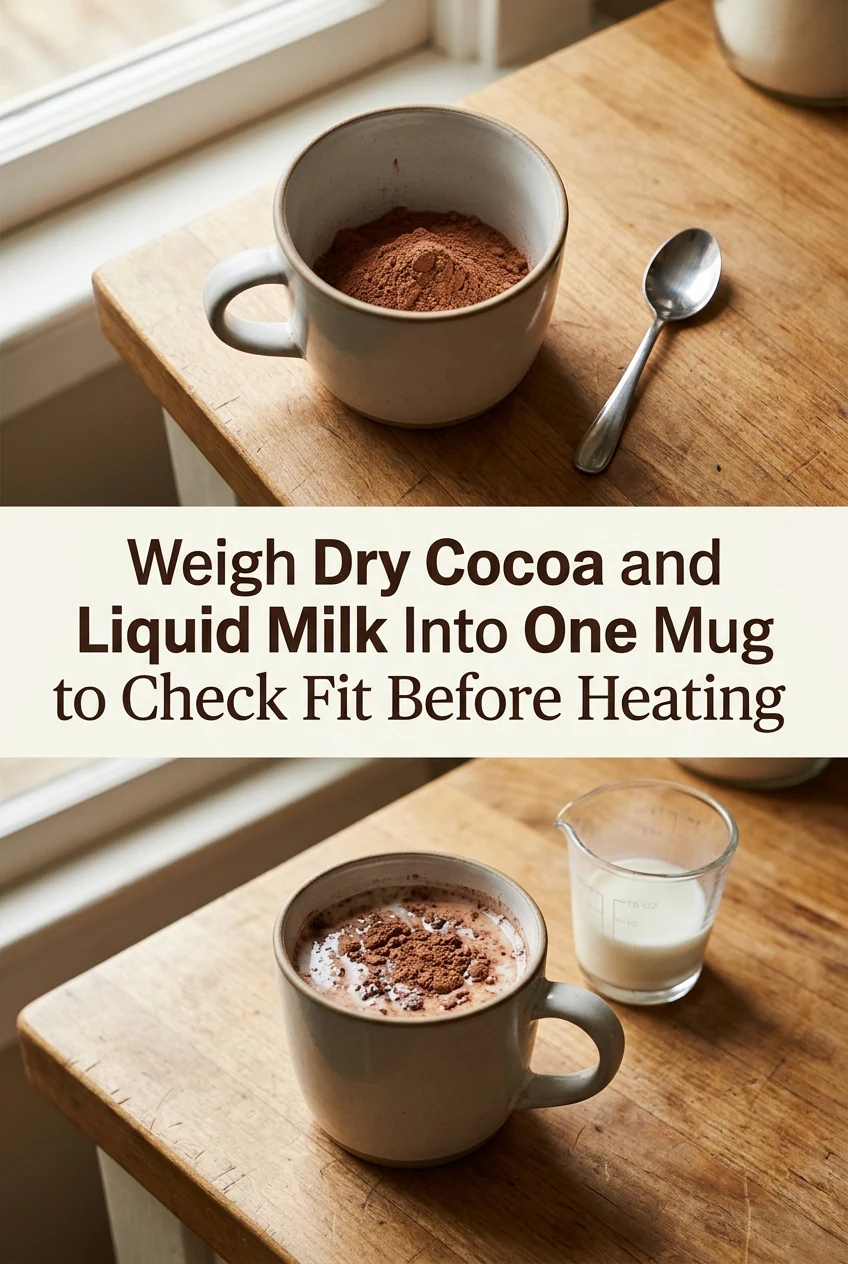
AI-generated editorial concept created for this article. The image is not a technical diagram or a tested result.
Set the mug on a scale and tare it before adding anything
Place your empty mug on a kitchen scale and press the tare button so the display reads zero. This lets you weigh each ingredient sequentially without removing the mug between additions. Use a mug you actually intend to serve from, not a measuring jug, because the goal is to confirm fit in the real vessel. A standard cafe-style mug typically holds 280 to 350 millilitres, but capacity varies significantly between designs.
Add the dry cocoa first and note the weight
Spoon unsweetened cocoa powder into the mug and watch the scale. A typical single serving uses 10 to 15 grams of cocoa powder. Tare again after adding cocoa so your next reading reflects only the milk weight. Adding cocoa first rather than last prevents it from sitting on top of cold milk and forming a dry crust that resists mixing. Sugar, if used, can be added at this stage alongside the cocoa.
Pour cold milk slowly and watch the fill level visually
Pour cold pasteurised milk into the mug while watching both the scale and the physical liquid level. Stop at 200 to 220 grams for a standard serving, or at whatever weight your recipe specifies. Leave at least 15 to 20 millimetres of visible clearance below the rim. This gap accommodates the small volume increase that occurs when milk is warmed and any surface foam that forms during heating or whisking.
Assess whether the mug fits or whether you need a larger vessel
If the liquid surface sits within 10 to 15 millimetres of the rim with the cocoa already present, the mug is too small for safe handling and comfortable drinking. In that case, switch to a larger serving mug rather than attempting to fit the heated beverage into this one. As an illustrative example, a 280-millilitre mug holding 15 grams of cocoa powder and 220 grams of milk (roughly 214 millilitres) contains about 225 millilitres of liquid once dispersed, leaving around 55 millilitres of headroom, which is adequate for most preparations.
Transfer to a saucepan for heating after confirming fit
Once you have confirmed the volume works, pour the cold milk and cocoa mixture from the mug into a small saucepan. Whisk immediately before applying heat to begin dispersing the cocoa powder into the milk. Heat over medium-low, whisking steadily, until the mixture reaches your preferred serving temperature. Pour back into the original mug. Because you already confirmed the fit, the transfer back is clean and the mug requires no adjustment.
A little more
to know.
Does this method work for plant-based milks as well?
Yes. Oat, soy, and almond milks behave similarly for volume checking purposes. Note that some plant milks foam more than dairy during heating, so leave slightly more headroom, around 20 to 25 millimetres of clearance below the rim, when using them.
What if I want to heat the milk directly in the mug using a microwave?
Only use a mug confirmed as microwave-safe by the manufacturer. Heat in short 30-second intervals, stirring between each, and ensure the mug has enough headroom since milk can rise suddenly. Do not cover the mug during microwave heating.
Original editorial guidance and recipe formulations, not independently kitchen-tested. Times are estimates and depend on equipment and product directions. Cooked bases need additional cooling and refrigeration before cold serving. Images are AI-generated illustrations; appearance and yield may vary. Check actual ingredient labels, allergens, and any certification you require. We do not certify products. Read our approach.
Save to Pinterest ↗ANOTHER IDEA FOR THE COUNTER