Wash Tall Drink Glasses by Hand: Brushes, Racks and Drying
Tall, narrow glasses used for iced lattes and cold drinks present a specific washing problem: a standard sponge cannot reach the base, dried milk film clings to the interior, and the glasses tip or knock together in a crowded sink. Solving this takes the right brush, a sensible sink arrangement and a drying method that does not trap moisture inside. None of this requires special products, only a deliberate approach to a task most people rush.
Read the note ↓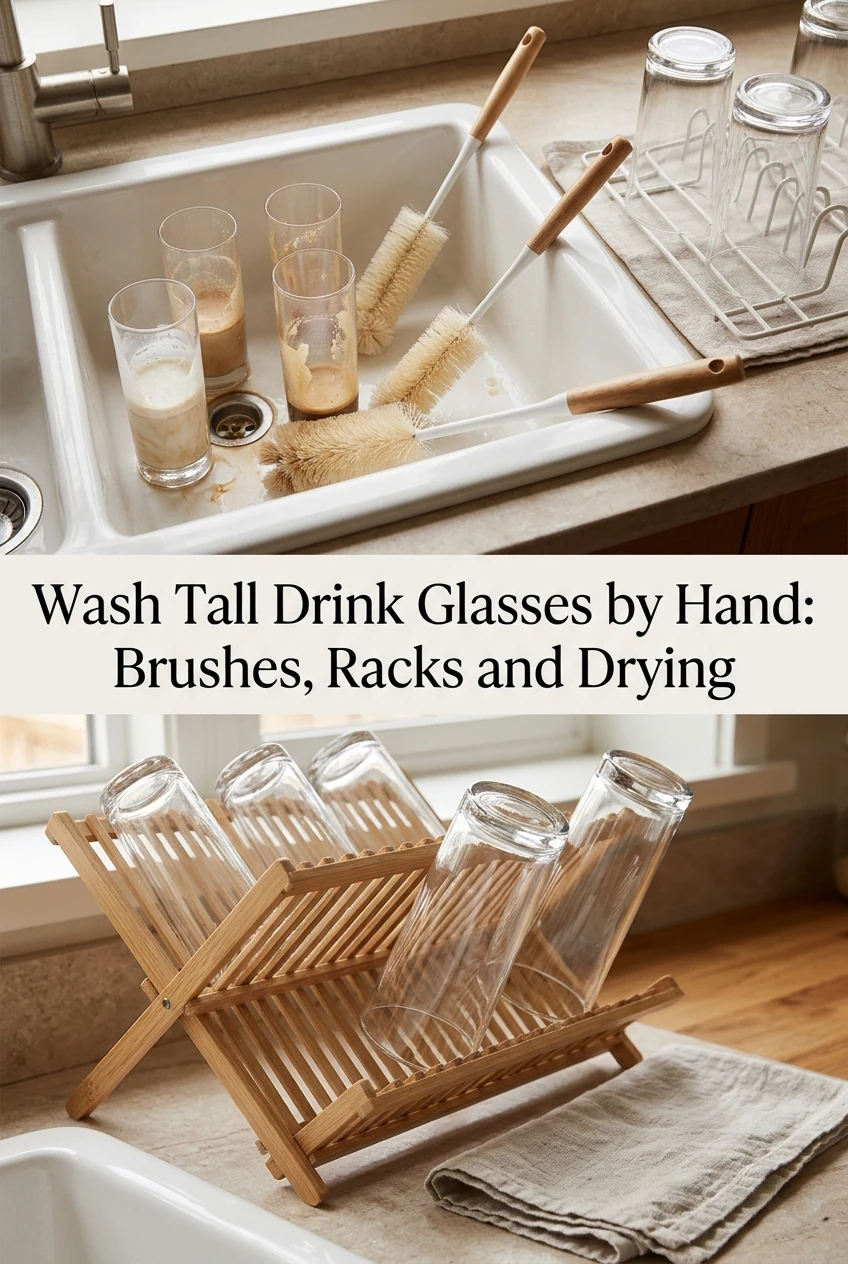
AI-generated editorial concept created for this article. The image is not a technical diagram or a tested result.
Choose the Right Bottle Brush
A long-handled bottle brush with a soft, dense head is the correct tool for tall glasses. The handle should reach the base of your tallest glass with your hand still above the rim, typically 30 centimetres or longer for a 400-millilitre iced latte glass. Avoid brushes with exposed wire tips, which scratch glass interiors. A brush with a twisted wire core and nylon bristles is a common and practical choice. Check that the head diameter is narrow enough to enter the glass opening without forcing.
Set Up the Sink to Prevent Chipping
Place a folded cloth or a rubber sink mat at the bottom of the basin before washing. Tall glasses tip easily when you insert a brush, and a hard sink base chips the rim if the glass falls. Wash one glass at a time rather than filling the sink with several. Fill each glass partway with warm soapy water, insert the brush, and scrub the base and sides with a rotating motion. Do not use very hot water on cold glasses straight from the fridge, as sudden temperature change can stress the glass.
Address Dried Milk Film at the Base
Milk residue that has dried at the bottom of a glass requires a short soak before brushing. Fill the glass with warm water and a small drop of dish soap, leave it for five minutes, then scrub with the bottle brush. This is usually enough to lift the film without abrasive cleaners. If film persists after soaking and brushing, repeat the soak rather than scrubbing harder, which risks scratching. Wash glasses promptly after use to prevent milk from drying in the first place.
Rinse and Check Before Drying
Rinse each glass thoroughly under running water, tilting it so water flows across the entire interior. Before setting it down, hold the glass up to a light source and look for soap residue or remaining film. Check the rim for chips at this point; a chipped rim is a reason to retire the glass rather than continue using it. A chip that is not visible when drinking can still cut a lip, so this check matters. Run your finger carefully around the rim if you are unsure.
Dry Upside Down on a Rack or Cloth
Place washed glasses upside down on a drying rack or a clean, dry cloth so water drains out rather than pooling at the base. A rack with widely spaced pegs supports the rim without trapping moisture around it. If you are using a cloth, refold it to a dry section after every two or three glasses. Check the maker's care label before putting any glass in a dishwasher; some tall glasses with printed or etched decoration are hand-wash only. Allow glasses to dry fully before storing them upright or stacking.
A little more
to know.
How often should I replace a bottle brush used for glasses?
Replace it when the bristles splay outward and no longer make firm contact with the glass interior, or when the head shows visible discolouration that does not rinse away. A worn brush cleans poorly and can leave bristle fibres behind.
Can I air-dry glasses right-side up to avoid rim marks from the rack?
Drying right-side up traps water at the base and encourages water spots and residue. Upside-down drying on a rack is preferable even if it leaves faint rim marks, which wipe away easily with a dry cloth before serving.
Original editorial guidance and recipe formulations, not independently kitchen-tested. Times are estimates and depend on equipment and product directions. Cooked bases need additional cooling and refrigeration before cold serving. Images are AI-generated illustrations; appearance and yield may vary. Check actual ingredient labels, allergens, and any certification you require. We do not certify products. Read our approach.
Save to Pinterest ↗ANOTHER IDEA FOR THE COUNTER