Warm Quince and Cinnamon Milk Cup
Quince paste is dense and sticky, and it does not dissolve cleanly when dropped directly into hot milk. The fat and proteins in milk create a barrier that traps pockets of undissolved paste, leaving chewy lumps in the finished cup. Dissolving a small, measured portion of quince paste in a warm liquid base first, before the milk is added, gives a smoother result and distributes the quince flavour evenly throughout the drink.
Read the note ↓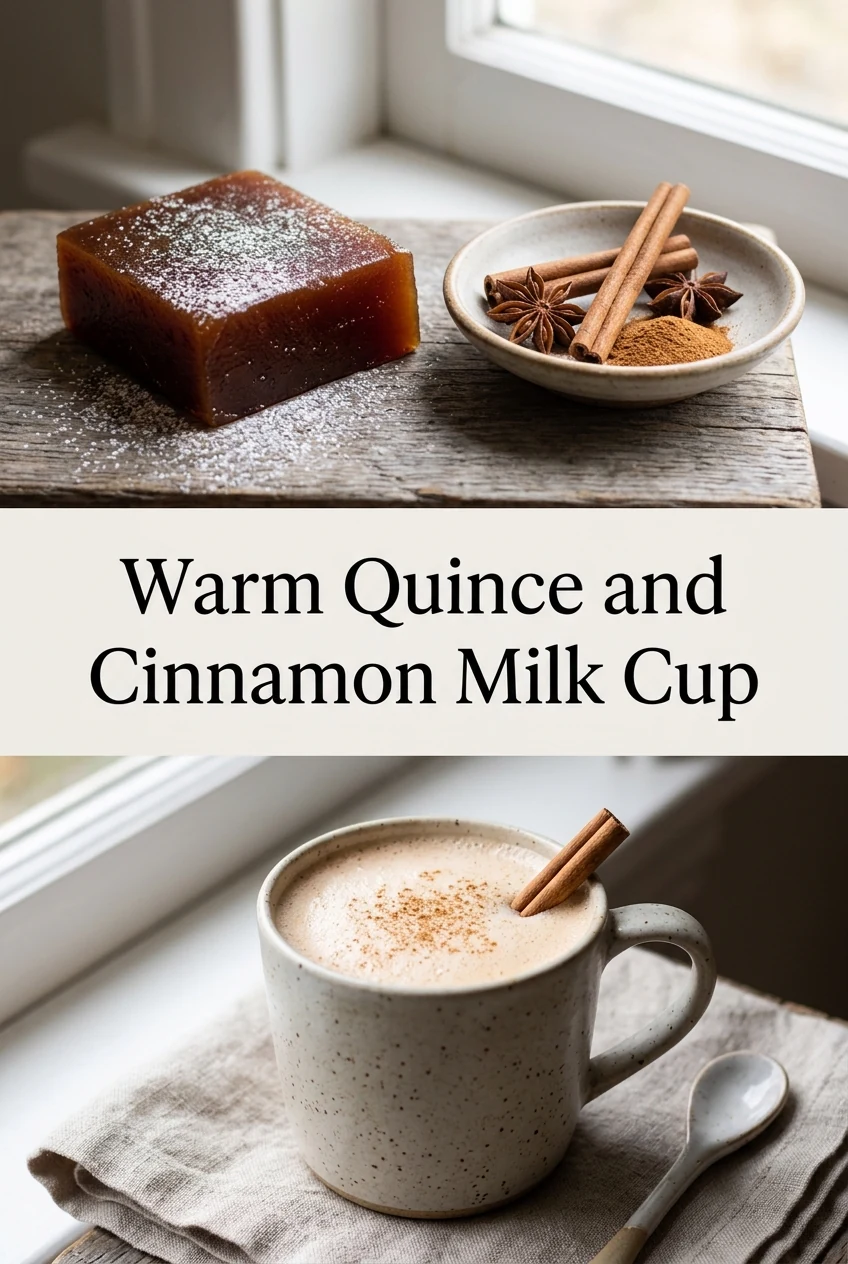
AI-generated editorial concept created for this article. The image is not a technical diagram or a tested result.
Cutting and measuring the quince paste
Cut 40 grams of firm quince paste into small cubes, roughly one centimetre on each side. Smaller pieces expose more surface area and dissolve faster. Quince paste sold in blocks varies in firmness depending on the brand and how long the block has been open. If the paste is very firm, use a warm knife to cut it more easily. Weigh the cubes on a scale rather than estimating, because quince paste is dense and even a small excess makes the drink noticeably sweeter.
Dissolving paste in warm water first
Place the quince paste cubes in a small saucepan with 60 millilitres of water. Heat over low to medium heat, stirring constantly with a small whisk or spoon. The paste will soften within two to three minutes and gradually loosen into a smooth, thick liquid. If stubborn pieces remain, press them against the side of the pan with the back of a spoon. The goal is a fully smooth quince base with no visible chunks before any milk is added.
Adding milk and cinnamon
Once the quince base is smooth, pour in 220 millilitres of whole milk while stirring continuously. Add one quarter of a teaspoon of ground cinnamon at this stage. Raise the heat to medium and warm the mixture until it is steaming and just beginning to show small bubbles at the edge of the pan, which is around 70 to 75 degrees Celsius if you are using a thermometer. Do not bring it to a rolling boil, as this can cause the milk to scorch on the bottom.
Tasting and adjusting before serving
Remove the pan from heat and taste the drink. Quince paste is already sweetened, so the 40-gram portion usually provides enough sweetness for most preferences. If you want more depth, add a very small pinch of ground cardamom rather than more cinnamon, which can turn bitter in quantity. If the drink tastes too sweet, a small squeeze of lemon juice, around 5 millilitres, cuts through the sweetness without changing the character of the drink significantly.
Pouring and serving
Pour through a fine strainer into a warmed cup to catch any cinnamon sediment or undissolved particles. Serve immediately. This drink does not hold well, as the quince solids can settle and the milk surface develops a skin quickly. If you are making two cups, double all quantities and keep the second portion in the covered pan over the lowest heat setting for no more than five minutes before pouring. Do not reheat once poured.
A little more
to know.
Does this work with plant-based milk?
Oat milk works reasonably well and produces a slightly thicker result. Avoid rice milk, which is thin and makes the drink watery. Dissolve the quince paste in water exactly as described before adding any plant milk, since the process does not change.
How do you store leftover quince paste once the block is open?
Wrap the remaining block tightly in cling film and refrigerate it. Use within the timeframe stated on the packaging. Do not store cut quince paste at room temperature for extended periods, as the exposed surface can dry out and harden significantly within a day or two.
Original editorial guidance and recipe formulations, not independently kitchen-tested. Times are estimates and depend on equipment and product directions. Cooked bases need additional cooling and refrigeration before cold serving. Images are AI-generated illustrations; appearance and yield may vary. Check actual ingredient labels, allergens, and any certification you require. We do not certify products. Read our approach.
Save to Pinterest ↗ANOTHER IDEA FOR THE COUNTER